





 Portuguese
  English
  Spanish
  3 min of reading
  0 comments


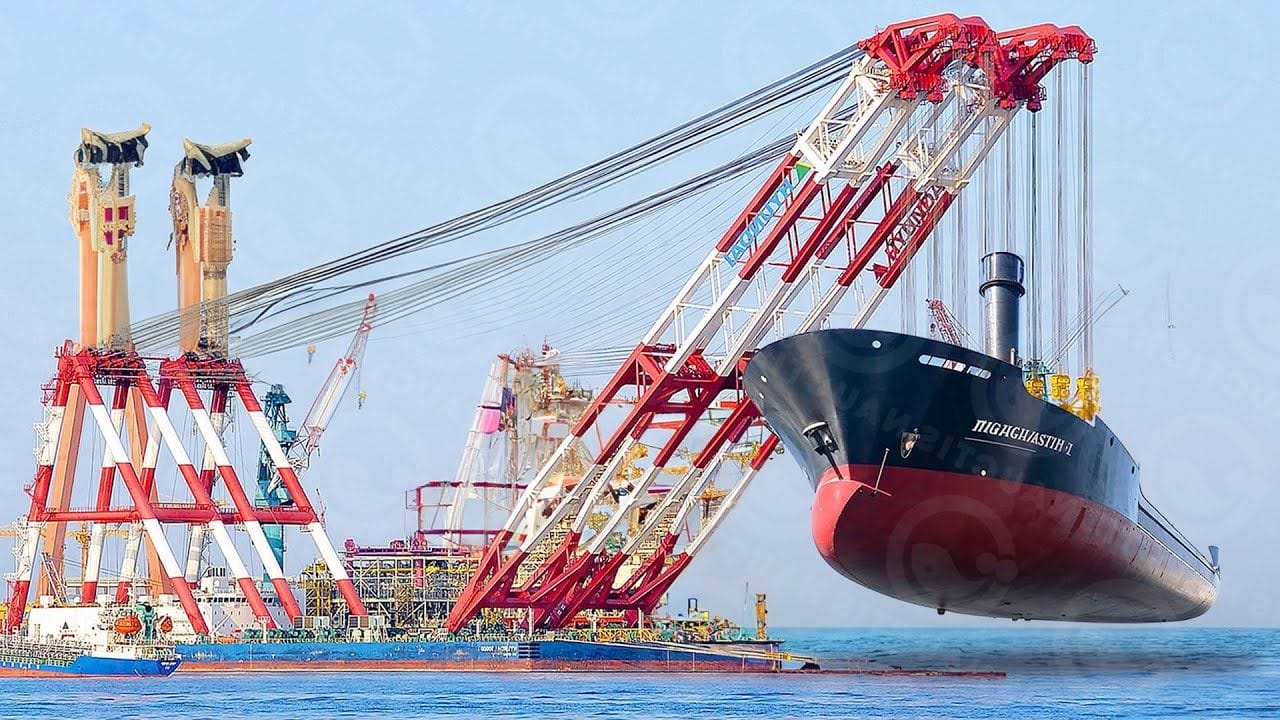
The Hyundai 10000, Recognized as the Largest Floating Crane in the World, Redefines Marine Engineering Standards, Capable of Lifting Entire Ships with Its Monumental Capacity of 10,000 Tons, Driving the Shipbuilding Industry to New Horizons of Efficiency and Innovation.
Lifting an entire ship is a feat that challenges the laws of physics and engineering, but the Hyundai 10000, the largest floating crane in the world, makes it seem like a routine task. At 180 meters long, equivalent to the width of a football field, this engineering colossus stands out not only for its size but also for its ability to lift massive loads with millimeter precision.
Unlike conventional cranes, the Hyundai 10000 and its Samsung counterpart, with a capacity of 8,000 tons, are designed for complex and large-scale operations, typical of shipbuilding yards. Hyundai Heavy Industries, a global leader in shipbuilding, is the force behind this technological marvel, excelling not only in ship construction but also in equipment that pushes the limits of engineering.
Largest Floating Crane in the World
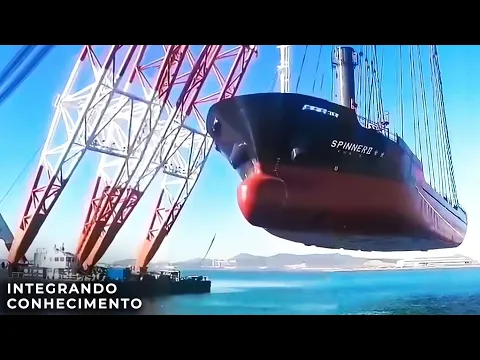

One of the main advantages of the Hyundai 10000, the largest floating crane in the world, is its ability to install large modules, up to 8,000 tons, on ships or platforms in a single move. This efficiency significantly reduces operational costs, saving up to 22 million dollars annually compared to traditional methods that require multiple operations and adjustments.
-
Historic bankruptcy of Centauro shocks the market, and the century-old company puts more than 500,000 products, machines, and complete infrastructure up for online auction.

-
New shoe factory in Ceará is expected to create 400 jobs and strengthen the local economy.

-
No one imagined it, but a mixture of sawdust with a mineral that fights fires surprises scientists with a result that changes the course of fire-resistant construction.

-
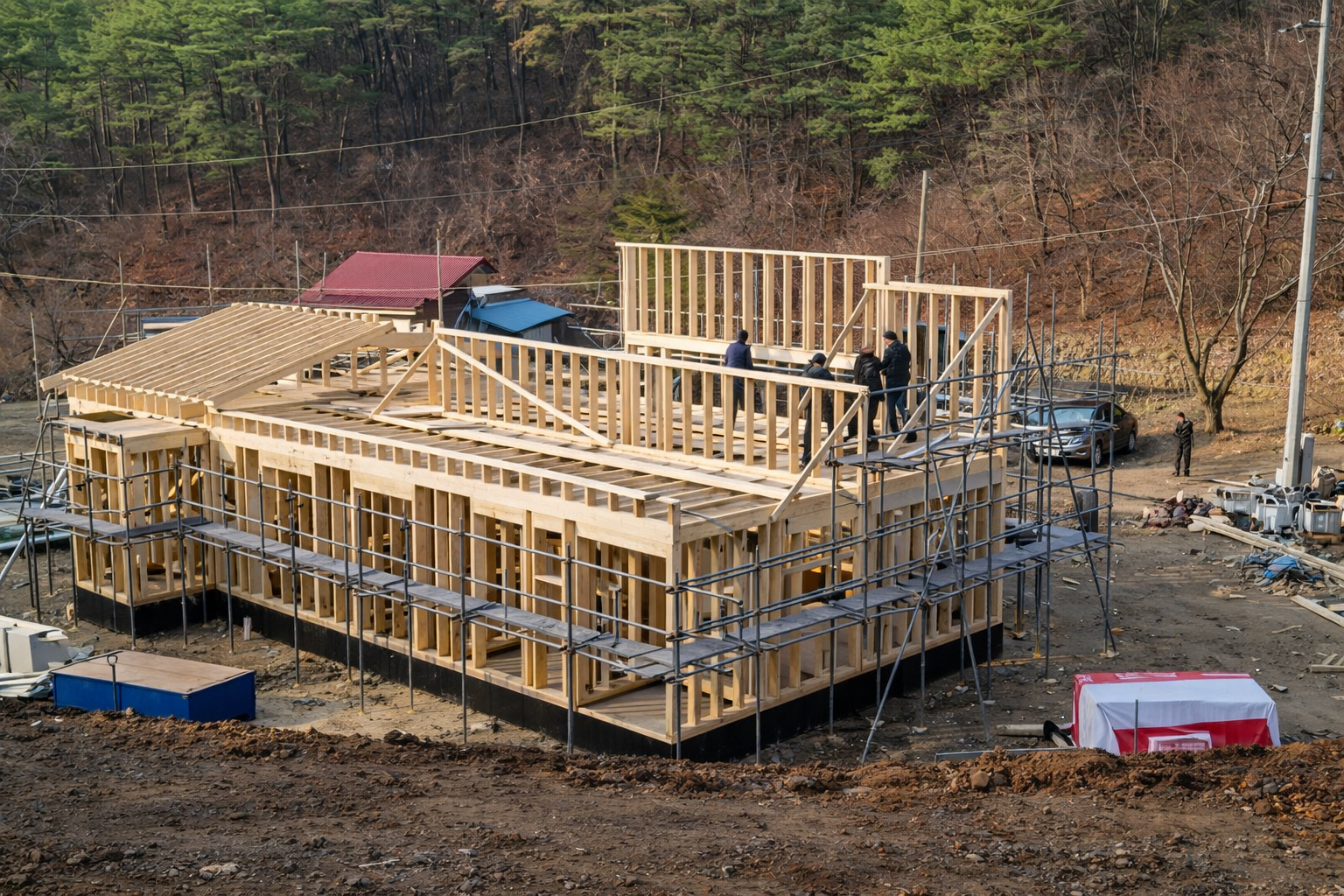
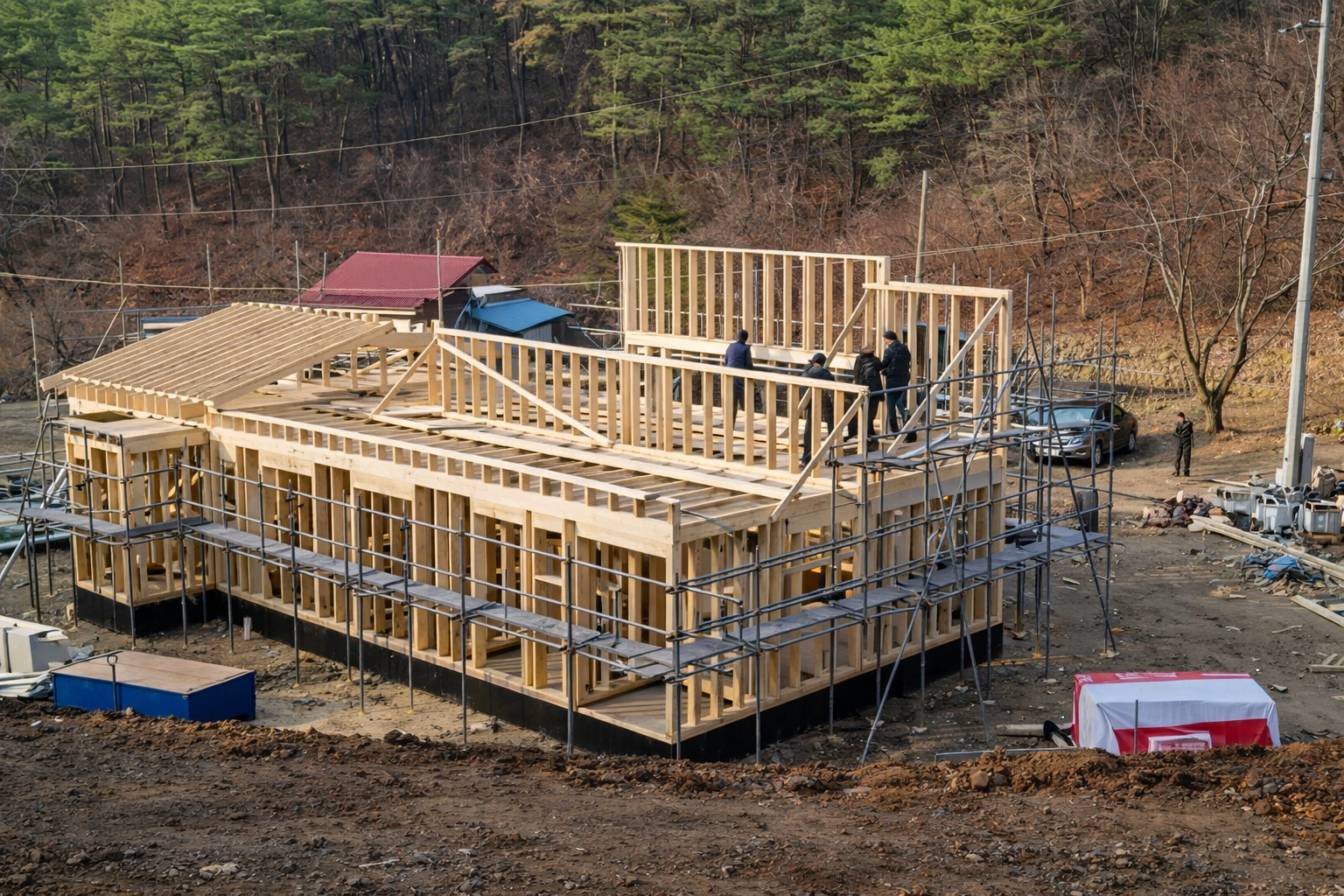
From empty land to a high-end house, wooden construction uses a lightweight system, metal structure for the foundation, ventilated ceramic cladding, and special windows to create an efficient and comfortable living space throughout the year.

Floating cranes like the Hyundai 10000 are vital for shipbuilding, recovering sunken vessels, and offshore projects, including the construction of bridges, wind farms, and oil and gas infrastructures. Their ability to handle delicate and large loads, such as heavy transformers, highlights the importance of these structures in logistics and international maritime transport.
How Does It Work to Lift Giant Ships?
The stability of the Hyundai 10000 during lifting operations is ensured by the balance between the center of gravity and the center of buoyancy. Before lifting a giant ship, the crane adjusts its ballast, filling tanks with water to change the center of gravity and ensure stability. This precaution prevents the crane from tipping over, even when lifting heavy weights like an entire ship.
The operation of these maritime giants is controlled by advanced computerized systems that ensure precision and effectiveness, compensating for factors such as currents, wave movement, and wind strength. Operations are carefully planned to occur in favorable weather conditions, with the assistance of tugboats and self-propulsion systems.
Types of Offshore Cranes
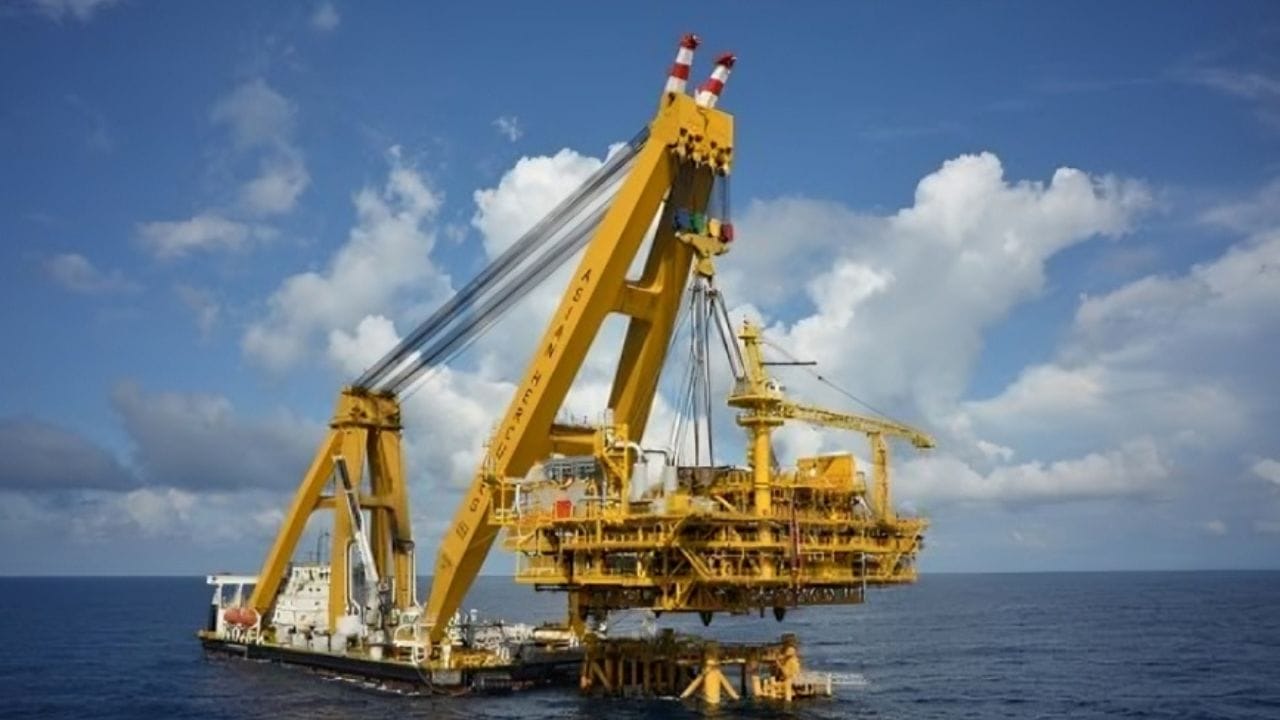
The maritime sector features various types of offshore cranes, adapted to the diverse demands and conditions of the marine environment:
- Pillar Cranes: Used on fixed platforms, these cranes offer stability and capacity for moving heavy loads.
- Articulating Cranes: With flexible arms, they are suitable for precise and quick operations in confined spaces, like support ships.
- Telescoping Boom Cranes: Allow vertical or horizontal extension, being versatile for use on different types of vessels and tasks.
- Truss Boom Cranes: Ideal for offshore construction and installation of large structures, these cranes handle extremely heavy loads.
- The CBO series by Liebherr stands out for its compactness and efficiency in maintenance and support operations in confined spaces, with a capacity of up to 100 tons.
Cost and Training for Offshore Crane Operators
Investing in training as an offshore crane operator is a strategic decision for professionals in the maritime sector. The cost of courses can vary significantly depending on the level of certification, educational institution, and location. In Brazil, a course like the one offered by RelyOn Nutec costs approximately BRL 3,762.00, reflecting the investment in acquiring specialized skills and necessary certifications to operate in an offshore environment.
The career of offshore crane operator is financially rewarding, with salaries that can reflect the complexity and responsibility of maritime operations, especially if working on the largest floating crane in the world. A junior operator earns between R$ 4,000 and R$ 7,000 per month, while a mid-level operator earns between R$ 7,000 and R$ 10,000. A senior operator can earn more than R$ 10,000 monthly. This market offers not only an attractive financial return but also international career opportunities and continuous professional development.









Seja o primeiro a reagir!