





 Portuguese
  English
  Spanish
  3 min of reading
  0 comments


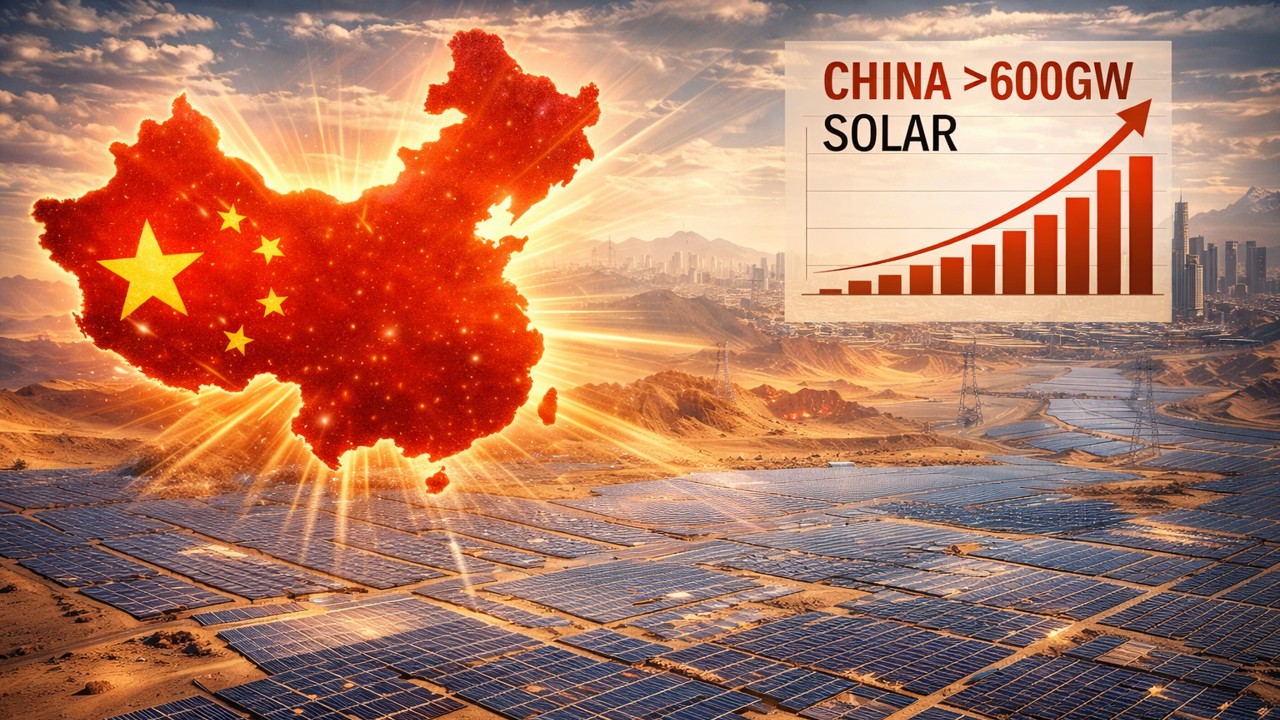
Chinese Solar Complexes Exceed 400 km², Produce Energy for Millions of People, and Position the Country Far Ahead of the Rest of the World
China has become, by far, the world’s largest power in solar energy, operating gigantic photovoltaic parks with generating capacity that exceeds the sum of several countries. In desert regions and the Tibetan plateau, the country has built solar complexes with areas larger than 400 km², something unparalleled in Brazil.
To grasp the scale, 400 km² is equivalent to over 500 times the area of Maracanã, one of the largest stadiums in the world.
Where These Giant Solar Parks of China Are Located
The largest Chinese solar parks are concentrated:
-
Renewable energy advances over protected areas in Brazil, and a survey by the Energy Transition Observatory reveals silent impacts that challenge environmental conservation and pressure sensitive traditional territories.

-
Rio Grande do Sul accelerates energy transition: State invests in renewable technologies and consolidates decarbonization strategies and pathways to attract billions in new industrial investments.

-
With 160,000 m² of collectors, an area larger than 20 football fields, Silkeborg, in Denmark, hosts a solar thermal plant that heats 19,500 homes and could become the largest solar heating plant in the world.

-
A study reveals the expansion of renewable energy procurement in Brazil and shows how companies are taking advantage of opportunities to reduce expenses, ensure energy efficiency, and strengthen strategic environmental commitments.


- in the west of China, in desert regions
- on the Tibetan Plateau, at nearly 3,000 meters altitude
These areas have high solar incidence, low population occupation, and are connected to major urban centers by ultra-high voltage transmission lines, capable of transporting energy over thousands of kilometers.

What These Parks Produce: Energy on a Continental Scale
According to data from the International Energy Agency (IEA), China has already exceeded 600 gigawatts (GW) of installed solar capacity, representing over a third of all solar energy existing on the planet.
In practice:
- China generates hundreds of terawatt-hours (TWh) per year solely from solar energy
- in a single year, the country installs more solar capacity than many countries have in their entire history
China vs. Brazil: Size, Production, and Scale Difference
The comparison makes the difference between the two countries clear:
- China: over 600 GW of installed solar capacity
- Brazil: about 45 GW (combining large plants and distributed generation)
In other words, China operates more than 13 times the Brazilian capacity.
While Chinese solar parks occupy hundreds of square kilometers, the largest solar projects in Brazil typically have areas between 5 and 20 km², aimed at regional generation, not continental.
Energy Price: Why China Can Generate More Cheaply
Another decisive point is the cost of solar energy. China dominates nearly the entire global supply chain for photovoltaic panels, inverters, and batteries, which drastically reduces prices.
In many Chinese projects, the cost of solar energy is already lower than that of fossil sources, even without high subsidies. In Brazil, despite the rapid growth of solar energy, costs are still impacted by logistics, transmission, and the smaller scale of projects.
Solar Giants Explain Why China Sets the Pace for the Energy Transition
Solar parks larger than cities, production sufficient to supply millions of people, and increasingly lower costs explain why China sets the pace for the global energy transition.
Brazil is rapidly advancing in solar energy, but is still far from operating projects with the scale, integration, and economic impact of China’s megasolar complexes.








-

Uma pessoa reagiu a isso.