





 Portuguese
  English
  Spanish
  3 min of reading
  0 comments


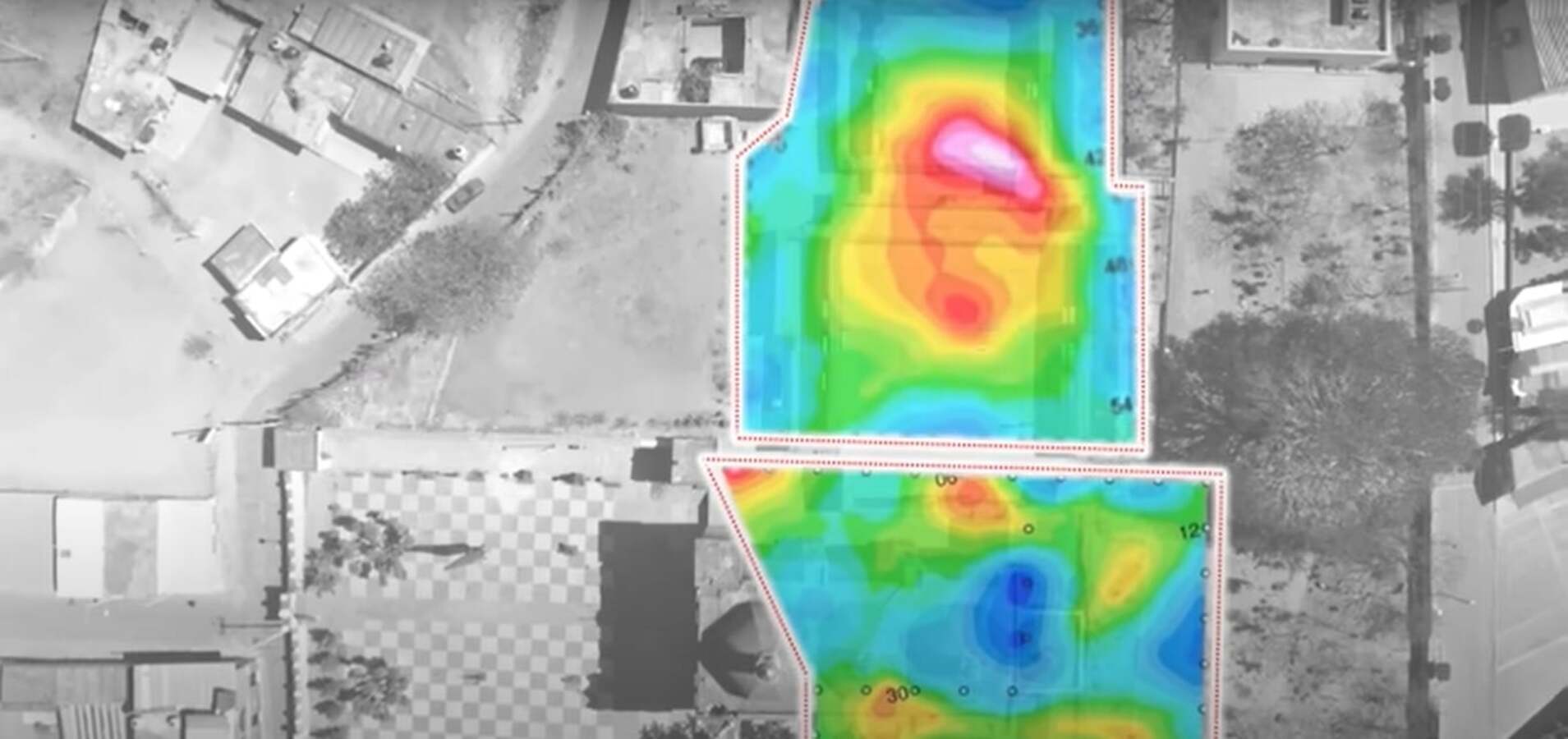
Discovery Under Church in Mitla Reveals Complex Zapotec Subterranean Network, Reinforcing Legends, Rituals, and the Cultural Importance of the Ancient Mexican City
Archaeologists identified, beneath the Catholic Church of São Paulo Apóstolo in Mitla, Mexico, a complex system of chambers and subterranean tunnels. The discovery, made in July 2023, confirms oral reports about the existence of a “passage to the underworld” of the Zapotec civilization, which inhabited the region from 700 B.C. to the early 15th century.
The work was carried out by the Lyobaa Project, in partnership with the National Institute of Anthropology and History (INAH), the National Autonomous University of Mexico, and the ARX Project.
Lyobaa, which means “place of rest,” is what the Zapotecs called the site, seen as the gateway to the land of the dead.
-
Motorola launched the Signature with a gold seal from DxOMark, tying with the iPhone 17 Pro in camera performance, Snapdragon 8 Gen 5 that surpassed 3 million in benchmarks, and a zoom that impresses even at night.

-
Satellites reveal beneath the Sahara a giant river buried for thousands of kilometers: study shows that the largest hot desert on the planet was once traversed by a river system comparable to the largest on Earth.

-
Scientists have captured something never seen in space: newly born stars are creating gigantic rings of light a thousand times larger than the distance between the Earth and the Sun, and this changes everything we knew about stellar birth.

-
Geologists find traces of a continent that disappeared 155 million years ago after separating from Australia and reveal that it did not sink, but broke into fragments scattered across Southeast Asia.

Advanced Technology to Reveal the Subterranean
The team used ground-penetrating radar, electrical resistivity tomography, and seismic tomography to create a 3D virtual model of the ruins.
These methods allowed measuring the reflection of electromagnetic and seismic waves as they passed through the ground, revealing a large hole beneath the main altar and two passages connected to it, about 5 to 8 meters deep.
These techniques had already been employed at other Mesoamerican sites, such as Teotihuacán, where structures associated with the underworld were also identified.
In Mitla, the evidence confirms the architectural complexity and ingenuity of the Zapotecs, with mosaics, monuments, and tombs filled with treasures for the afterlife.
Religious Center and Cultural Legacy
Mitla was the main Zapotec religious center until the end of the 15th century. With the conquest by the Aztecs, the site was abandoned and later used as a base for the construction of the Catholic church, during the Spanish domination between 1519 and 1521.
Colonial reports indicate that the tunnels were the setting for rituals and ceremonies dedicated to the dead and ancestors.
The connection between the subterranean structure and these practices reinforces the importance of Mitla for Zapotec spirituality.
Oaxaca and the Day of the Dead
The Mitla complex is located 44 km from Oaxaca, a city that preserves unique mosaics and remains a cultural reference in Mexico.
Oaxaca is also one of the main centers for the celebration of Día de los Muertos, held between late October and early November.
The festival is marked by visits to cemeteries, the setup of altars, the use of sugar skulls, decorated skeletons, and the symbolic presence of the famous La Catrina.
More than a religious date, the Day of the Dead is an ancestral tradition, originating from peoples such as the Aztecs and Mayans, and which initially took place in August.
With the arrival of the Spaniards, the rituals were adapted to coincide with All Saints’ Day. In 2003, UNESCO declared the celebration an Intangible Cultural Heritage of Humanity.
Although celebrated throughout the country, the festival is more traditional in states like Aguas Calientes, Mexico City, Morelos, Oaxaca, and Quintana Roo.
It can last up to seven days, starting around October 26 and continuing until November 3.
With information from O Tempo.







-

Uma pessoa reagiu a isso.