





 Portuguese
  English
  Spanish
  4 min of reading
  4 comments


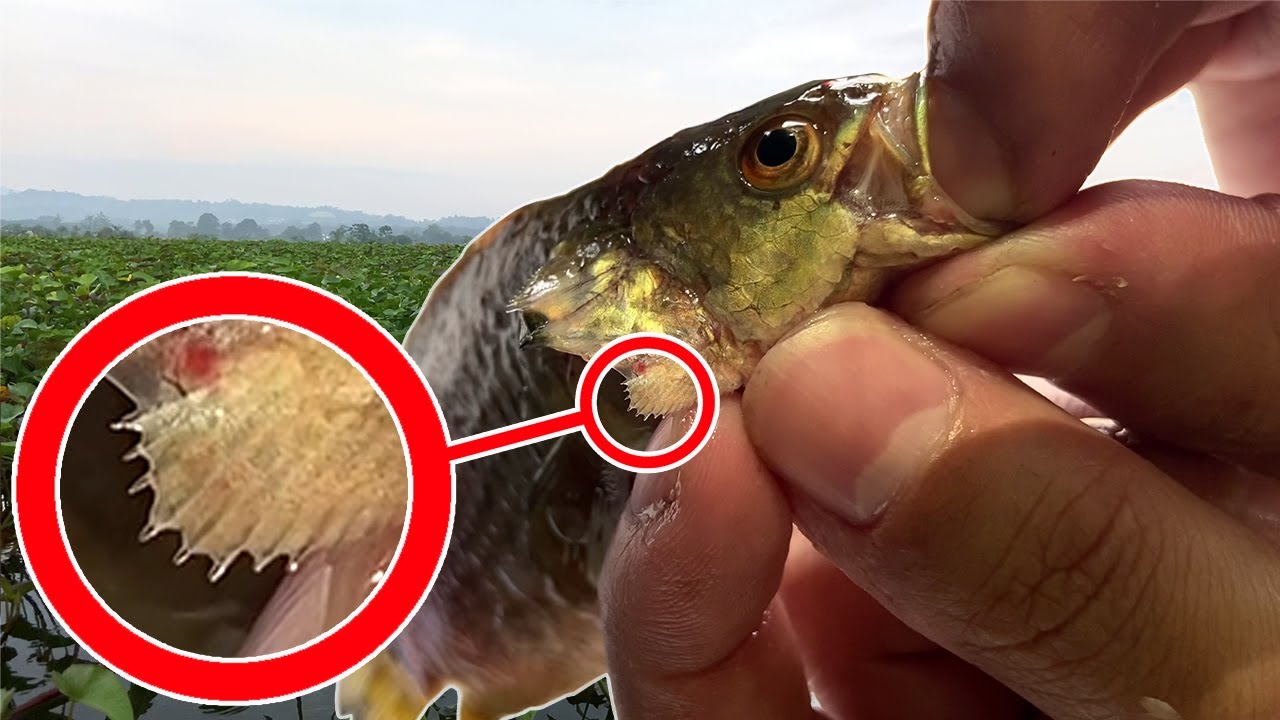


Climbing Perch Fish Breathes Air, Walks on Land, Climbs Leaning Trees, and Survives Hours Out of Water, Intriguing Biologists in Southeast Asia.
While most people imagine fish as animals entirely dependent on water, the climbing perch (Anabas testudineus) subverts nearly all biological expectations: it breathes atmospheric air, walks on solid ground, moves between puddles and rice paddies, survives hours out of water, and can climb over roots and leaning trees using a peculiar combination of pectoral fin, operculum, and moist body. This behavior is so unusual that, since the 19th century, naturalists have recorded the climbing perch as a “fish that walks.” Today, it is studied by universities and institutions in Asia for its amphibious abilities, hardiness, and ecological impact.
Geographically, it is common in India, Bangladesh, Myanmar, Thailand, Cambodia, Malaysia, Indonesia, and Vietnam, where it occupies rice paddies, canals, swamps, and temporary bodies of water.
How Does a Fish Breathe Air? The Labyrinth Organ Explains
One of the keys to the climbing perch’s survival out of water is a specialized organ called the labyrinth, an extra respiratory structure that allows it to absorb oxygen directly from the air, similar to what occurs with some adult amphibians.
-
Friends have been building a small “town” for 30 years to grow old together, with compact houses, a common area, nature surrounding it, and a collective life project designed for friendship, coexistence, and simplicity.

-
This small town in Germany created its own currency 24 years ago, today it circulates millions per year, is accepted in over 300 stores, and the German government allowed all of this to happen under one condition.

-
Curitiba is shrinking and is expected to lose 97,000 residents by 2050, while inland cities in Paraná such as Sarandi, Araucária, and Toledo are experiencing accelerated growth that is changing the entire state’s map.

-
Tourists were poisoned on Everest in a million-dollar fraud scheme involving helicopters that diverted over $19 million and shocked international authorities.


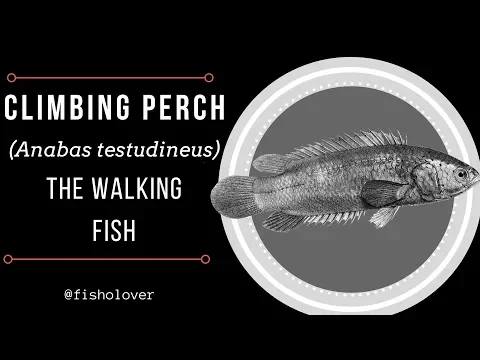

This organ compensates for conditions where:
- the water is low in oxygen
- there is temporary drought
- the fish needs to cross mud, soil, or vegetation
This adaptation turns the climbing perch into a functional amphibious fish, capable of exploring territories where other species would simply suffocate.
Walking on Land and ‘Climbing Trees’: Technique and Limits
The climbing perch does not scale smooth trunks vertically like a lizard, but researchers have documented the fish climbing exposed roots, low vegetation, and leaning trunks, especially in flooded margins and rice paddies with trees.
Movement on solid ground occurs in two ways:
- Side strokes of the body, pushing the fish forward
- Alternating use of pectoral fins, enhancing directional control
In humid and shaded conditions, it can remain out of water for up to 6 hours, as long as it keeps its skin and gills moist to allow for gas exchange.
Why Does a Fish Walk on Land? The Answer Lies in Survival
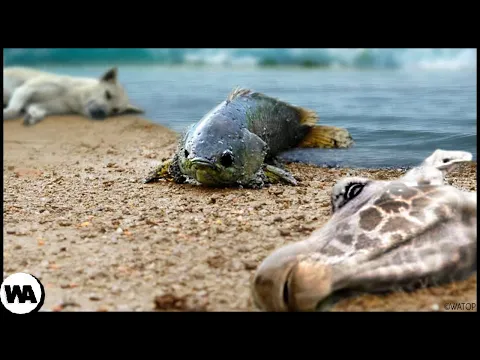
The ability to walk has a clear purpose: to migrate between temporary bodies of water. This behavior is essential in the monsoonal regions of Southeast Asia, where rice paddies cyclically dry and fill. The climbing perch takes advantage of:
- rains
- wet mud
- dense vegetation
- leaning roots and trunks
- irrigation furrows
to colonize new puddles, lakes, and canals before predation or drought eliminates it.
That is why it is so difficult to eradicate the species when it invades agricultural systems.
The Dominance of Rice Paddies: Biology and Agriculture on the Same Stage
Most of the climbing perch’s behavioral records come from flooded rice paddies, where the animal:
- feeds on insects and invertebrates
- resists degradation of oxygen and migrates between plots
- survives the dry season
- encounters reduced predators
This set of factors makes the rice paddy an ideal ecosystem for the species’ expansion — and a challenge for farmers trying to protect their stocks of native fish.
Ecological Impact and Fear of Invasions
In countries like Papua New Guinea and Australia, environmental authorities fear the entry of the climbing perch due to its invasive characteristics. Once established, it could:
- displace native fish
- compete for resources
- survive droughts
- migrate between bodies of water
- resist low oxygen levels
Some reports describe attempts to transport it in freight trains and fishing boats, because the animal can live for hours in moist boxes without water — increasing the risk of accidental spread.
What Science Still Wants to Understand About the Climbing Perch
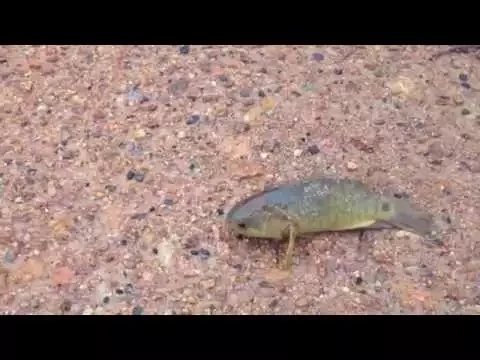
Researchers are still investigating:
- limits of time out of water
- respiratory efficiency of the labyrinth organ
- locomotion mechanisms on different surfaces
- physiological resistance to thermal stresses
- invasive impact on non-Asian ecosystems
This species is also of interest to biotechnology and comparative physiology for being a living model of amphibious transition, something that harkens back to ancient evolutionary processes.
A Fish That Redefines the Limits of the Category “Fish”
The climbing perch is a living reminder that nature does not respect our simple categories. It swims, breathes air, walks, climbs vegetation, migrates, survives drought, and even dominates human agricultural corridors.
For Asian farmers, it is an almost inevitable component of the monsoonal system. For biologists, it is an extraordinary evolutionary model. And for environmentalists, it is a potential high-risk invader.
Few animals so clearly demonstrate that life finds a way even when it involves walking on land with fins.










A fishermans dream come true! So how many more years until they evolve in to dinosaurs all over again?
No brasil em minha região existe uma espécie de peixe ,que anda sombre o solo em busca de água também, se chama-se bagre africano e ele fica gigante!
Maravilhoso! Espero que seja comivel e possa até substituir o lambari que anda emvprocesso de extinção.
Yes, they are edible.