





 Portuguese
  English
  Spanish
  4 min of reading
  1 comment


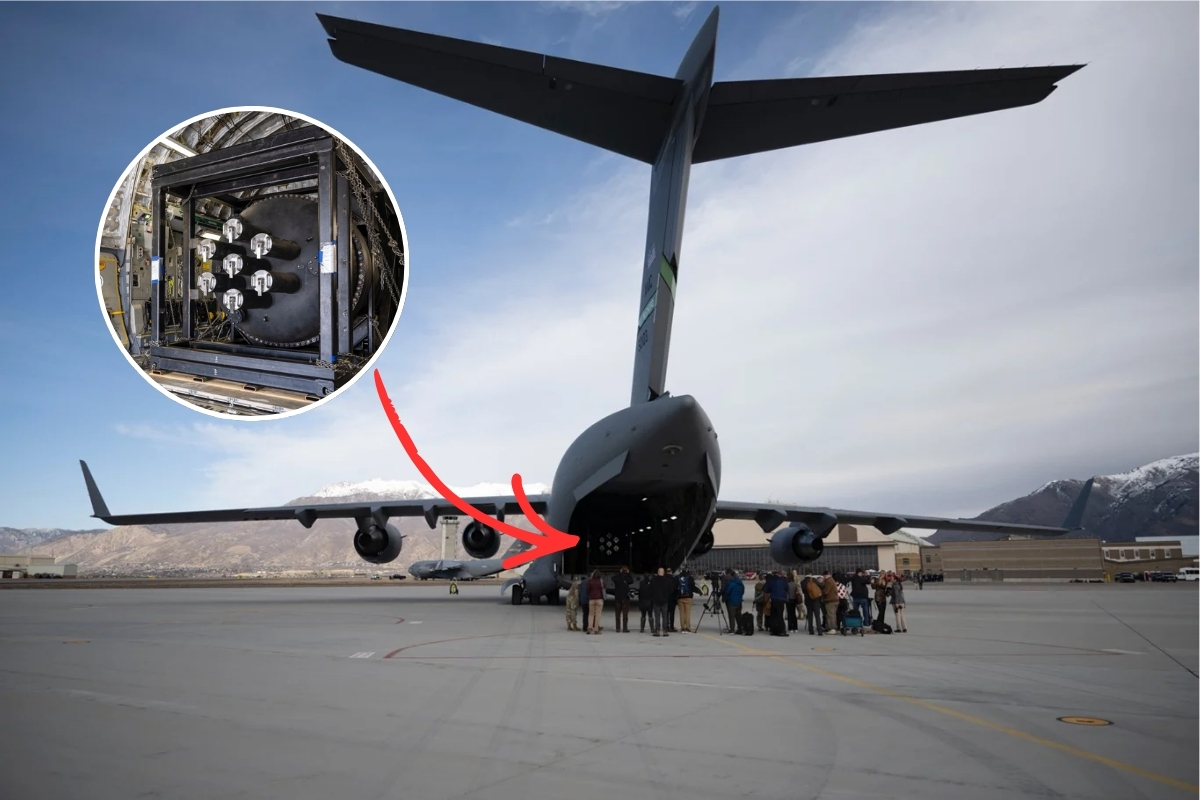


Department of Energy and Department of Defense Transported a Microreactor from California to Utah on February 15, Targeting Energy at Remote Bases and Strategic Gain.
Six tons of strategic ambition. The United States conducted, for the first time, the air transport of a miniaturized nuclear reactor aboard a military aircraft.
The journey started in California and ended in Utah on February 15, with a clear focus on accelerating a capability that could change energy presence and autonomy in sensitive areas.
The equipment traveled without nuclear fuel, reducing immediate risks and keeping the political and military message: compact energy also enters the game.
-
Friends have been building a small “town” for 30 years to grow old together, with compact houses, a common area, nature surrounding it, and a collective life project designed for friendship, coexistence, and simplicity.

-
This small town in Germany created its own currency 24 years ago, today it circulates millions per year, is accepted in over 300 stores, and the German government allowed all of this to happen under one condition.

-
Curitiba is shrinking and is expected to lose 97,000 residents by 2050, while inland cities in Paraná such as Sarandi, Araucária, and Toledo are experiencing accelerated growth that is changing the entire state’s map.

-
Tourists were poisoned on Everest in a million-dollar fraud scheme involving helicopters that diverted over $19 million and shocked international authorities.


Military Flight Connects California to Utah and Tests New Logistics
The transport occurred on a military cargo aircraft, delivering the Ward microreactor and components to Hill Air Force Base in Utah.
The operation was conducted in partnership with Valar Atomics, a California-based company, to demonstrate that such a system can be rapidly moved to where it will make a difference.
The central point was not energy generation that day, but the ability to swiftly relocate critical infrastructure.

Authorities Embarked and Treated the Mission as a Milestone
The Secretary of Energy, Chris Wright, and the Under Secretary of Defense for Acquisition and Sustainment, Michael Duffey, accompanied the reactor and its components during the journey.
Duffey described the movement as an important step in bringing nuclear energy to locations where it is needed, with a direct impact on military readiness.
In practice, the message conveys logistical reach and deterrence, expanding options in scenarios of pressure and conflict.
Source Confirms Partnership with Valar and Reactor Without Fuel
According to Công Luận, a Vietnamese general news and public policy newspaper, the agencies worked with Valar Atomics to transport the Ward microreactor aboard a plane without nuclear fuel to Utah.
This detail reinforces the idea of operational demonstration, not immediate use, focusing on projection capacity and rapid response.

Trump White House Bets on Small Reactors and Accelerates Decisions
The Trump administration considers small-scale reactors as part of its plan to expand energy production in the United States.
In last May, Trump signed four executive orders to boost the use of nuclear energy, citing demands related to national security and competition in artificial intelligence.
In last December, the Department of Energy granted two grants to accelerate the development of small modular reactors.
Defense Wants to Replace Diesel Generators in Remote Areas
Proponents of this technology point to a direct advantage: bringing energy to remote regions and reducing reliance on diesel generators that require constant refueling.
On the critical side, there is skepticism regarding cost, arguing that electricity generated by microreactors may be more expensive than that from large reactors and sources like wind and solar.
The debate impacts budgets and strategy, as reliable energy defines range and permanence.
Valar Details 5 Megawatts Power and Schedule Until 2028
The CEO of Valar Atomics, Isaiah Taylor, stated that the reactor transported on February 15 is slightly larger than a minivan and has a capacity of 5 megawatts, sufficient for about 5,000 homes.
The forecast is to start operation in July with 100 kilowatts, increase to 250 kilowatts later this year and gradually advance to full capacity.
The company expects to begin test electricity sales in 2027 and to start commercial operations in 2028, indicating a need for federal support, especially for fuel and uranium enrichment.
The Department of Energy also indicated that the fuel is expected to come from the Nevada National Security Area to the San Rafael facilities, as well as negotiations with states, including Utah, to recycle or permanently bury fuel.
What appears as a transport test essentially projects an energy model that follows troops, bases, and interests, with less dependence on long supply chains.
By placing a microreactor in the air and on the map, Washington adds a new piece to the chessboard of presence and influence, changing the strategic reading.










But did it become operational THAT SAME DAY? How was the nuclear fuel transported. How much power did it make the very first day in Utah?