Portuguese
  Spanish


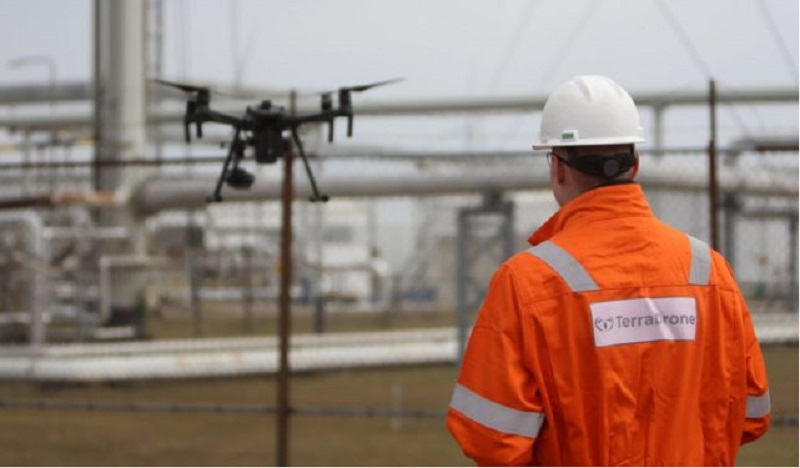

Petrobras’ FPSO P66 Was the Setting for the First Tank Inspection Conducted by a Drone Aircraft. Activity Was Considered a Success
Technology has increasingly taken up space in the execution of activities in the oil and gas industry. After Petrobras Developed a Robot for Painting Platforms, It Was Time for the Use of Drones in the Inspection of FPSO Tanks.
The use of drones has grown significantly across all branches of industry, and now it seems here to stay in the Oil and Gas segment.
The Brazilian subsidiary of the Japanese group Terra Drone used a drone aircraft to inspect one of the tanks of Petrobras’ FPSO P-66, and the results were very satisfactory.
The novelty of the operation was a source of pride for the executive director of Terra Drone in Brazil, Marcelo Belleti, as it was the first time a drone was used for inspection in confined spaces in Brazil.
-
Brazilian Innovator Uses 3D-Printed Device to Cool Two Rooms with One Air Conditioner
-
China Uses 432 Robots to Move a 7,500-Ton Historic Building in Shanghai, Preserving Architecture While Creating Space for Underground Center
-
Dutch Initiative Swaps Cigarette Butts for Food to Clean Streets, Combat Pollution, and Turn Waste into Recycled Furniture

-
Kenyan Company Recycles Over 10 Million Flip-Flops from Indian Ocean Beaches into Elephant and Giraffe Sculptures Sold for Up to $1,200

The speed (just over one hour) with which the inspection was carried out and the reduction of labor, requiring only two men to execute the task, were the main advantages of using the drone.
Normally, in a platform tank inspection, four men and scaffolding or climbers are used, in addition to the drone having its own lighting and not requiring such preparation.
Terra Drone’s intention is to provide the service not only to Petrobras but also to other companies operating in the oil and gas sector, in the inspection of flares and measuring the thickness of plates in ship tanks.
According to Belleti, inspecting flares is much more advantageous when done by drones, as there is no need to interrupt the operation of the equipment to perform the inspection.
In addition to visual inspection, it is also possible to conduct thermal inspection of the flare, and with 30x optical zoom cameras, the drone can remain at a distance of 50 to 100 meters.
The Company
Terra Drone, a Japanese group, acquired 50% of the shares of 20 service provider companies around the world (including PlimSoll UAV), a subsidiary of PlimSoll, an engineering and offshore maintenance group with 25 years in the market.
Today, the company operates across all five continents and in Latin America, it operates in three countries. Currently, the company is involved in the entire oil and gas chain as well as in energy, mining, and mapping.