





 Portuguese
  English
  Spanish
  4 min of reading
  0 comments


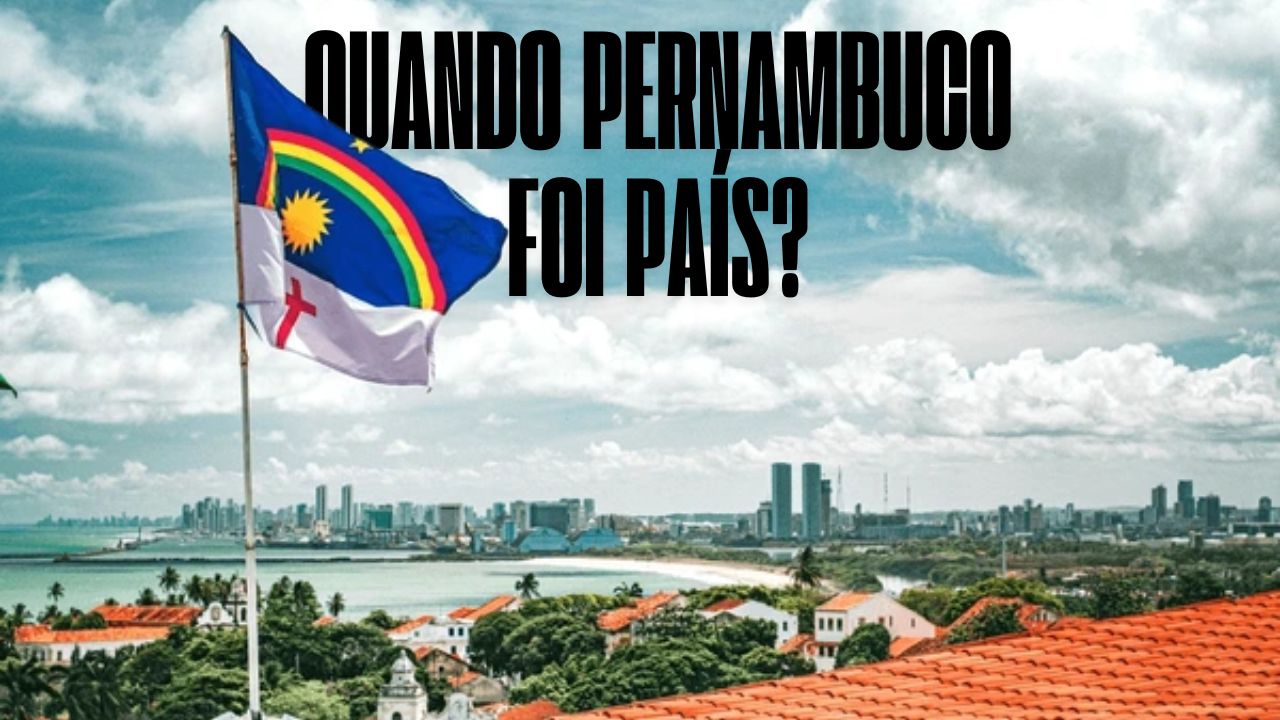
Pernambuco Carries One of the Most Impressive Chapters in the History of Brazil: In 1817, the State Became an Independent Republic and Remained So for 74 Days. The Movement, Known as the Pernambucana Revolution, Resulted in the Creation of Its Own Government, a Flag, and Even the Appointment of an Ambassador.
Pernambuco has always had a strong spirit of resistance and has been the stage for several revolts against Portuguese rule. But the Revolution of 1817 was the one that went the furthest, resulting in the creation of an independent government.
The spark of the revolt happened on March 6, 1817, when the then governor of the captaincy of Pernambuco, Caetano Pinto de Miranda Montenegro, ordered the arrest of a group suspected of planning a conspiracy.
Among those targeted for arrest was the military man José de Barros Lima, known as “Leão Coroado”. But instead of surrendering, he reacted and killed, with a sword stroke, the commander who was trying to arrest him. This act triggered an uprising that quickly gained strength, leading to the governor’s flight to Rio de Janeiro.
-
50 viaducts, 4 tunnels, 28 bridges, and 40 kilometers of bike paths: BR-262 in Espírito Santo will receive 8.6 billion reais for the largest engineering project in the state’s history, inspired by the Immigrant Highway in São Paulo.

-
Brazil produces too much clean energy and doesn’t know what to do with it: over 20% of solar and wind capacity was wasted in 2025 while investors flee and 509 renewable generation projects were abandoned in the last year.

-
Piauí will produce a new fuel that replaces diesel without needing to change anything in the truck’s engine and reduces pollutant gas emissions by half: truck drivers from all over the Northeast are already celebrating the news that will arrive later this decade.

-
A new Brazilian shopping center worth R$ 400 million will be built in an area equivalent to more than 4 football fields, featuring 90 stores, 5 cinemas, a supermarket, a college, and parking for 1,700 cars, potentially generating 3,000 jobs.


With the governor’s departure, the rebels took power and established a new government, beginning the period in which Pernambuco was an independent nation. During those 74 days, the province was administered by a revolutionary board and began to organize as a republic.
The Independent Government of Pernambuco and the Creation of the Organic Law
The Pernambucana Revolution was not just a military uprising. The movement’s leaders had well-defined ideas about how to govern the new country.
After the governor’s expulsion, a group of five leaders took command of the Pernambuco government, representing different sectors of society:
- Manoel Correia de Araújo (agrarian sector);
- Domingos José Martins (commerce);
- Padre João Ribeiro (Catholic clergy);
- José Luís de Mendonça (judiciary);
- Domingos Teotônio Jorge (armed forces).
What Did the Organic Law Establish?
On March 7, 1817, the new governing board instituted the Organic Law, which established a series of innovative principles for the time:
- Freedom of the press and freedom of thought;
- Equality among citizens, who should be called “patriots”, with no class distinctions;
- The promise of an official Constitution to be written after one year of government.
However, despite the political advancement, the revolution did not abolish slavery nor implement land reform, as landowners opposed these changes.
The End of Independence and the Consequences
Even with an organized government and progressive ideas, the Republic of Pernambuco did not last long.
On May 20, 1817, troops sent by the Portuguese Crown departed from Rio de Janeiro and Bahia to invade Pernambuco. The city of Recife was besieged and, after intense fighting, the revolutionaries were defeated.
As punishment, Portugal dismembered part of the territory of Pernambuco, transferring the Comarca do Rio de São Francisco first to Minas Gerais and then to Bahia.
Many leaders of the revolution were arrested, and some, like “Leão Coroado”, were executed. Even with the end of the Pernambuco republic, the movement served as an inspiration for the Independence of Brazil in 1822 and influenced future revolts in the Northeast.
Data Magna: the Holiday That Remembers the Independence of Pernambuco


To keep the memory of the Pernambucana Revolution alive, the state decreed March 6 as a state holiday, known as Data Magna.
The choice of the day was made through a popular vote in 2007, organized by the Legislative Assembly of Pernambuco (Alepe) and the Association of Broadcasting Companies of Pernambuco (Asserpe). Among the options were other historical dates of the state, such as:
- January 13, 1825 – Execution of Frei Caneca (leader of the Confederation of Ecuador);
- October 5, 1821 – Beberibe Convention;
- November 10, 1710 – Cry of Republic.
The Data Magna only became an official holiday in 2017, during the celebrations of the 200 years of the Pernambucana Revolution.
Although it was officially recognized in 2007, the holiday took a decade to be implemented. The proposal was approved only in 2017, guaranteeing an extra day of rest for Pernambucans, often extending it with Carnival.









Seja o primeiro a reagir!