





 Portuguese
  English
  Spanish
  3 min of reading
  0 comments


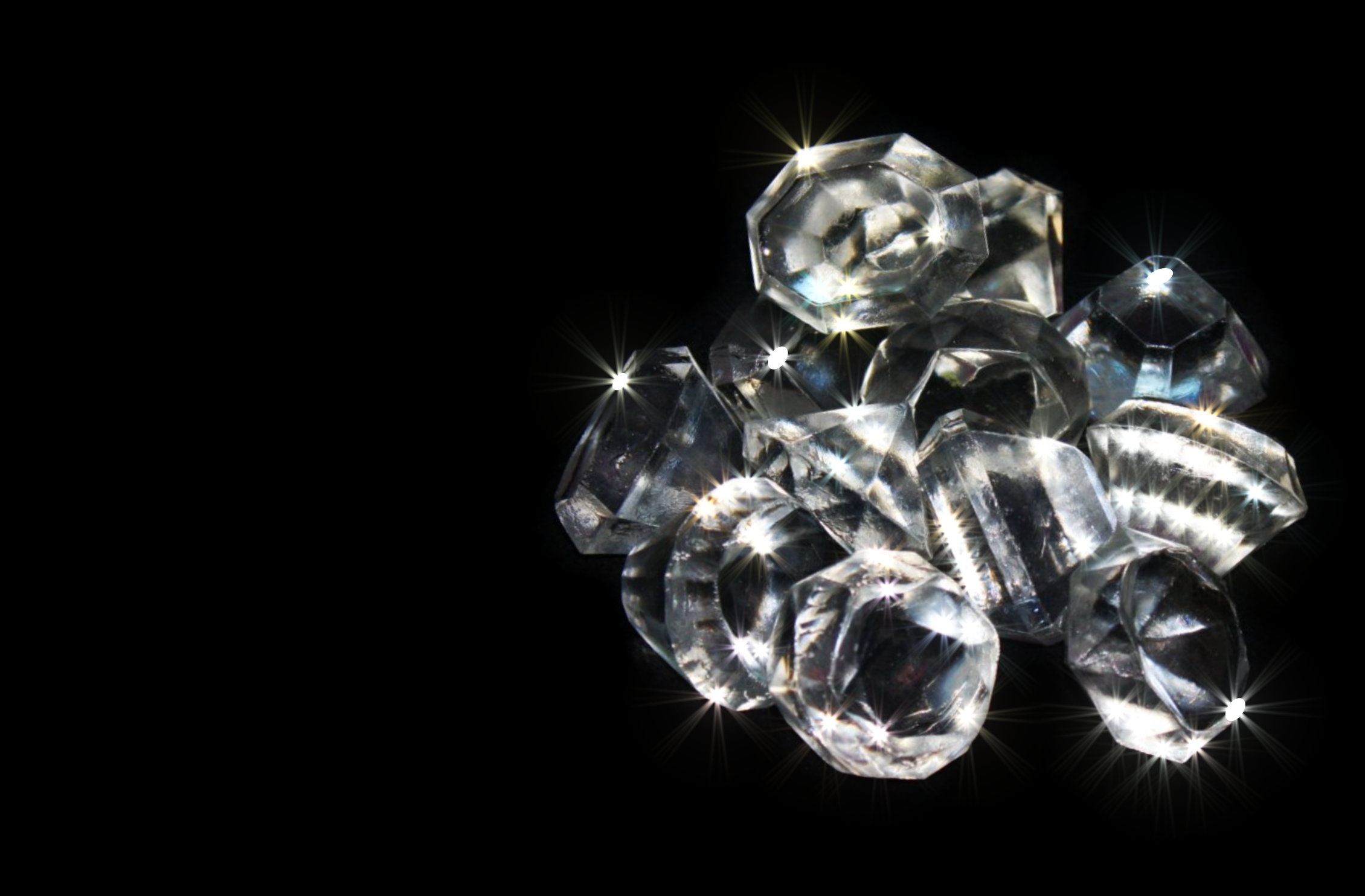
Scientists In China Create An Ultra-Hard Diamond, 40% More Resistant Than The Natural One, With Potential For Use In Technology And Manufacturing Industries
A group of Chinese scientists has developed in the lab an “superdiamond” that is harder than natural diamonds. The discovery, led by researchers from Jilin University and Sun Yat-sen University, could revolutionize industrial sectors that use the material, such as cutting and polishing industries. The study was recently published in the journal Nature Materials.
Diamonds are known as the hardest natural material, but the synthetic version created by the researchers has a different crystal structure called lonsdaleite.
While ordinary diamonds have a cubic structure, this new version has a hexagonal structure, significantly increasing its hardness. The resulting diamond, according to scientists, is 40% more resistant than the natural one and has greater thermal stability.
-
Man builds functional 5-meter submarine in his garage using gas cylinders, PVC pipes, and a refrigerator motor, and navigates with the vessel on a lake in Colombia.

-
Millions of people have been eating yam for centuries without knowing that this humble tuber contains a compound called diosgenin, which scientists have now discovered can improve memory and help control blood sugar levels.

-
Scientists from an international project drill 1,800 meters of ice in Antarctica using hot water and discover details about one of the most intriguing places on planet Earth.

-
Seen from space, a colossal volcano nearly 5,000 meters high in Russia has released 1,600 km of smoke over the Pacific, forming “devil’s horns” of lava and revealing the brutal force of the Ring of Fire.


Lonsdaleite was first discovered in 1967, in the Canyon Diablo meteorite in Arizona, USA. However, recreating the material artificially has always been a great challenge.
Now, Chinese researchers have managed to synthesize pure hexagonal diamonds from graphite using a compression and heating process under extreme pressure.
Production Process And Unique Characteristics
The process of creating this superdiamond involves applying high temperatures and pressures to the graphite. The resulting structure, known as ‘post-graphite phase’, gives rise to the hexagonal diamond.
The created material not only has high hardness but also excellent thermal stability, surpassing nanodiamonds, which are smaller and less stable at high temperatures.
The researchers claim that the innovation opens doors for new industrial applications. Cutting and drilling tools that already use conventional diamonds can benefit from this new material. Additionally, there is potential for its use in advanced technology sectors that require highly resistant and stable materials.
Background And Previous Studies
This was not the first time science attempted to create hexagonal diamonds in the lab. In 2021, a team of researchers from the USA managed to produce crystals of this type large enough to measure their stiffness with sound waves.
At the time, scientists had already identified the material’s potential to replace traditional cubic diamonds in industrial applications.
Travis Volz, one of the American researchers, emphasized that the hexagonal diamond could be used in sectors that require resistant materials, such as drilling and machining.
Volz highlighted at the time the great potential of this material for various applications. Furthermore, hexagonal diamonds were mentioned as possible substitutes for traditional diamonds in engagement rings, thanks to their similar appearance and superior durability.
Future Applications And Advances In China
The discovery by Chinese scientists is not an isolated case in the country. Chinese researchers had already developed, in 2023, a version of diamond capable of conducting electricity, something unusual for this material.
This innovation resulted from collaboration among various universities, including Zhengzhou University and Ningbo University.
The ability to synthesize diamonds with specific properties, such as increased hardness or electrical conductivity, significantly expands the possibilities for industrial applications.
The new hexagonal diamond, in addition to its superior strength, may be used in the manufacture of more efficient and durable tools, as well as electronic devices that require robust and stable materials.
Industrial Impact And Prospects
Synthetic diamonds are already widely used in industries that require wear-resistant materials.
The production of this new type of diamond, with even more advantageous characteristics, could boost efficiency and reduce costs in machining and drilling processes. Furthermore, the ability to produce in the lab allows for adjusting the material’s properties according to the needs of each application.
With the publication of the results in Nature Materials, the discovery has attracted the attention of the international scientific community.
With information from IE.








Seja o primeiro a reagir!