





 Portuguese
  English
  Spanish
  3 min of reading


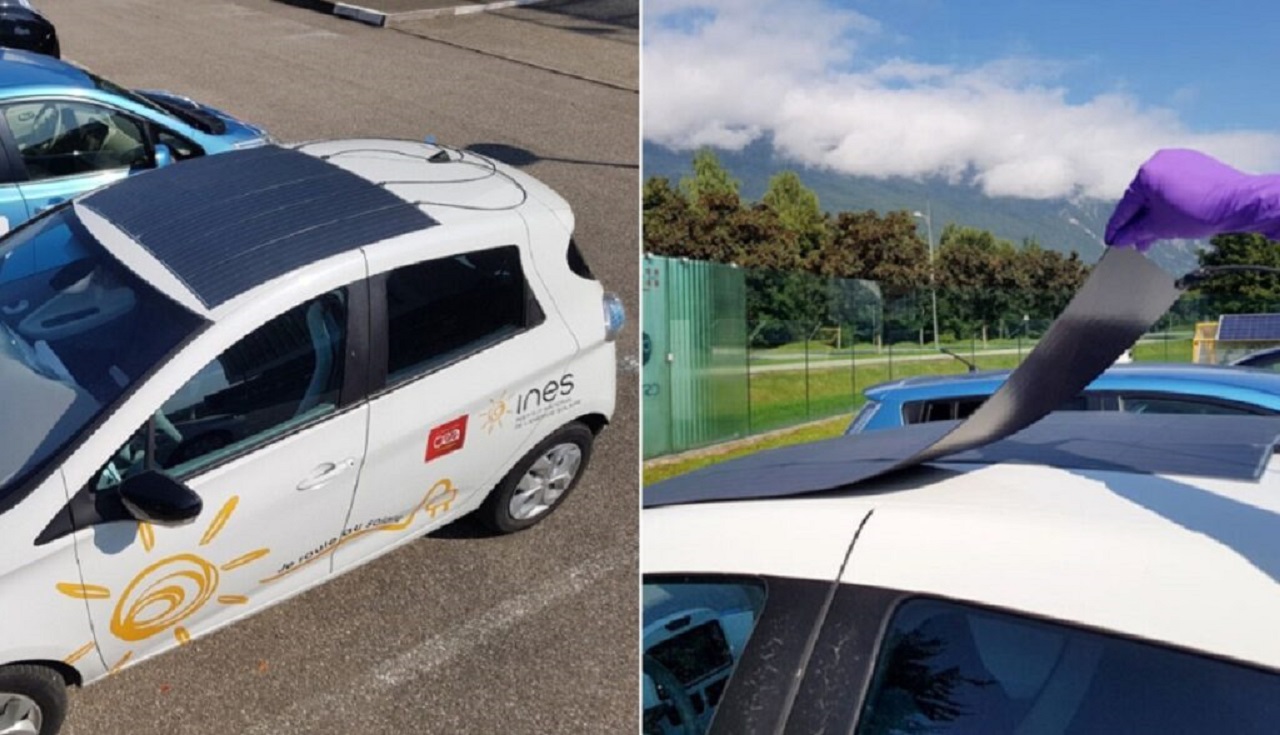
A French Institute Developed A Photovoltaic Kit That Can Generate 800 Km Of Range For An Electric Car Per Year. The Kit Capable Of Generating Solar Energy Can Offer Up To 4 Km Of Range Per Day.
The French Research Institute INES.2S (Institut National de L’Energie Solaire) developed a photovoltaic kit capable of transforming any electric car into a solar energy collector. The equipment was tested on a Renault Zoe model and showed the potential to add up to four kilometers of daily range.
Photovoltaic Kit Can Provide Up To 800 Additional Km Per Year
The Vehicle Integrated PhotoVoltaic (VIPV) is a system made up of an adaptable solar panel, a battery, and an electronic interface. The additional solar energy provided by the photovoltaic kit can both enhance the electric car’s range and power the vehicle’s electrical components and air conditioning, for example.
According to the INES institute, data collection over several months and multiple vehicles will make it possible to accurately quantify the contribution in solar kilometers, estimated at an additional 800 km of range per year.
-
Renewable energy advances over protected areas in Brazil, and a survey by the Energy Transition Observatory reveals silent impacts that challenge environmental conservation and pressure sensitive traditional territories.

-
Rio Grande do Sul accelerates energy transition: State invests in renewable technologies and consolidates decarbonization strategies and pathways to attract billions in new industrial investments.

-
Engineers propose a fourth traffic light for intersections – the change promises to affect crossings, queues, and waiting times.

-
Chevrolet Suburban Z71 lands in Brazil with a V8 engine, off-road design, air suspension, seven seats, and colossal size, a rare version imported for around R$ 1.3 million with luxury and exclusivity.


For now, the team presents the photovoltaic kit as a way to stimulate interest among automotive manufacturers in advancing toward an integrated and optimized solution that powers the main battery of the electric car.
Still a Prototype, the photovoltaic kit is seen as a non-intrusive solution, compatible with any rechargeable vehicle, and can be easily installed and removed.
Advantages of the New Equipment Capable of Transforming Any Electric Car into a Solar-Powered Vehicle
Like a film, the material features a backside composed of magnets and a mechanical design that allows for good conformability on any metal body. According to the institute, the solar application of VIPV is currently being studied by various industrial and research teams; however, research addressing the entire charging chain, from solar production to its valorization in vehicle consumption, is rarer.
The institute estimates that a photovoltaic kit could make it possible to increase the vehicle’s range by 800 km per year and reduce the frequency of recharges by 14%, a significant number when viewed in an urban environment.
For example, in France, according to a survey conducted by the Ministry of Ecological Transition and Territorial Cohesion, 35.7% of home-to-work trips are made for less than 5 km, meaning 10 km round trip.
Among the advantages of the photovoltaic kit in electric car applications are the potential to extend the vehicle’s range, partially alleviate the charging network, improve the comfort of the electric car driver by reducing the frequency of recharges, and, of course, reduce CO2 impact throughout its lifecycle.
Company Develops Solar-Powered Cars
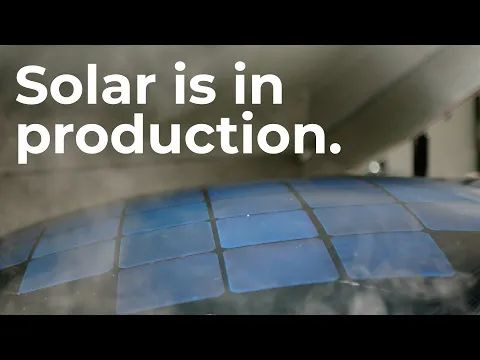

The Aptera Motors model is officially the first solar-powered electric car to be produced on a large scale in the world that attracts customers. With an elegant, mega-futuristic, and comfortable design, the car was inspired by a tricycle model, featuring about 10 m² of solar energy cells responsible for generating enough energy to fully power the vehicle, enabling multiple trips per day.
The trend of purchasing a solar-powered electric car has left consumers extremely excited about the novelty that has reached the market through Aptera Motors, and they are already preparing to place orders.
The vehicle can operate on rainy days or even at night, as the connection made is capable of capturing solar energy and storing it for cloudy days.
Source: INES.2S










Seja o primeiro a reagir!