





 English
  Francês
  Alemão
  Italiano
  Japonês
  Norueguês
  Portuguese
  Spanish
 3 min of reading



Ethanol Is Already One of the Main National Biofuels, But It Can Now Become Cheaper
The production of second-generation ethanol is one of the most promising areas of the biofuel industry. With the growing demand for renewable and sustainable energy sources, the production of second-generation ethanol has the potential to boost the economy. Thus, it will generate new jobs. A recent discovery may help to increase and lower the production costs of this biofuel.
The discovery was made by researchers from the University of São Paulo (USP). In this sense, they managed to create an unprecedented procedure that will change the way ethanol is produced. Want to know more? Keep reading.
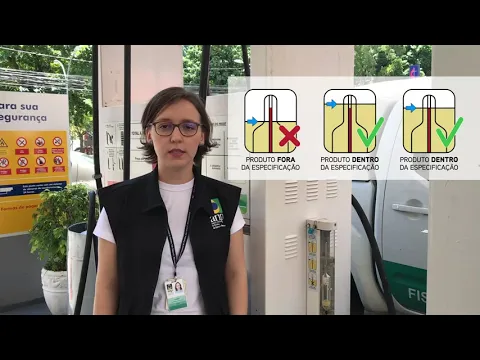
Want to Know More About the Importance of Ethanol Quality? Check It All Out in the Video Below

Discovery of New Enzymes by Researchers from USP
Scientists from the University of São Paulo (USP) discovered new enzymes capable of breaking down lignin, one of the main obstacles to the production of second-generation ethanol. This substance, present in the cell walls of plants, is responsible for providing rigidity and resistance to the cells. However, its presence makes it difficult to extract the sugar needed for ethanol production.
-
A study reveals the expansion of renewable energy procurement in Brazil and shows how companies are taking advantage of opportunities to reduce expenses, ensure energy efficiency, and strengthen strategic environmental commitments.

-
Brazil accelerates decarbonization in the South: International forum in Foz do Iguaçu gathers leaders to discuss the advancement of biomethane in the energy matrix and the potential of “caipira pre-salt.”

-
Mato Grosso do Sul excels in the sugar-energy sector: the state reaches a milestone of 22 operating mills and accelerates the production of clean energy in MS with a focus on sustainability.

-
As diesel prices soar due to conflicts in the Middle East, a Brazilian city decides to test a little-known biofuel that promises to completely replace fossil fuel without adaptation and could change the future of energy in the country.

With the new enzymes discovered by the USP team, it will be possible to break down lignin more efficiently. Thus, this will allow for a greater extraction of sugar and, consequently, a more efficient production of second-generation ethanol. However, this increases the willingness of society and companies to have a source of renewable energy.
The Economic and Employment Potential That This New Method Will Generate is Very Interesting
The production of second-generation ethanol has enormous economic and employment potential. In addition to being a renewable and sustainable energy source, second-generation ethanol can help reduce dependence on fossil fuels and contribute to mitigating climate change.
With the discovery of the new enzymes, the production of second-generation ethanol may become even more efficient and economical. Thus, this can boost the biofuel industry and generate new jobs worldwide.
Environmental Benefits
In addition to economic and employment benefits, the production of second-generation ethanol also has significant environmental benefits. However, unlike fossil fuels, second-generation ethanol is a renewable and clean energy source that does not contribute to global warming.
With the discovery of the new enzymes, it will be possible to increase and lower the production costs of second-generation ethanol, making this energy source even more accessible and efficient. This can help reduce dependence on fossil fuels and contribute to building a more sustainable and fair future for all.
Current Scenario of Ethanol Production in Brazil
Brazil is one of the largest producers and exporters of ethanol in the world, with an annual production of around 30 billion liters. Ethanol production in Brazil is primarily derived from sugarcane, which is a readily fermentable sugar source.
The production of ethanol from sugarcane involves several stages, including harvesting, transportation, milling, fermentation, distillation, and dehydration. Sugarcane is harvested either manually or with the help of machines and transported to processing plants.
At the plant, sugarcane is crushed to extract the juice. This juice contains sugar that is transformed into alcohol through fermentation with the help of yeast. The alcohol is then distilled to increase the concentration of ethanol. Finally, it is dehydrated to achieve the required purity level to be used as a biofuel.
Ethanol production in Brazil has great economic and social importance, as it generates millions of jobs across the country. Additionally, the ethanol produced from sugarcane is a renewable and clean energy source that helps reduce dependence on fossil fuels. Thus, it contributes to mitigating climate change.








Seja o primeiro a reagir!