





 Portuguese
  English
  Spanish
  3 min of reading


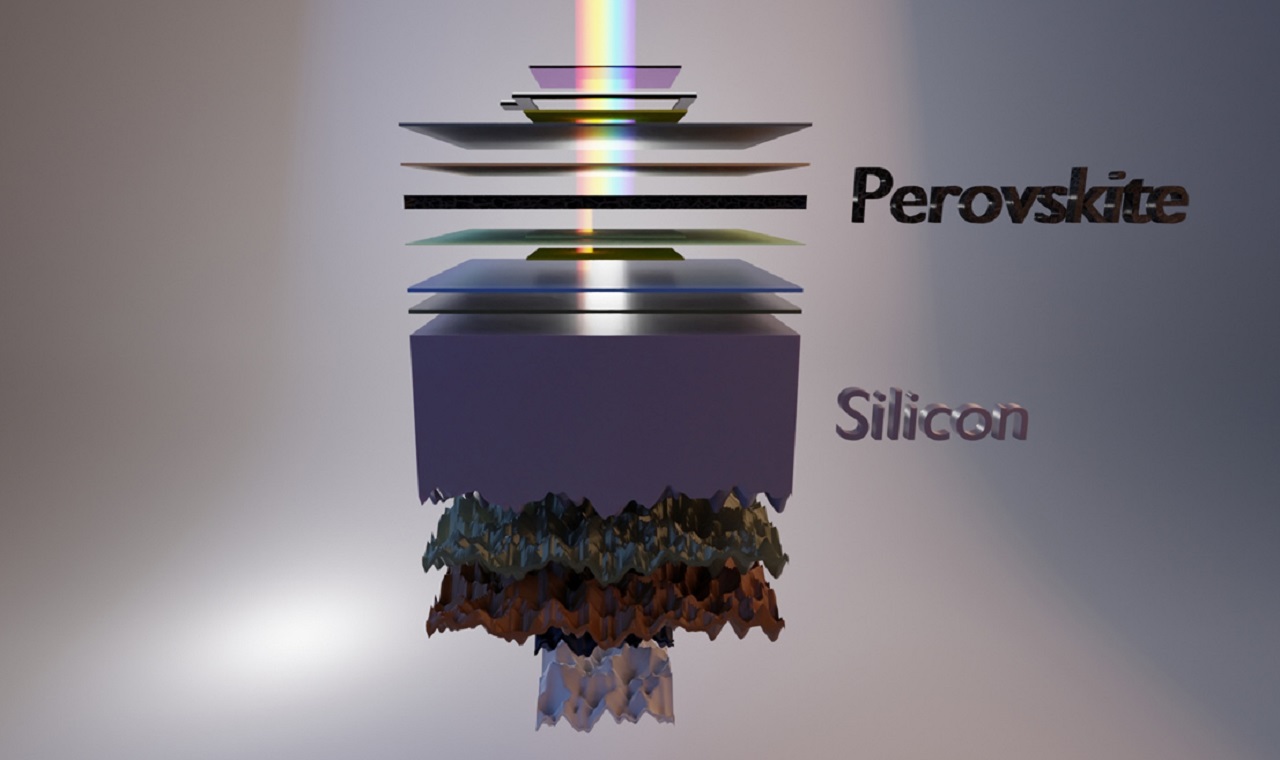
Researchers Developed Solar Cell That Uses Silicon And Perovskite Together To Generate An Efficiency Above 32%, Something That Until Now Was Only Possible With Rare Materials.
The silicon is the main element used in solar panels worldwide; however, experts say that it is close to reaching its maximum efficiency limit. Therefore, researchers from the research institution Helmholtz Zentrum Berlin (HZB) in Germany created a solar cell that achieved a new efficiency record in the realm of solar energy using silicon and perovskite.
Scientists Develop Solar Energy Cell With Efficiency Greater Than 32%
In the research, the team of scientists discovered that perovskite, a mineral that is relatively rare, can provide much higher efficiency than silicon. However, by combining the two materials, it was possible to develop solar cells with efficiency greater than 32.5%, thus making them more efficient than when used separately.
The aim is for each material to have a different capacity to collect light from the solar spectrum. While silicon works better with red and infrared wavelengths, perovskite is more efficient at collecting blue light in the solar cell.
-
A “silent skill” is allowing Brazilians to earn up to R$ 22,000 per month without a degree and become indispensable for companies that rely on millions of data to survive.

-
Researchers at the Toyota Research Institute found that if a human uses robotic arms to flip a pancake 300 times in an afternoon, the robot learns to do it on its own the next morning, and this is currently the most promising method to solve the biggest bottleneck in modern robotics.

-
Goodbye iron: a common item in households is starting to lose space to technology that smooths clothes in minutes without an ironing board and with less energy consumption.

-
Antarctica reveals an unusual clue high in the Hudson Mountains, and what appeared to be just an isolated rock began to expose a secret hidden under the ice for ages.


As the new solar cell is generated with multiple layers and features a new interface between the active area and the electrodes, it is possible to filter the various light spectra to reduce electrical energy loss and increase overall efficiency.
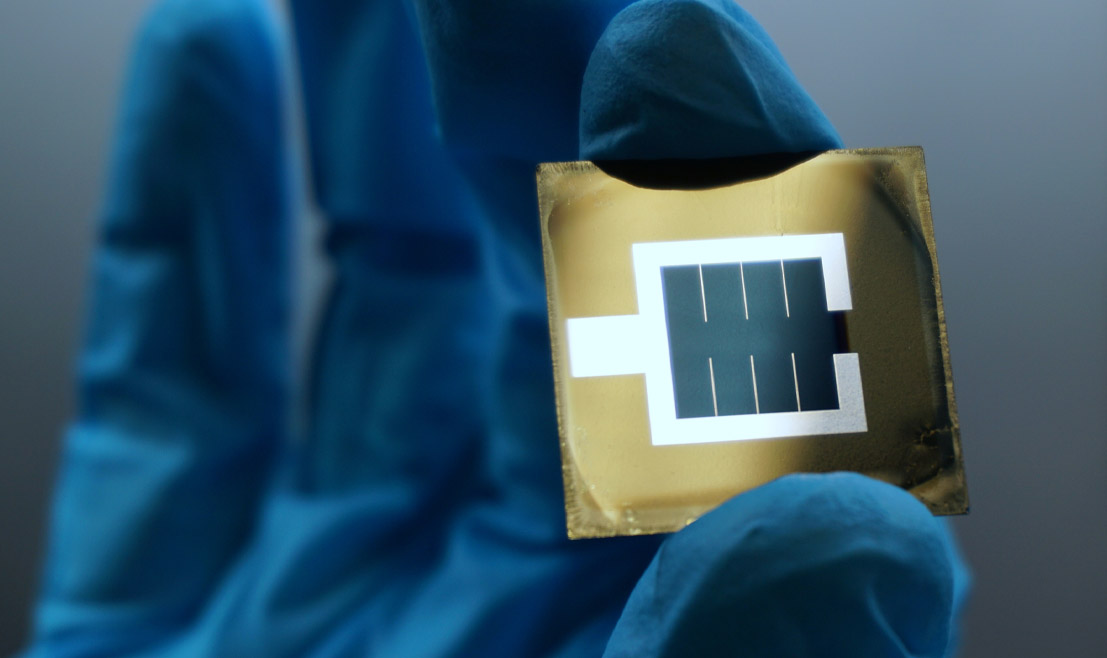
According to Bernd Rech, the professor and scientific director of HZB, in a statement, at 32.5%, the efficiency of the solar cell that uses silicon and perovskite is now in ranges previously only achieved by expensive III/V semiconductors.
According to a graph released by the National Renewable Energy Lab (NREL) in the United States, the new technology is considered the best solar cell currently available. Until now, the last record reached 31.25% efficiency, however, only with more expensive devices. Nevertheless, it is important to remember that the new efficiency record was recorded independently.
Scientists In Greece Develop First Solar Power Plant That Uses Graphene – Perovskite
Researchers from the University of Rome Tor Vergata in Italy partnered with researchers from the Hellenic Mediterranean University in Greece to develop graphene – perovskite solar panels that may be more efficient, being produced with 2D materials, that is, two-dimensional.
According to the creators, these solar energy panels, installed on the island of Crete, can be integrated with each other, thus generating the first power plant with graphene – perovskite panels.
The unit can generate energy on a large scale, something that until now seemed possible only in controlled laboratory environments. According to the lead author of the study, engineering professor Francesco Bonaccorso, the work of the scientists is the result of about 5 years of research focused on scaling up the use of graphene solar panels.
Brazil Installs Half a Million Solar Energy Systems Just In 2022
Brazil reached the mark of 500 thousand installed photovoltaic solar energy systems this year, according to data from the National Electric Energy Agency (Aneel) gathered by Portal Solar. This number is the highest ever seen in a single year in the national distributed generation (GD) market, a sector that allows consumers to produce their own energy.
The installations made by October 20th account for almost one-third of the total in Brazil, which totals 1.7 million systems. Throughout the year, the technology added 4.8 GW and has already generated benefits for over 650 thousand consumers. A large part of the connections made this year are residential, totaling 413 thousand. Next come rural consumption classes (42.3 thousand), industrial (5.2 thousand), and commercial (41.9 thousand).







Seja o primeiro a reagir!