





 English
  Francês
  Alemão
  Italiano
  Japonês
  Norueguês
  Portuguese
  Spanish
  3 min of reading


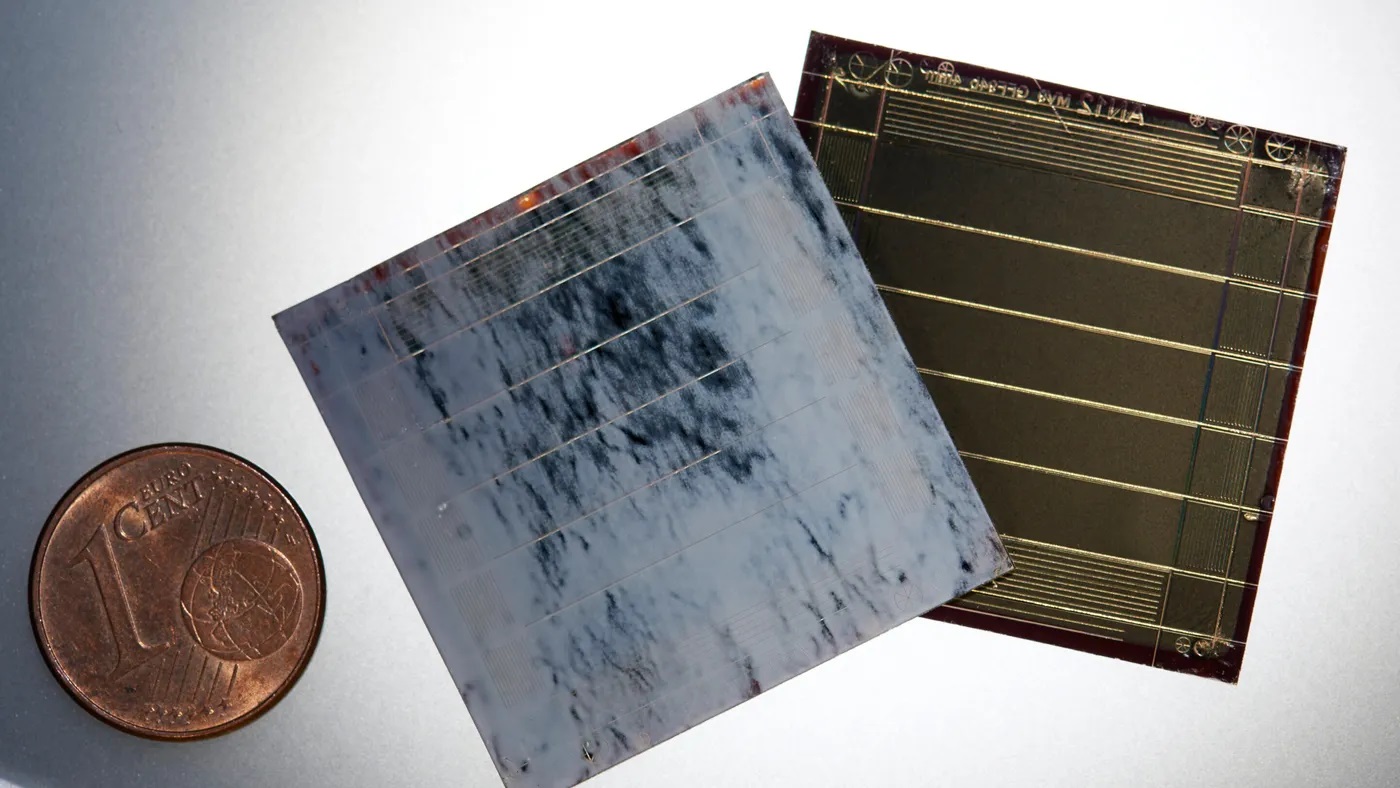
Researchers from Germany Developed Solar Panels That Look Like Marble Stones. The Equipment Could Be Used by the Construction Industry and Installed on Building Facades
Researchers from the Karlsruhe Institute of Technology (KIT), located in Germany, created perovskite solar panels that resemble marble stones. The new technique developed makes it possible for the modules to be used in construction, as cladding for buildings or warehouses. To color the perovskite solar panels, the researchers used an inkjet printing technique, which is much more efficient for coloring larger areas and is also significantly cheaper compared to conventional techniques.
Read Other Related News
- Solar Energy Company Develops Solar Panels That Can Be Attached to Any Home Roof and Withstand Winds of Up to 210 km/h
- Architect Develops New Generator Capable of Improving Solar Panel Efficiency by 35%
- Organization Gerando Falcões Will Install Solar Panels Capable of Generating Energy for 240 Houses in a Slum in São Paulo’s Interior
- Ship from China Will Disembark 619,000 Solar Panels for Ceará Solar Power Plant
- With 895 Solar Panels, Ceará Inaugurates the Largest Public Solar Plant in the State
Understand How Marble-Like Solar Panels Are Made


According to one of the researchers and lead author of the study, Ulrich W. Paetzold, the sale of this technology is not yet available due to the instability of perovskite solar panels and also due to the difficulty of transferring the high efficiencies achieved on small scales to larger scales.
With the arrival of this new technology, panels that look like marble stones can be integrated into previously unused parts of buildings, such as facades, without compromising the architectural design. The coloring technique is based on reflective pigments printed using inkjet technology and can be adapted for perovskite solar panels of various sizes.
-
With 160,000 m² of collectors, an area larger than 20 football fields, Silkeborg, in Denmark, hosts a solar thermal plant that heats 19,500 homes and could become the largest solar heating plant in the world.

-
A study reveals the expansion of renewable energy procurement in Brazil and shows how companies are taking advantage of opportunities to reduce expenses, ensure energy efficiency, and strengthen strategic environmental commitments.

-
Roraima bets on the sun to escape high tariffs: Amid the energy crisis and price hikes, solar energy is growing in Roraima and transforming consumption in the North region.
-
Mato Grosso do Sul excels in the sugar-energy sector: the state reaches a milestone of 22 operating mills and accelerates the production of clean energy in MS with a focus on sustainability.


Another benefit generated by the technique is that painting these solar modules does not require an incident light angle. Thus, the color or texture appears the same regardless of the viewing perspective, keeping the ability to absorb sunlight almost invariant.
Perovskite Solar Panels Reached 60% of Their Original Efficiency
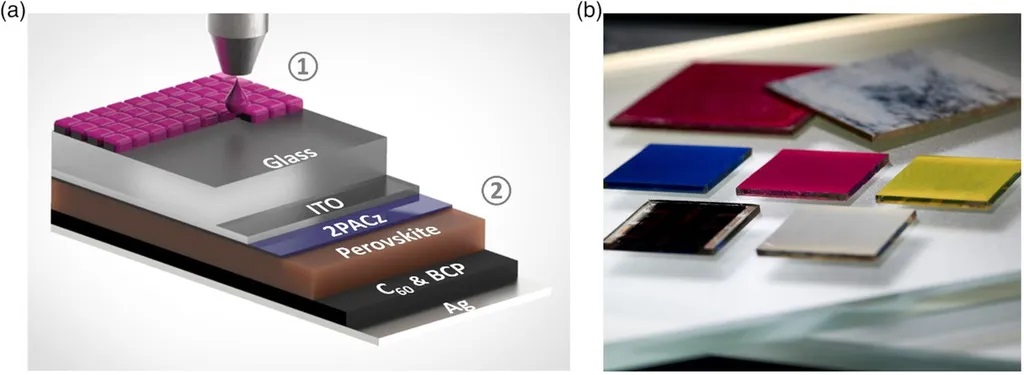
In the tests conducted by the researchers in the laboratory, the solar panels painted in cyan, yellow, and magenta reached 60% of their original efficiency in converting sunlight into electrical energy.
According to the researchers, so far, the analyses have been limited to basic paint colors, namely white, magenta, cyan, and yellow. However, this dyeing technique is capable of producing prints with more vivid colors, with textures and patterns that can be applied to any perovskite solar panel.
Perovskite Solar Panels Can Reduce Electricity Bills
As the printing process developed by the researchers is conducted with ink jets, the colors can be mixed in almost infinite ways, developing complex dyeing patterns.
During the tests, the researchers created solar panels that resembled various materials used as cladding in construction. The perovskite panels that mimic white marble, for example, achieved a very good energy efficiency, that is, the ability to generate energy from sunlight, of 14%. This result was achieved by coloring an area of just 4 cm² of the photovoltaic module.
According to the professor and leader of the research, Ulrich W. Paetzold, for a solar generation system that will be on the facade of buildings, it can be stated that, even with very low energy efficiency, it will still be much better than a simple concrete wall that will not produce any energy.








Seja o primeiro a reagir!