





 Português
  Inglês
  Espanhol
  4 min de leitura
  0 comentários


Researchers Made a Surprising Discovery When Finding Unknown Forms of Life Living Inside Rocks Like Marble and Limestone
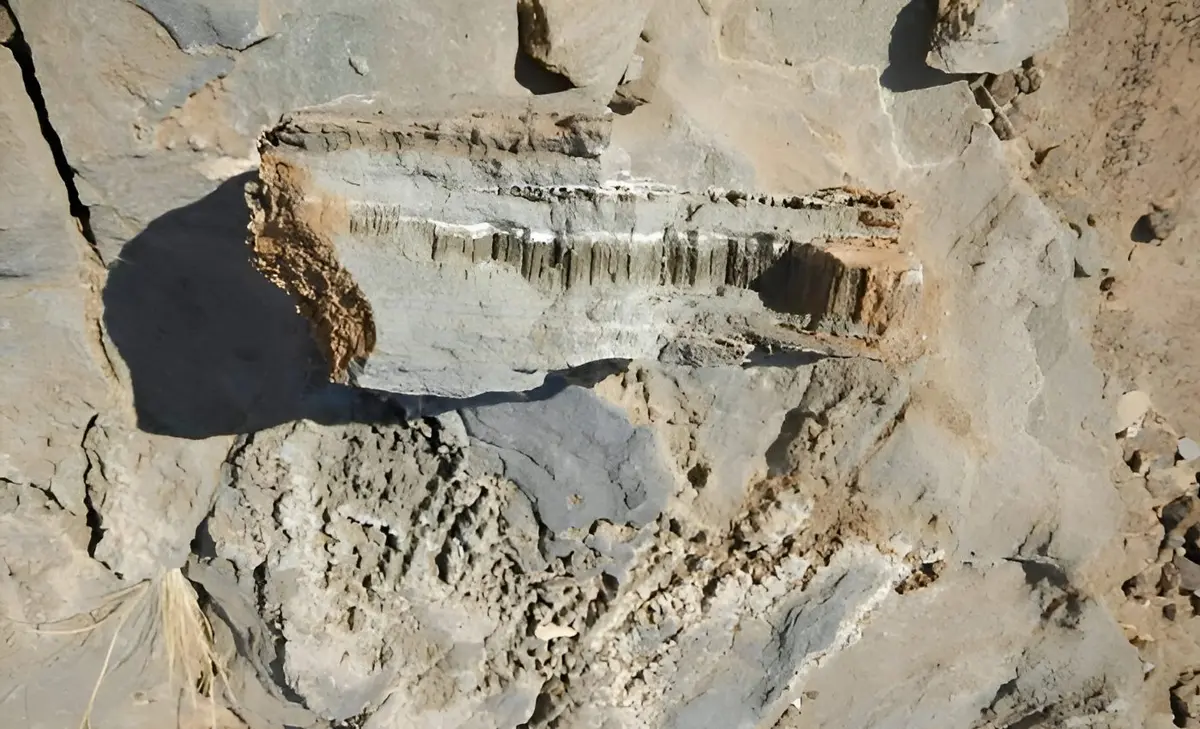
In desert regions of Namibia, Oman, and Saudi Arabia, scientists found something surprising: tiny tunnels in marble and limestone rocks.
The patterns do not resemble any known geological process. Now, researchers believe they may be the work of ancient microorganisms.
An Unexpected Find in the Middle of the Desert in Marble and Limestone
During fieldwork in Namibia, researchers from Johannes Gutenberg University Mainz (JGU) noticed something unusual in the rock formations.
-
A bright yellow mushroom imported from Asia escaped from a cultivation farm in the United States in 2010 and is now aggressively spreading across 25 states, destroying entire communities of native fungi in American forests.

-
Buried under China, a colossal machine weighing 20,000 tons began operating as the largest neutrino detector on the planet and, in just 59 days, surpassed results that science took half a century to achieve.

-
Iran enters the center of a climate alert after the war emitted 5.6 million tons of CO2 in two weeks, surpassing the annual pollution of entire countries.

-
Lunar exploration may change after a Chinese probe finds a “cavity” of radiation that reduces the impact on astronauts by up to 20% at certain times on the Moon.

Professor Cees Passchier was the first to observe the thin, parallel tubes that run through the rocks.
“We were surprised because these tubes are clearly not the result of a geological process,” Passchier stated. According to him, it is unclear whether this form of life still exists or if it has already disappeared.
These tubes were found in marble and limestone, in distinct locations.
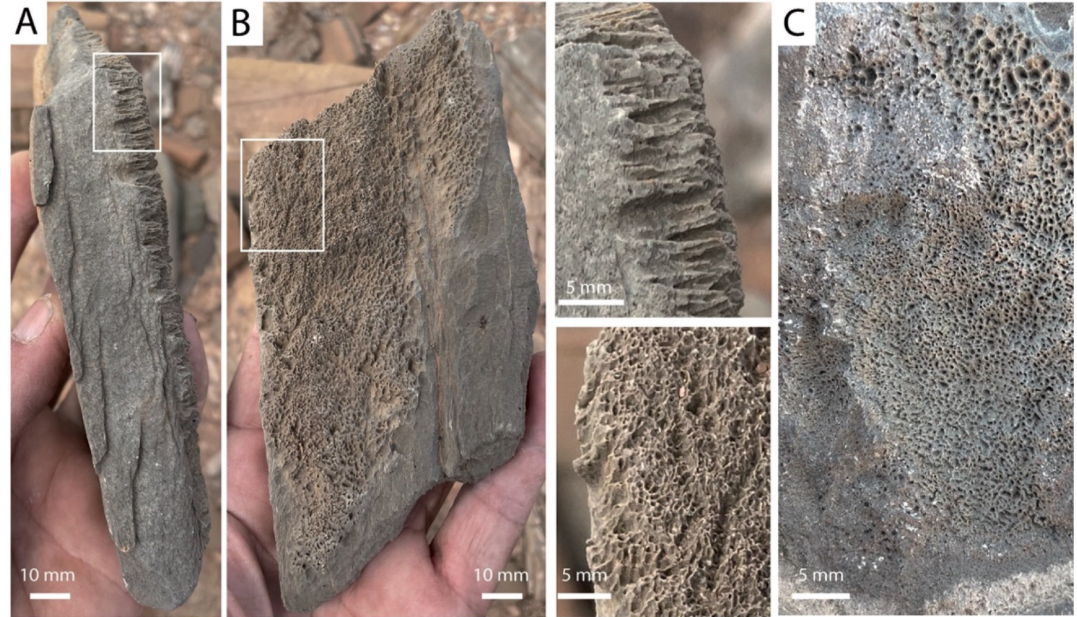
The structures are thin, about half a millimeter wide, but can reach up to three centimeters in length. In some cases, they extend for ten meters.
Tunnels That Intrigue Specialists
The tunnels follow very organized patterns, something unusual for natural formations caused by wind or water.
Instead, researchers noticed parallel bands with caliche crusts around them, suggesting a different, possibly biological process.
The material found in the tubes also drew attention. They were not hollow.
Instead, they contained a fine powder of calcium carbonate, which may indicate that some type of organism fed on the rock and left this residue.
The first observations occurred over 15 years ago in Namibia, but it was only recently that scientists found similar structures in Oman and Saudi Arabia. This expanded the relevance of the study.
Multidisciplinary Collaboration to Understand the Origin
To deepen the investigation, scientists from the University of Mainz partnered with Dr. Trudy Wassenaar, an expert in molecular microbiology and genomics.
They raised the hypothesis that the tunnels were created by endolithic microbes. These organisms live inside rocks and are known to withstand extreme conditions, such as heat, drought, and lack of light.
Even so, there is a significant challenge: the structures are between one and two million years old. They are too ancient to preserve DNA or proteins that would allow the identification of the microorganism. Still, biological traces have been found in the samples.
“What is so exciting about this discovery is that we do not know what microorganism this is,” commented Passchier. “It could be a known form or completely new.”
Life Without Light and Its Relationship to Climate
One aspect that intrigues scientists is that the tubes are located deep inside the rocks, away from sunlight. This means that the form of life that created them survived without relying on solar energy, which is uncommon.
According to researchers, the formation of these structures may have occurred during a wetter period in the deserts where they were found. This indicates that the environment was once different and more favorable to subterranean life.
But the impact of this discovery may go beyond scientific curiosity.
Potential Influence on the Carbon Cycle
Microorganisms that interact with rocks can affect the global carbon cycle. By breaking down minerals, they help release or retain carbon, influencing the balance of CO₂ in the atmosphere.
Professor Passchier emphasizes the importance of understanding these forms of life, even if they are ancient. “This form of life may have been important for the global carbon cycle. Therefore, it is essential for the scientific community to be aware of this, ” he stated.
If microorganisms truly participated in the transformation of calcium carbonate, their role in regulating the Earth’s climate may have been more significant than previously thought.
Buried Mystery, But Full of Possibilities
Despite the discoveries, many questions remain. Who created these tunnels? Why in such specific locations? And what more can we learn by investigating this phenomenon?
Scientists continue to analyze samples and plan new studies to try to answer these questions.
What is already known is that these structures are not normal, do not follow known geological patterns, and show clear signs of biological activity.
For now, the mystery remains buried under millions of years of rock and dust. But scientists are on alert. Those tiny tunnels may hold clues to a form of life that survived without light, in the heart of the Earth. And perhaps, they played a fundamental role in the planet’s balance.
The complete study is available in the Geomicrobiology Journal.







Seja o primeiro a reagir!