





 English
  Francês
  Alemão
  Italiano
  Japonês
  Norueguês
  Portuguese
  Spanish
 5 min of reading


Para-Maranhão Basin Is The Great Promise To Increase Oil Production In National Territory, According To Researchers
The advances of Petrobras are getting bigger, and in the coming years, the national company will be able to count on exploration in basins in the state of Pará, according to researchers. They estimate that 8 sedimentary basins in the state could bring a production of more than 20 billion barrels of oil. However, the extraction of this natural resource takes place in deep waters, which requires high technology and investment for exploration.
The coast of the state of Pará is part of the area known as the Equatorial Margin, which comprises 5 main sedimentary basins: Para-Maranhão, Amapá Deep Waters, at the mouth of the Amazon River, Ceará, Barreirinhas, and Potiguar, all with potential for exploration up to 3,000 meters deep.
Understand More About Oil Exploration And Production By Petrobras In Deep Waters, Using Cutting-Edge Technology


The Data Is Still Not Precise, But Projections Are Promising And Indicate Billion-Barrel Oil Production By Petrobras
In an interview with the portal “O Liberal”, published on May 14, 2022, the executive manager of exploration at Petrobras, Mário Carminatti, points out that, although the data is not yet very precise, there is a high probability that the oil-generating rocks that exist in neighboring countries are also in the territory of Pará. More geophysical data needs to be used, and research in the region must be conducted to be sure of the extraction potential.
-
Unemployment rises again to 5.8% at the beginning of 2026, raising alarms about the end of temporary positions and its impact on the Brazilian job market.

-
Document organization can cut invisible costs in small businesses, a simple step that prevents waste, rework, and losses in daily operations.

-
Brazilian giant expands borders in the Southeast: Petrobras confirms new oil discovery in ultra-deep waters in the pre-salt of the Campos Basin.

-
Alert in the global energy market: Severe tropical cyclone hits the coast and disrupts gas production at major plants in Australia, threatening global supply.


However, in the same interview with the portal “O Liberal”, other researchers such as Allan Kardec Dualibe Barros Filho, Ronaldo Gomes Carmona, and oil exploration consultant Pedro Victor Zálan point to a very optimistic scenario. They affirm that the Para-Maranhão basin is the most promising in the region, receiving the name “new pre-salt” because it has a vast oil reserve, with high potential for exploration and recovery.
According to these researchers, production is estimated to be between 20 to 30 billion barrels, half of what has been explored in the Pre-Salt to date. This great discovery will contribute to greater economic development in the region and benefit states such as Amapá, Pará, and Maranhão, making the north a prominent region in Brazil.
However, Mário Carminatti disagrees with the comparison to the Pre-Salt, offering more skeptical observations based on the geophysical data obtained so far. Still, he states that we should be enthusiastic because the exploration of this region greatly contributes to the sustainability of national oil and gas production.
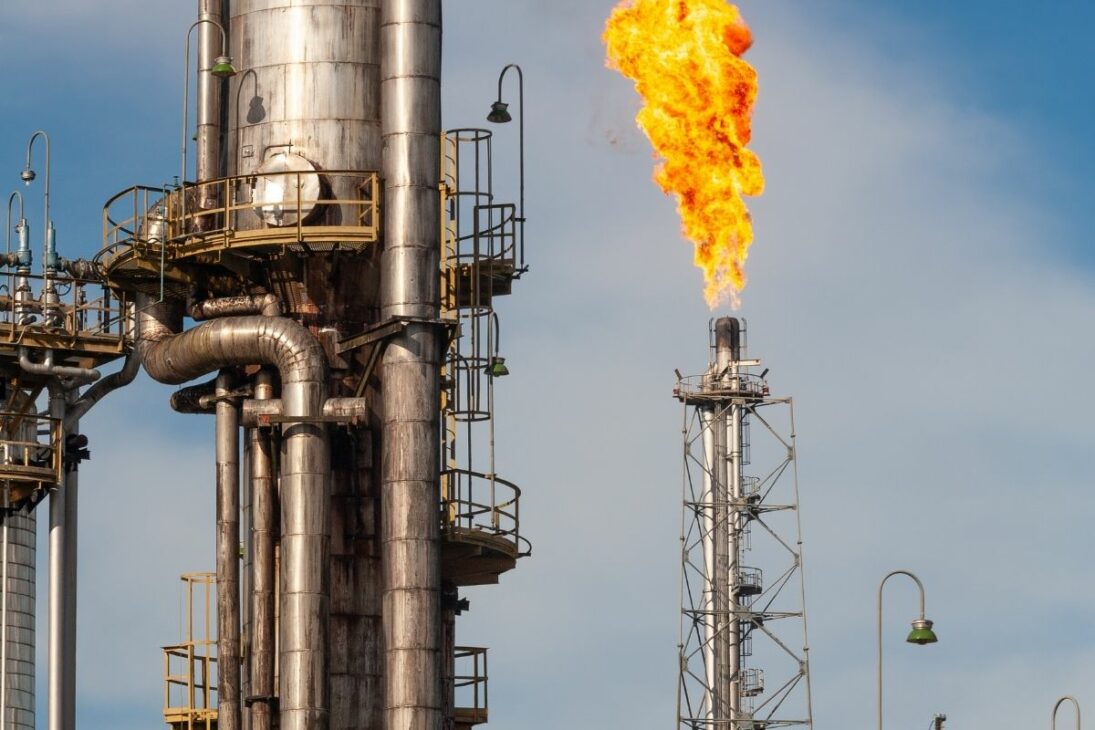
The Exploration Of The Amapá Deep Waters (Mouth Of The Amazon) Was Granted In 2013 To The Consortium Formed By TotalEnergies, Petrobras, And BP, But In 2021, Only Petrobras Decided To Continue With The Concessions
In 2013, the National Petroleum Agency (ANP) granted the exploration of the Foz do Amazonas Basin region to a French multinational called TotalEnergies, which invested R$ 250 million for five blocks in the area. This company was part of the consortium along with Petrobras and BP. However, in 2021, BP and TotalEnergies opted to leave the consortium, and only Petrobras remained.
In this new scenario, Petrobras becomes the main operator in the Pará basin region, specifically, with potential for deep waters. As this new phase requires high technology, the state-owned company intends to invest more than R$ 2 billion across the entire equatorial margin. The objective of this exploration is to promote harmony in the local ecosystem sustainably and contribute to economic development, offering jobs and generating profits.
Regional Exploration Faces Some Environmental Risks And Challenges Ahead, As There Is Limited Knowledge About The Local Ecosystem
The exploration of this new region raises concerns among some environmentalists and even deep-water exploration specialists. This is because the local ecosystem is still being studied, and there is limited knowledge about what oil exploration might entail for the area. A study published in 2016 by Science Advances showed that there are corals in the deep regions of the mouth of the Amazon River, for instance.
Additionally, the activity may generate environmental liabilities and face technical requirements from environmental legislation. The Amazon Reef System, known by the acronym GARS, discovered in 2016, is one of the greatest concerns of specialists. After all, the occurrence of this formation in the world takes place at a rate of only 5 to 10%, making it very rare and a true natural relic of Brazil. As it is a recent discovery, little is known about the local biodiversity, and studies are still being conducted.
There is also a fear that the exploration might affect fishing extraction activities in the region, impacting around 2 million people who rely on this activity for their livelihood. Nevertheless, Mário Carminatti points out that Petrobras has a strong history of social and environmental responsibility and has always been committed to maintaining collaborations with universities and segments of society to disseminate potential risks. Moreover, the company is highly concerned with local development and does not intend to advance without first analyzing all scenarios and employing the use of technology and innovation to ensure safety.
Two Processes For Environmental Licensing In The Region Have Begun And Follow Rigid Criteria To Mitigate Potential Risks
Carminatti states that the company invests heavily in environmental studies and rigor in procedures to ensure the safety of operations. Thus, two environmental licensing processes for exploration have already begun. The first refers to concession FZA-M-59_R11 and is in the pre-evaluative stage prior to the Pre-Operational Assessment. Approval is expected in the second semester of 2022.
The second licensing process involves 5 concessions administered by Petrobras in the region: FZA-M-57_R11, FZA-M-86_R11, FZA-M-88_R11, FZA-M-125_R11, and FZA-M-127_R11. These are already in the analysis stage by Ibama, regarding the report submitted on the Environmental Impact Study (EIA-RIMA).
A third licensing process is still being evaluated and encompasses the concession of the Para-Maranhão Basin. However, its request is still being re-evaluated to ensure greater adherence to Petrobras’ strategic planning and to bring important aspects of safety to operations.








Seja o primeiro a reagir!