





 Portuguese
  English
  Spanish
  5 min of reading
  0 comments


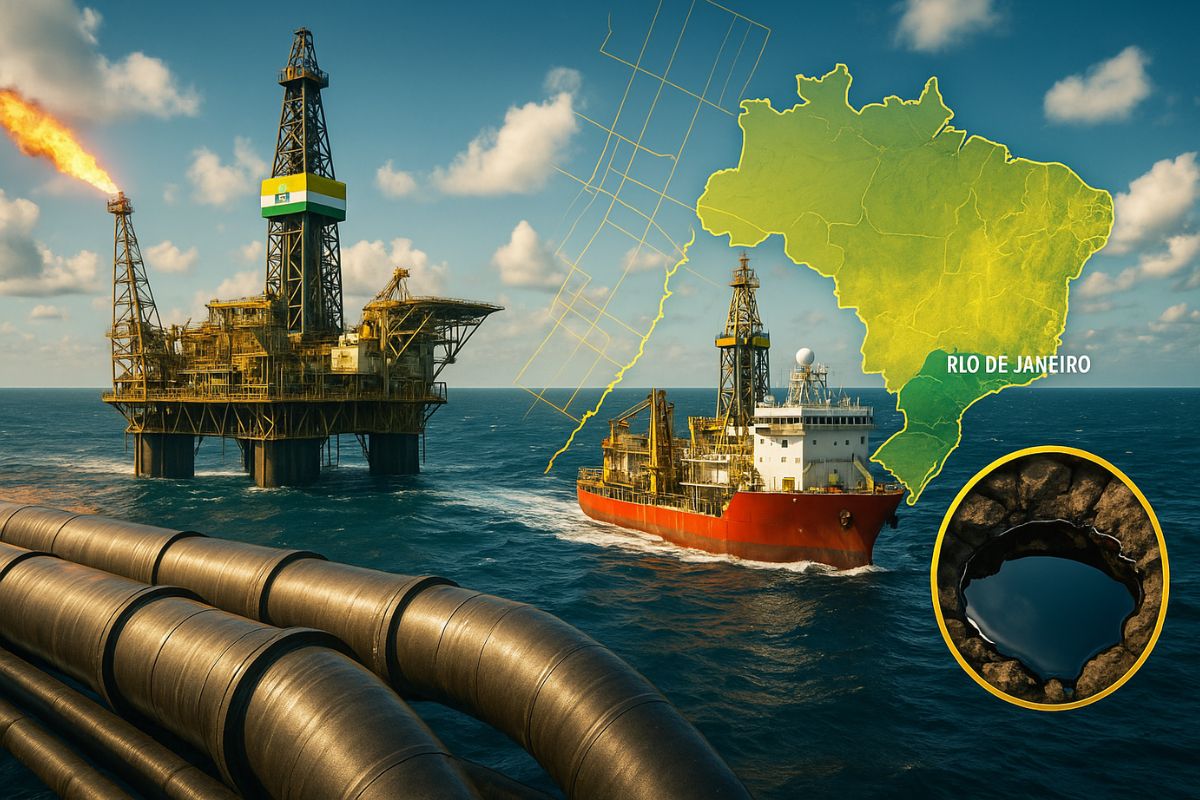
Petrobras’ Discovery in the Southwest Tartaruga Verde Block, 108 km from the Coast of Campos dos Goytacazes, Confirms Oil of Excellent Quality in Post-Salt Area and Opens New Front to Assess Production Potential in the Campos Basin.
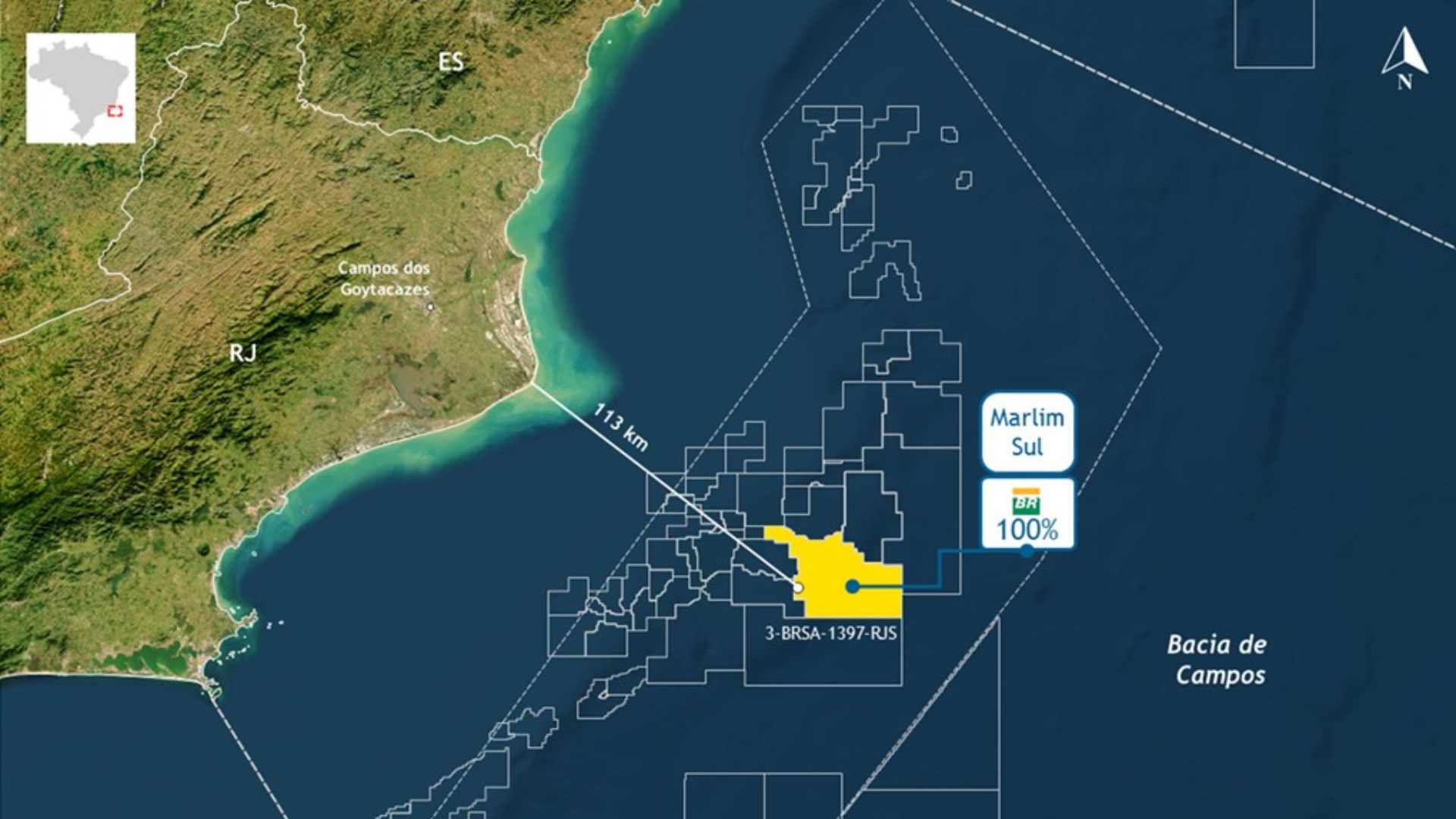
Petrobras announced the discovery of high-quality oil in an exploratory well in the post-salt layer of the Campos Basin, off the coast of Rio de Janeiro. The oil was identified in the Southwest Tartaruga Verde block, located 108 kilometers from the coast of Campos dos Goytacazes, in a region with a depth of 734 meters.
According to Petrobras itself, the drilling of the well has been completed and the initial tests, which involved electrical analyses, identification of gas signals, and fluid collection, confirmed the presence of oil in the reservoir. The material is now undergoing laboratory examinations, a crucial step to detail the reservoir’s quality and indicate the actual production potential of the area within the Campos Basin.
Where the New Petrobras Discovery in the Campos Basin Is Located
The new exploratory well of Petrobras is in the block known as Southwest Tartaruga Verde, a maritime area positioned about 108 kilometers from the coast of Campos dos Goytacazes, in the northern Fluminense region.
-
Brazilian giant expands borders in the Southeast: Petrobras confirms new oil discovery in ultra-deep waters in the pre-salt of the Campos Basin.

-
Alert in the global energy market: Severe tropical cyclone hits the coast and disrupts gas production at major plants in Australia, threatening global supply.

-
Petrobras finds high-quality oil in the pre-salt at 113 km from RJ and reignites expectations about strategic reserves in the Campos Basin.

-
Ocyan opens registrations for startups focused on innovation in the oil and gas sector and will select projects for Innovation Day with the support of Nexio.


The water depth in the region is 734 meters, which characterizes the operation as exploration in open sea, but still at an intermediate depth compared to deeper areas of the pre-salt layer.
The Campos Basin is an extensive maritime area located between Rio de Janeiro and Espírito Santo, historically responsible for a large part of Brazil’s oil production.
For decades, the Campos Basin has been the main production hub for Petrobras, concentrating mature fields and development projects in different phases. Even with the advancement of the pre-salt in other basins, the region remains strategic as a frontier for exploration and production recovery.
What Is Post-Salt and Why It Matters for Petrobras
The new discovery by Petrobras is in a post-salt area of the Campos Basin. The post-salt is the layer of rock above the thick salt layer in the seabed.
Geologically, this means that the oil is found at shallower depths than in the pre-salt, which can simplify some aspects of exploration.
The pre-salt corresponds to reservoirs that are below the salt layer, at much greater depths and in environments of higher technical complexity, but that tend to concentrate large volumes of high-quality oil.
By finding high-quality oil in a post-salt area, Petrobras reinforces a complementary front to the pre-salt, combining older fields, new discoveries, and potential projects at different risk and investment levels.
Initial Tests Confirm Presence of Oil and Open Laboratory Phase
In the exploratory well drilled in the Southwest Tartaruga Verde block, Petrobras completed the drilling phase and conducted reservoir evaluation tests.
These tests included electrical analyses along the well, detection of gas signals, and fluid sample collection, which are standard practices to identify the presence of hydrocarbons.
The preliminary results confirmed that there is oil in the reservoir, making it a relevant discovery. The next phase is to send the material for laboratory examinations, where characteristics such as viscosity, density, composition, and physicochemical properties will be analyzed.
From this information, Petrobras will be able to better estimate the production potential of the area, simulate different development scenarios, and decide on potential plans for new wells or integration with existing systems in the Campos Basin.
Block History and Role of PPSA in the Area
The Southwest Tartaruga Verde block, where Petrobras made the new discovery, was acquired in 2018 during the 5th Production Sharing Round.
In this regulatory model, Pré-Sal Petróleo S.A. (PPSA) acts as the manager of the sharing contracts, monitoring project execution and measuring profit oil, which is the production share allocated to the Union.
In the area in question, Petrobras is the operator with 100 percent participation, meaning it conducts exploration, drilling, and evaluation activities.
The combination of production sharing with full operation by Petrobras creates an environment in which the government closely monitors the use of resources, while the company applies its experience in offshore exploration and field development in Brazilian waters.
Campos Basin Remains Strategic Even with Advances in the Pre-Salt
Although Petrobras has been strongly focused on the pre-salt in recent years, especially in the Santos Basin, the Campos Basin remains an important core in its project portfolio.
The region is home to mature fields where the company is working on revitalization, and areas with exploratory potential in post-salt and in still little-tested structures.
This new discovery reinforces this view. Even with the growth of production in the pre-salt, the Campos Basin continues to be a relevant exploration hub, supporting the development of new wells and the repurposing of existing infrastructure, which helps dilute costs and extend the lifespan of already installed systems in the region.
Other Recent Discoveries by Petrobras in Deep Waters
In addition to the new discovery of high-quality oil in the Campos Basin, Petrobras has been reporting advances on other fronts.
The state-owned company recently highlighted significant finds in the pre-salt of the Santos Basin, in blocks such as Aram.
In the Aram block, for example, a well was identified located 248 kilometers from the city of Santos, off the coast of São Paulo, in a water depth of 1,952 meters.
According to Petrobras, this was the second well classified as high-quality oil in the same block just this year, reinforcing the exploratory potential of the area and the role of the Santos Basin as one of the pillars of future production.
What the Discovery in Campos Could Mean for Petrobras’ Future
From a strategic standpoint, the discovery of high-quality oil in the post-salt of the Campos Basin is another element in Petrobras’ attempt to balance its portfolio between already consolidated areas and new frontiers.
Campos offers the advantage of having installed infrastructure, an operating history, and accumulated knowledge of the reservoirs’ behavior in the region.
If laboratory tests confirm good reservoir conditions and economic viability, the area could be added to other ongoing projects, helping to maintain stable or growing production amidst a gradual energy transition scenario.
The state company now has another card to play within a board that involves the Campos Basin, Santos Basin, and other offshore regions under different exploration regimes.
In light of this scenario, the question for you is: in your view, should Petrobras prioritize further exploration in already known areas like the Campos Basin or allocate more resources to new frontiers and technologies outside the traditional oil and gas model?









Seja o primeiro a reagir!