





 English
  Francês
  Alemão
  Italiano
  Japonês
  Norueguês
  Portuguese
  Spanish
  6 min of reading
  27 comments


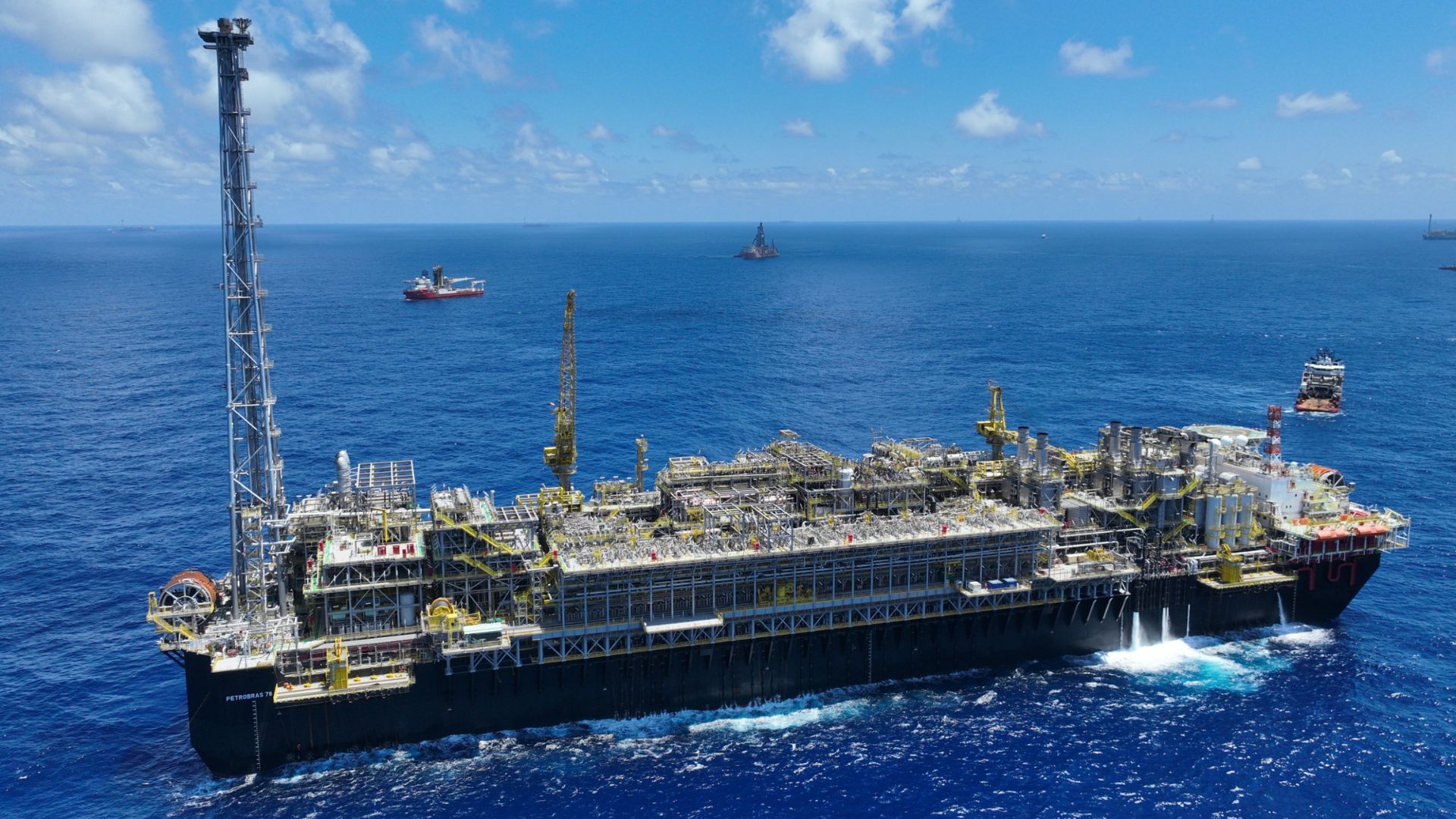


Petrobras Reported Strong Financial Performance in 2025, With High Net Income Driven by Increased Oil and Gas Production, Reinforcing Its Relevance in the Brazilian Energy Sector and the National Economy.
Petrobras ended 2025 with one of the most significant financial results in its recent history. According to a publication from the company on March 5, net income reached R$ 110.1 billion (US$ 19.6 billion), a figure that represents approximately 200% growth compared to 2024, when the result was R$ 36.6 billion. The performance reinforces the relevance of the state-owned company in the Brazilian energy sector, especially in an international context marked by volatility in oil prices.
Even in the face of a challenging scenario, with a 14% drop in Brent prices throughout the year, the company managed to present strong operational performance. The result was mainly driven by the growth in oil and gas production, operational efficiency, and the expansion of strategic projects linked to the pre-salt region.
Another relevant indicator was the Operational Cash Flow, which reached R$ 200 billion (US$ 36 billion) in 2025. This value demonstrates the company’s ability to generate resources from its operations, ensuring financial stability and supporting significant investments in exploration and production.
-
Petrobras announces new oil discovery in the pre-salt of the Campos Basin and reinforces Brazil’s prominence with high-quality reserves that can increase production and energy revenues.

-
Alert in the fuel market: Analysts and a former director of ANP warn that oil prices may worsen in the coming months due to global instability.

-
Ocyan brings executives and digital solutions to Macaé Energy 2026 and highlights offshore expansion with Nexio and a new base in Macaé.

-
Petrobras advances 4.6% with rising oil prices and the dollar, reigniting the debate on macro risks, pricing policy, and fiscal impact in Brazil.

In addition to financial performance, the company also expanded its contribution to the national economy. Throughout the year, Petrobras paid R$ 277.6 billion in taxes, government participation, and royalties, destined for the Union, states, and municipalities. These resources reinforce the company’s impact on public revenue and wealth generation in the Brazilian energy sector.
Record Production Drives Petrobras and Sustains Net Income Even with Brent Decline
The main driver behind Petrobras’ financial results in 2025 was the consistent growth in oil and gas production. Total production reached 3 million barrels of oil equivalent per day, consolidating a significant operational advance for the company.
The increase in production was crucial to offset the decline in international oil prices. With a higher volume produced and sold, the company managed to preserve margins and maintain a robust net income. According to the company’s president, Magda Chambriard, the result reflects the operational strategy adopted by the company throughout the year.
The executive emphasized that the increased oil and gas volume helped neutralize some of the effects of Brent’s decline. Additionally, the company was able to expedite projects and optimize operations, enhancing value generation for both shareholders and society.
This performance reinforces Petrobras‘ position as one of the main companies in the Brazilian energy sector, especially in the development of pre-salt reserves, which continue to be essential for expanding national production.
New Platforms and Operational Efficiency Expand Oil and Gas Production
The growth in Petrobras’ production in 2025 was a direct result of the commissioning of new production units and the optimization of existing assets.
Among the operational highlights are the FPSOs Almirante Tamandaré, P-78, in the Búzios field, and Alexandre de Gusmão, in the Mero field. These three units added 585,000 barrels of nominal production capacity per day, significantly expanding the company’s productive potential.
Other factors also contributed to the increase in production. Maintaining the peak production of the FPSO Sepetiba and the operational advancements of units like Maria Quitéria, Anita Garibaldi, Anna Nery, and Marechal Duque de Caxias helped to sustain the production growth curve.
In addition, the company recorded gains in operational efficiency in strategic areas, such as UN-BS and the Búzios field, considered some of the most productive assets in the state-owned company’s portfolio. This set of operational improvements directly contributed to sustaining the strong net income recorded by Petrobras in 2025.


Cash Flow of R$ 200 Billion Strengthens Petrobras’ Financial Solidarity
Another highlight of Petrobras’ performance was the high cash flow generated from its operations. The Operational Cash Flow reached R$ 200 billion, reflecting the company’s ability to convert production into resource generation.
This result was primarily supported by high-quality projects in the company’s portfolio. According to the financial director Fernando Melgarejo, the company’s strategy combines capital discipline, production expansion, and operational efficiency.
Even with the decline in oil prices throughout the year, the company managed to maintain strong cash generation. This performance ensures resources for future investments and strengthens the company’s position within the Brazilian energy sector.
Another factor that influenced the financial result was the exchange rate variation, especially the appreciation of the real against the dollar. Excluding currency effects and other unique events recorded during the period, the company’s net income would have been R$ 100.9 billion (US$ 18.1 billion).
The adjusted EBITDA, not considering unique events, reached R$ 244.3 billion (US$ 43.8 billion). This indicator was also benefited by the reduction of operational expenses throughout the year.
Billion-Dollar Investments Strengthen Expansion in the Brazilian Energy Sector
Petrobras maintained a high pace of investments throughout 2025. The total applied reached R$ 112.9 billion (US$ 20.3 billion), a figure that fell within the expected variation range in the company’s guidance.
A large portion of these investments was directed to the Exploration and Production segment, responsible for approximately 84% of the total applied by the company.
The resources were mainly directed to projects related to the development of pre-salt, including the construction of new FPSOs, drilling campaigns, and the expansion of underwater interconnections.
Another factor that influenced the volume of investments was the anticipation of deliveries in strategic projects. The acceleration of physical progress of platforms destined for the Búzios, Atapu, and Sépia fields contributed to increase production and enhance the company’s competitiveness.
This investment cycle directly impacts the growth of oil and gas production, as well as strengthening Petrobras’ presence in the Brazilian energy sector.
Record Exports Expand Petrobras’ Global Presence
The company’s operational performance also reflected in exports. In 2025, oil exports recorded an annual record of 765,000 barrels per day. Furthermore, the company achieved a new quarterly record in the fourth quarter of 2025, with 999,000 barrels per day exported.
This growth was driven by high domestic production and the effort to develop new international markets for the oils produced by Petrobras. The expansion of exports reinforces the company’s role in the global oil and gas market, as well as generating a positive impact on the Brazilian trade balance.
Petrobras Increases Public Revenue and Socio-Environmental Investments
The impact of Petrobras on the Brazilian economy goes far beyond its net income. In 2025, the company allocated R$ 227.6 billion in taxes to the Union, states, and municipalities, establishing itself as one of the largest contributors in the country.
Including government participation, royalties, and other charges, the total amount allocated to the public power reached R$ 277.6 billion. These resources help finance public policies in various areas, including infrastructure, health, and education.
Additionally, the company allocated approximately R$ 2 billion for socio-environmental investments, sponsorships, and donations throughout the year. These resources were directed both to voluntary projects and to mandatory commitments related to sustainability. This set of actions reinforces the company’s importance for the economic and social development of the Brazilian energy sector.
Reserves, Refining, and Dividends Show Petrobras’ Strategic Impact
The company’s operational results were also reflected in the growth of its oil and gas reserves. In 2025, Petrobras incorporated 1.7 billion barrels of oil equivalent into proven reserves.
This performance led to a reserve replacement ratio of 175%, even amid high production levels. The relationship between reserves and production, known as the R/P ratio, reached 12.5 years, showing the sustainability of the company’s portfolio.
In the refining segment, the company maintained a high level of utilization of its assets. The refining park registered a total utilization factor of 91%, keeping operations at a high level with operational safety. The production of diesel, gasoline, and aviation kerosene represented 68% of total production, reflecting the strategic focus on generating higher value-added fuels.
Furthermore, the Board of Directors approved the submission of a proposal for the payment of R$ 8.1 billion in dividends for the fourth quarter of 2025, with payments expected in May and June 2026. In total, throughout 2025, R$ 45.2 billion in dividends were distributed to shareholders, with R$ 17.6 billion allocated to the controlling group.
These numbers demonstrate how Petrobras continues to be one of the main economic engines of the country. The growth of oil and gas production, combined with strong cash generation and high net income, reinforces the company’s strategic role within the Brazilian energy sector and its importance for the national economy in the coming years.









Petrobras é uma potência, a tendência é crescer ainda mais. Todo tempo se descobre novas reservas
Faz o L
A Petrobras por conta da guerra vai produzir exportar mais petróleo