





 Portuguese
  English
  Spanish
  3 min of reading
  0 comments


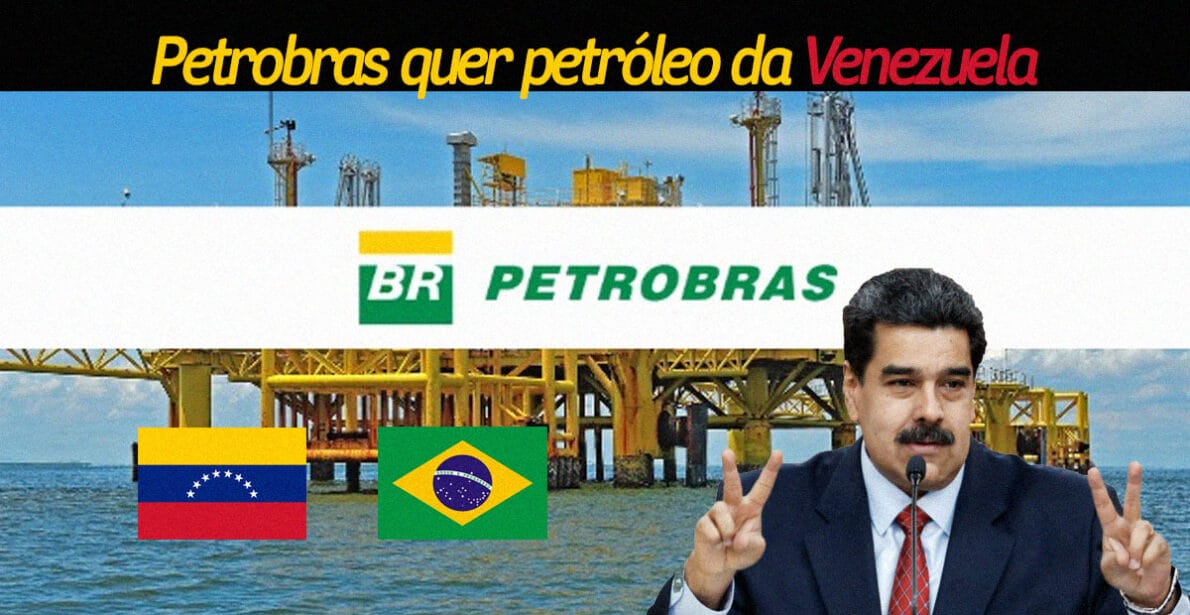
In A Strategic Movement, Petrobras Evaluates Exploring Venezuela’s Oil Reserves, Aiming To Expand Its International Presence. The Initiative Takes Place Amid Easing US Sanctions, Highlighting Growing Foreign Interest In The Oil-Rich Region.
What motivates one of Brazil’s largest oil companies to explore reserves in a country marked by international sanctions and economic crises? Petrobras, the Brazilian oil giant, recently sent a mission to assess resources in Venezuela, a strategic move that could redefine its position in the global market.
According to data from consultant Adriano Pires and the World Energy Review, Venezuela has the largest proven oil reserves in the world, with 303 billion barrels, surpassing Saudi Arabia and Iran. Brazil, on the other hand, ranks 15th, with 15.9 billion barrels, which explains Petrobras’s search for new exploration frontiers.
In March 2024, a Petrobras mission visited Venezuela to assess oil production fields in Maracaibo and the Centro de Refinación Paraguaná (CRP) Refinery. The visit, organized at the invitation of the Venezuelan Embassy in Brazil, aimed primarily to understand the current state of Venezuelan oil assets and explore potential future collaborations.
-
Unemployment rises again to 5.8% at the beginning of 2026, raising alarms about the end of temporary positions and its impact on the Brazilian job market.

-
Document organization can cut invisible costs in small businesses, a simple step that prevents waste, rework, and losses in daily operations.

-
Brazilian giant expands borders in the Southeast: Petrobras confirms new oil discovery in ultra-deep waters in the pre-salt of the Campos Basin.

-
Alert in the global energy market: Severe tropical cyclone hits the coast and disrupts gas production at major plants in Australia, threatening global supply.


According to a survey by Mordor Intelligence, several international oil companies are already operating in Venezuela, including Total SA (France), NK Rosneft PAO (Russia), Repsol SA (Spain), Eni SpA (Italy), China National Petroleum Corporation (CNPC) and China Petroleum & Chemical Corporation (Sinopec), among others. The presence of these industry giants highlights global interest in Venezuela’s vast reserves.
Moreover, a report by Reuters in 2024 revealed that after the return of US sanctions, over 50 companies have requested permission to operate in Venezuela, demonstrating growing foreign interest in the country. Among these companies, Chevron, Repsol, Eni, and Maurel and Prom have maintained their operational licenses, with Maurel and Prom having a license valid until May 31, 2026.
The high opacity of the Venezuelan government and the lack of transparency in the market make it difficult to obtain consolidated data about the sector, which poses an additional challenge for companies wishing to operate in the country.
According to CNN Brasil, in a news article published on Friday (02), Petrobras’s mission in March took place in the context of easing sanctions, following the Barbados agreement and direct talks between executives of the Brazilian state-owned company and the American Chevron.
Petrobras technicians concluded that, although many Venezuelan oil assets are deteriorated due to a lack of recent investment, they hold significant potential for recovery and exploration. They also identified the need to reorganize the Venezuelan industry, especially in refining and petrochemical areas.
In the past, Petrobras had a significant presence abroad through its subsidiary Braspetro and a Holding Board. Specifically in Venezuela, the state-owned company operated Petrobras Venezuela in Caracas and maintained partnership contracts with PDVSA and other partners. However, following the Lava Jato scandals, these operations were halted, and the Bolsonaro administration reduced the company’s international activities.
With Lula’s return to power, the internationalization project of Petrobras has been resumed, and the mission in Venezuela is part of this strategy. A technical and legal core has been organized to evaluate opportunities in areas of strategic interest, including the South American equatorial margin, the Gulf of Mexico, the Caribbean, and the Atlantic margins of Africa and South America.
Other Countries In Focus
Besides Venezuela, Petrobras teams have also been sent to assess opportunities in other countries such as Uruguay, Argentina, Colombia, Paraguay, Mauritania, Namibia, Angola, São Tomé and Príncipe, South Africa, Guyana, and Suriname. These initiatives aim to explore new areas and expand Petrobras’s international presence.
According to CNN Brasil, Petrobras stated in a note that, according to its business strategies defined in the 2024-2028+ Strategic Plan, the company constantly seeks value generation and the recomposition of its reserves through the acquisition of new exploratory areas, both in Brazil and abroad.
Although Petrobras does not have immediate investments planned in Venezuela, the mission carried out is an important step towards future collaborations, depending on the developments of the sanctions and the political environment in the region.
Do you think Petrobras should invest in new exploration frontiers outside Brazil or focus on resolving internal issues? Leave your opinion in the comments!









Seja o primeiro a reagir!