





 Portuguese
  English
  Spanish
  3 min of reading
  0 comments


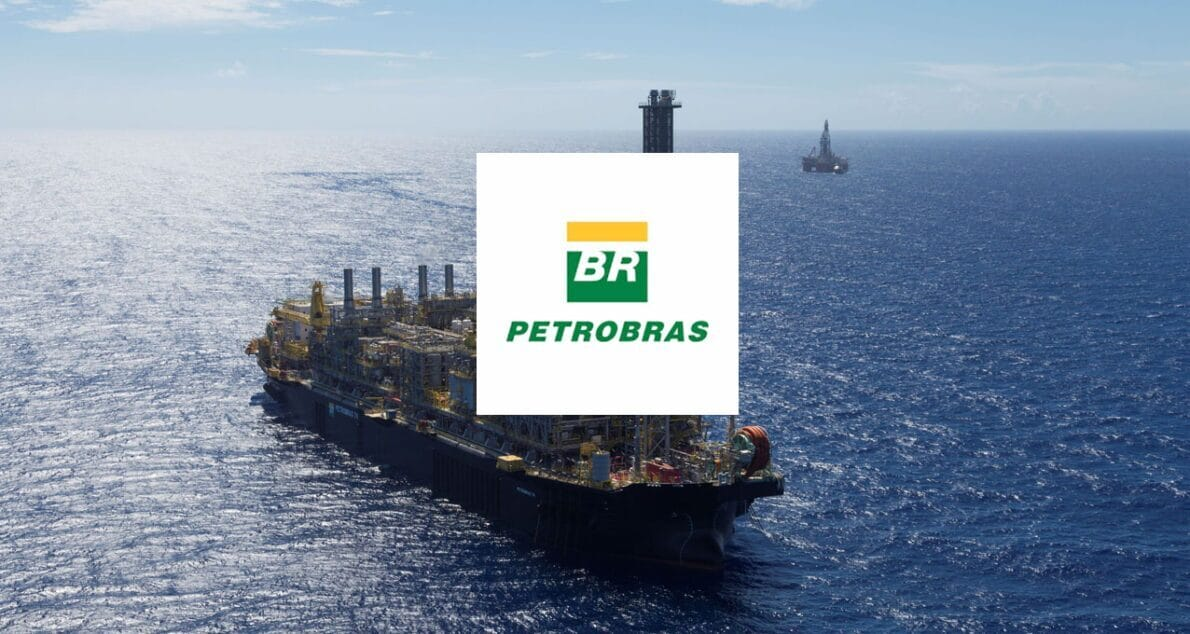
The Recent Announcement by Petrobras Has Left the Market in an Uproar: the Largest Brazilian State-Owned Company Presented a Business Plan That Promises to Invest Nothing Less Than US$ 111 Billion Between 2025 and 2029.
The impressive amount promises to shake the energy sector, bringing enormous economic and social impacts, including the creation of thousands of jobs. But what is really behind this billion-dollar initiative?
According to Petrobras, the plan, announced this Monday (18), still needs to be approved by the Board of Directors, which will meet on November 21 to deliberate on the proposal.
If approved, investments are expected to focus on strategic areas such as exploration, production, refining, and petrochemicals, reinforcing the company’s role as a leader in the national and global energy sector.
-
50 viaducts, 4 tunnels, 28 bridges, and 40 kilometers of bike paths: BR-262 in Espírito Santo will receive 8.6 billion reais for the largest engineering project in the state’s history, inspired by the Immigrant Highway in São Paulo.

-
Brazil produces too much clean energy and doesn’t know what to do with it: over 20% of solar and wind capacity was wasted in 2025 while investors flee and 509 renewable generation projects were abandoned in the last year.

-
Piauí will produce a new fuel that replaces diesel without needing to change anything in the truck’s engine and reduces pollutant gas emissions by half: truck drivers from all over the Northeast are already celebrating the news that will arrive later this decade.

-
A new Brazilian shopping center worth R$ 400 million will be built in an area equivalent to more than 4 football fields, featuring 90 stores, 5 cinemas, a supermarket, a college, and parking for 1,700 cars, potentially generating 3,000 jobs.


How Will the Billion-Dollar Amount Be Used?
The proposed US$ 111 billion will be divided among different lines of action.
The Exploration and Production (E&P) segment will receive the largest portion of the value, around US$ 77 billion, with US$ 7.9 billion allocated exclusively for exploration activities.
These initiatives include the search for new oil and gas fields and the intensification of operations in already known areas, aiming to achieve a total production of 3.2 million barrels of oil and gas equivalents per day (boe).
Another highlight is the investment of around US$ 20 billion in the Refining, Transport, Marketing, Petrochemical, and Fertilizers (RTC) segment.
These areas are essential for modernizing infrastructure, reducing operational costs, and enhancing the competitiveness of Petrobras in the international market.
Additionally, the plan foresees ordinary dividends of US$ 45 billion, with flexibility for extraordinary payments that can reach up to US$ 10 billion, ensuring significant returns for the company’s shareholders.
Economic Impact and Job Creation
Beyond the grand numbers, Petrobras’s investment plan has the potential to generate profound impacts on the Brazilian economy.
The state-owned company projects the creation of thousands of direct and indirect jobs, both in exploration and production operations and in infrastructure projects such as refineries and petrochemical plants.
The supply chain is also expected to benefit, with increased demand for equipment, specialized services, and advanced technologies.
Regions close to Petrobras’s operational areas may experience significant economic growth, driven by increased income and the expansion of local markets.
However, experts warn that logistical, environmental, and political challenges may hinder the execution of such ambitious projects.
Sustainability and Long-Term Vision
Another important point is that Petrobras’s plan is aligned with the Strategic Plan 2050 (PE 2050), which aims to establish the state-owned company as a global reference in the energy sector.
This includes a commitment to more sustainable practices and energy transition, a growing demand in the international landscape.
Diversifying investments, such as focusing on petrochemicals and fertilizers, is seen as a strategy to reduce dependency on crude oil and meet new market demands.
This movement could help Petrobras adapt to global changes and strengthen its position in a scenario of increasing international competition.
Challenges for the Future
Although projections are optimistic, the execution of the billion-dollar plan depends on various factors, such as board approval, political and economic stability, and Petrobras’s capacity to implement such complex projects.
There is also the challenge of balancing the pursuit of profits with the need to meet social and environmental demands.
Critics question whether Petrobras will be able to reconcile the interests of shareholders, workers, and communities impacted by its operations.
What to Expect from Brazil?
The proposal of the Business Plan 2025-2029 is more than an economic initiative; it is a promise of transformation for Brazil.
With massive investments and a robust production projection, Petrobras has the potential to propel the country to a prominent position in the global arena.
But, like any big bet, the risks are proportional to the rewards. Will the state-owned company be able to overcome the challenges and deliver the expected results?
And you, do you believe that this billion-dollar plan could revolutionize Brazil and establish Petrobras as a global powerhouse? Or will the challenges be too great for this promise to become a reality?








Seja o primeiro a reagir!