





 Portuguese
  English
  Spanish
 5 min of reading
  0 comments


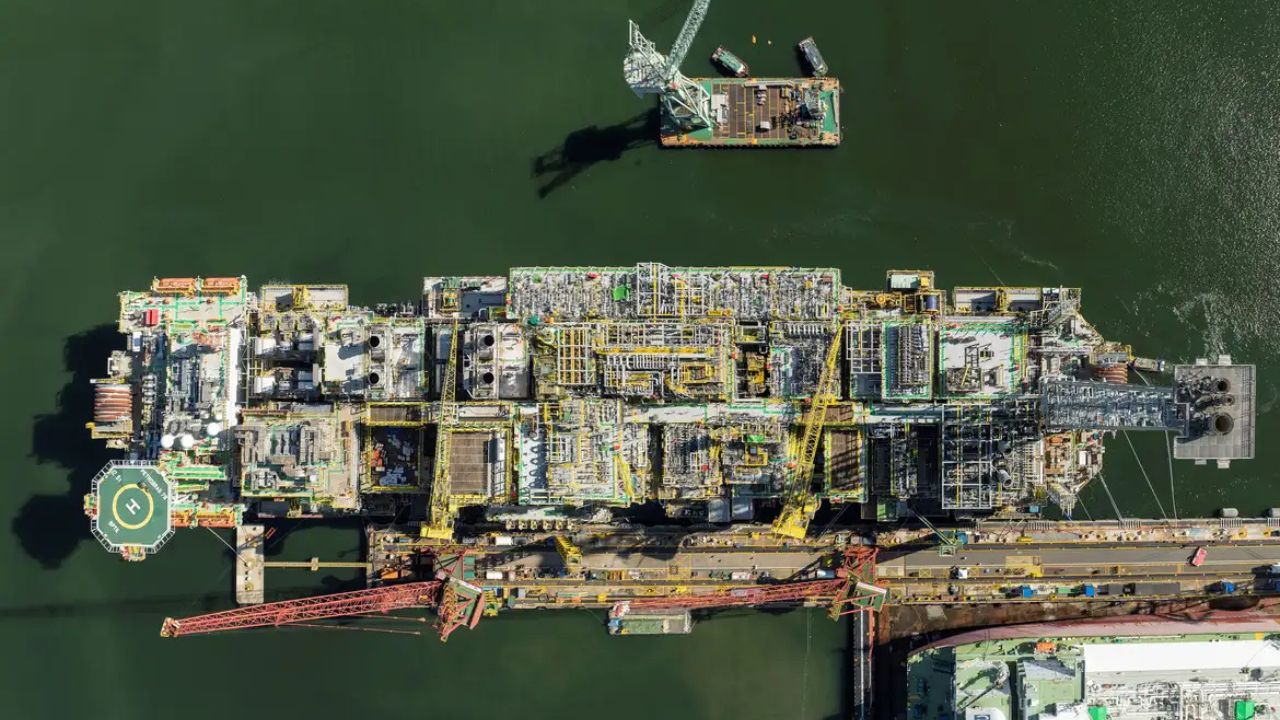
Petrobras Starts Operation of Platform P-78 in the Pre-Salt of the Campos Basin, in the Búzios Field, Expecting to Significantly Increase Oil Production
On Tuesday (30), Petrobras began operating the new P-78 platform in the Búzios Field, located in the pre-salt of the Campos Basin, expecting to increase oil production in the region by up to 20%. According to reports from Agência Brasil, the unit arrived in Brazil after departing from Singapore in July and represents a strategic milestone in expanding the state-owned company’s production capacity.
Start of Operation of Petrobras’ New Platform P-78
The new P-78 platform arrived at the Búzios Field on September 30, 2025, as reported by Agência Brasil and Petrobras itself. The unit is of the FPSO (Floating Production Storage and Offloading) type, with a capacity to produce up to 180,000 barrels of oil per day and compress 7.2 million cubic meters of natural gas daily.
This is the seventh platform installed in the Búzios Field, joining the P-74, P-75, P-76, P-77, Almirante Barroso, and Almirante Tamandaré units. With this, Petrobras strengthens its presence in the country’s largest deepwater field, located about 180 km off the coast of Rio de Janeiro.
-
Brazilian giant expands borders in the Southeast: Petrobras confirms new oil discovery in ultra-deep waters in the pre-salt of the Campos Basin.

-
Alert in the global energy market: Severe tropical cyclone hits the coast and disrupts gas production at major plants in Australia, threatening global supply.

-
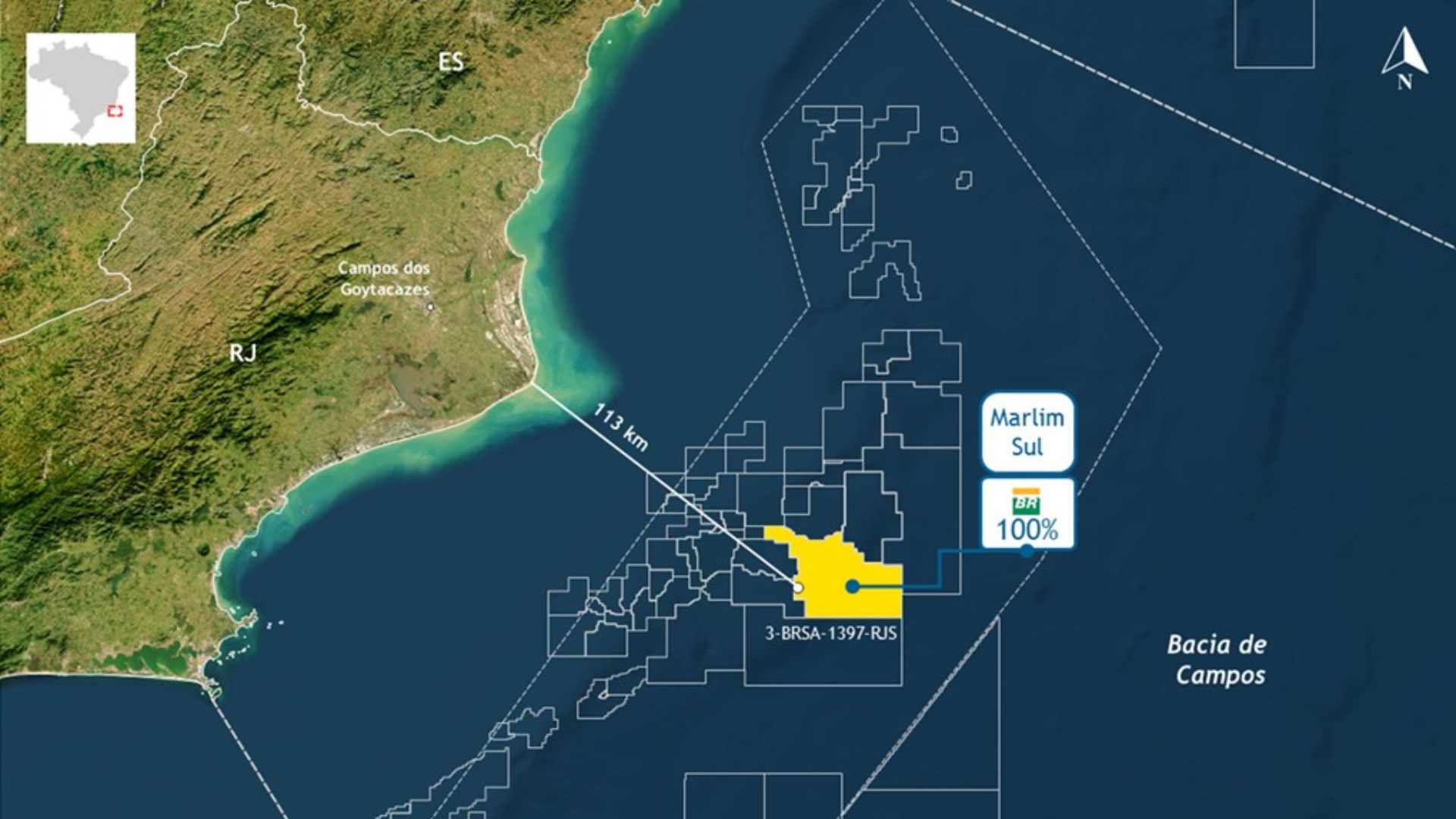
Petrobras finds high-quality oil in the pre-salt at 113 km from RJ and reignites expectations about strategic reserves in the Campos Basin.

-
Ocyan opens registrations for startups focused on innovation in the oil and gas sector and will select projects for Innovation Day with the support of Nexio.


Búzios Field: Pre-Salt Power in the Campos Basin
The Búzios Field is located in the Campos Basin, one of the most productive areas of the Brazilian pre-salt. According to data from the National Agency of Petroleum, Natural Gas and Biofuels (ANP), the pre-salt accounts for about 80% of the national oil and natural gas production.
Discovered in 2006, the pre-salt revolutionized the Brazilian energy sector, allowing the country to achieve greater autonomy and reduce dependency on imports. The Búzios Field, in particular, has stood out for its high productivity and the quality of oil extracted, which is considered light and of high commercial value.
The Campos Basin remains one of the pillars of oil production in Brazil, with ongoing investments in technology and infrastructure.
Technical Details of Petrobras’ New Platform P-78
The construction of the new P-78 platform involved a complex international production chain. The hull was manufactured in shipyards in the cities of Yantai and Hayang in China, and in Ulsan, South Korea.
The integration of the blocks took place in Korea, before being shipped to Singapore, where the upper modules were assembled, including one built at the Seatrium (formerly Brasfels) shipyard in Angra dos Reis.
The transportation strategy with the Brazilian crew onboard since Asia allowed for a two-week advancement in the start of operations, optimizing training and technical procedures during the journey. This practice had not been adopted by Petrobras since 1999.
The P-78 platform is equipped with advanced safety, automation, and environmental monitoring systems, aligning with the best international practices in the sector.
Projection of Increase in Oil Production
Petrobras’ Exploration and Production director, Sylvia Anjos, stated that the Búzios Field has already surpassed the mark of 900,000 barrels of oil per day. With the start of operations of the new P-78 platform, the expectation is for an increase of up to 20% in production, further solidifying the state-owned company’s leadership in the sector.
This increase is strategic for Brazil, which seeks to expand its export capacity and strengthen its position in the global energy market. In addition, the additional production contributes to job creation, royalty collection, and technological development.
Oil production in the pre-salt is one of the main drivers of the Brazilian economy, and the new P-78 platform is a key piece in this advancement.
Economic and Geopolitical Impact of the New Platform P-78
The increase in oil production in the pre-salt has direct implications for the Brazilian economy. In 2024, the oil and gas sector accounted for more than 10% of national exports, according to data from the Ministry of Economy. With the reinforcement of the new P-78 platform, an even greater growth in this indicator is expected.
Petrobras reaffirms its position as one of the largest oil producers in deep waters in the world, with cutting-edge technology and robust operational capacity. Investment in platforms like the P-78 also strengthens the country’s energy sovereignty and reduces external vulnerabilities.
Additionally, the increase in production may positively influence the exchange rate, trade balance, and foreign investments in the sector.
Final Steps Before Full Production in the Búzios Field
Before starting effective production, the new P-78 platform will undergo anchoring and interconnection with the producing wells. This process is estimated to last approximately two months, according to Petrobras’ estimates.
The unit will be connected by rigid and flexible pipelines for production, gas injection, and export, as well as service and gas lift lines. The Búzios 6 project, to which the P-78 is linked, includes 13 wells: six producers, six WAG injectors (water and gas alternating injection), and one gas injector.
The integrated operation between engineering and logistics is essential to ensure the success of oil production in the Campos Basin.
Engineering, Innovation, and Technology at Petrobras
Petrobras’ director of Engineering, Technology, and Innovation, Renata Baruzzi, highlighted that the strict adherence to the P-78 schedule reinforces the excellence in project management of the company. The integration between engineering, logistics, and operations was vital for the success of the undertaking.
Furthermore, the adoption of complex systems and the continuous training of onboard teams ensure greater reliability and safety in the operation of the platform. This model may be replicated in future units, optimizing time and resources.
Petrobras continuously invests in research and development, focusing on deepwater exploration technologies and sustainable solutions for the sector.


Sustainability and Environmental Responsibility in Oil Production
Oil production in the pre-salt requires strict environmental care. Petrobras has adopted sustainable practices, such as water recycling, emission control, and marine fauna monitoring. The new P-78 platform incorporates technologies that minimize environmental impacts and ensure compliance with international standards.
Social and environmental responsibility is one of Petrobras’ key pillars, investing in preservation and environmental compensation projects in the regions where it operates. The Búzios Field, for instance, has continuous monitoring programs and partnerships with scientific institutions.
These actions reinforce the company’s commitment to sustainable development and the preservation of marine ecosystems.
The Future of Exploration in the Brazilian Pre-Salt
The commissioning of the new P-78 platform in the Búzios Field, in the Campos Basin, represents a significant advancement for Petrobras and Brazil. With the capacity to increase oil production by up to 20%, the unit strengthens the country’s strategic position in the global energy landscape.
The initiative demonstrates the technical capability, strategic vision, and commitment of Petrobras to innovation and sustainability. By investing in modern and efficient platforms, the state-owned company contributes to economic development, job creation, and national energy security.





Seja o primeiro a reagir!