





 Portuguese
  English
  Spanish
  4 min of reading
  16 comments





In Response to Petrobras Decision to Increase Presential Workdays, About 4 Thousand Employees Started a 24-Hour Strike. Workers Criticize the Lack of Dialogue and Advocate for the Maintenance of the Current Telework Model, Which They Consider Beneficial for Mental Health and Productivity.
Remote work gained momentum during the pandemic and, for many companies, it has become part of the routine.
However, some companies have been revising this policy and determining a gradual return to presential work.
This is the case of Petrobras, which recently announced changes to the presential working hours of its administrative employees, generating dissatisfaction among workers.
-
Offshore industrial demand in Macaé skyrockets with the recovery of oil and gas and could grow by up to 396% by 2026 in the Campos Basin.
-
Offshore industrial demand in Macaé surges with the recovery of oil and gas and could grow by up to 396% by 2026 in the Campos Basin.
-
Brazilian giant expands borders in the Southeast: Petrobras confirms new oil discovery in ultra-deep waters in the pre-salt of the Campos Basin.

-
Alert in the global energy market: Severe tropical cyclone hits the coast and disrupts gas production at major plants in Australia, threatening global supply.


The oil company’s decision determined the increase of presential workdays, from two to three per week.
The change was met with resistance from about 4 thousand employees, who went on strike for 24 hours to protest against the measure.
According to the National Federation of Oil Workers (FNP), the decision was unilateral and did not consider the impacts on workers’ lives.
Protest and Paralysis at Petrobras Units
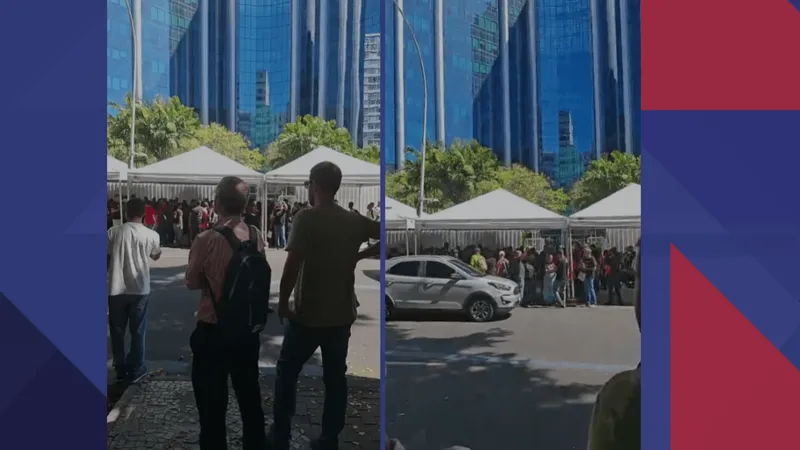
The protests took place at four Petrobras offices in Rio de Janeiro, where hundreds of employees gathered to demand the maintenance of the current hybrid work regime.
According to the Bandeirantes TV network, the mobilization was organized by Sindipetro-RJ and the National Federation of Oil Workers (FNP), who criticize the lack of dialogue from the state company with the category.
The director of Sindipetro-RJ and FNP, Ana Paula Baião, emphasized that the decision was imposed without negotiation.
“Petrobras, in an inflexible manner, changed the rules without considering the interests of the workers and the impact on the city. What we want is for the company to suspend this decision and sit down for negotiation. The telework contributes to the mental health and quality of life of workers, without harming the company’s productivity,” said Baião.
While there was a strike in Rio, other locations chose only demonstrations and delays in the start of work shifts.
Unions linked to the Unified Federation of Oil Workers (FUP) held protests in Minas Gerais, Bahia, Vitória, and Northern Fluminense, but without joining the total paralysis.
Petrobras Justifies Changes and Says the Impact of the Strike Was Null
In an official statement, Petrobras minimized the effects of the paralysis and stated that its operations were not affected.
The company reiterated that it respects the right to strike and maintains a channel of dialogue with the unions to discuss the new guidelines for the hybrid model.
The state-owned company justified the decision arguing that the increase in presential working hours aims to improve team integration and management processes.
The measure also accompanies a moment of expansion for the company, which anticipates new investments and hiring that require training and acclimatization of new employees.
According to Petrobras, the changes follow the guidelines of its Strategic Plan and seek to balance the needs of the company with the expectations of employees.
The state-owned company also stated that it monitors market trends to evaluate the evolution of work models in the sector.
How Will Petrobras’ New Hybrid Regime Be?
The hybrid work model implemented at Petrobras allowed administrative employees to work two days in person and three days remotely.
With the new determination, starting from April 7, 2025, the proportion will be reversed, requiring three in-person days and two working from home.
The company argues that this alteration does not impact productivity but improves collaboration and team engagement.
However, unions argue that the decision may cause disruptions for workers, especially those facing long commutes or who have structured their routines based on the current regime.
Should Mobilizations Continue?
Even with the end of the 24-hour paralysis, unions are already indicating that new mobilizations may occur.
The FNP maintains that the decision should be reviewed and demands the opening of a new channel of dialogue with Petrobras’ management.
In addition to the issue of home office, the unions are also discussing other agendas related to working conditions and internal policies of the company.
Depending on Petrobras’ response, the possibility of new strikes is not ruled out.
The state-owned company, in turn, has not shown signs that it intends to review the decision, but emphasized that it will remain open to dialogue with employee representatives.
With the deadline for the new policy approaching, the expectation is that the developments of these negotiations will take place in the coming weeks.







Boa tarde como enviar o currículo?
Título equivocado. Segundo o texto, não seria o FIM, mas diminuição. Só esse título leva dirigentes de outras grandes empresas, considerarem mudanças acreditando que, se uma grande estatal mudou o sistema, deve ter fortes indícios de prejuizo com o home office, o que não é verdade.
Petroleiros acham que mandam na Petrobrás e que suas vontades devem ser acatadas. O trabalho presencial nunca foi estressante na estatal onde a liberdade de horário e outras benefices deixam o ambiente de trabalho leve porém, com as obrigações inerentes aos cargos. Retornar ao trabalho presencial renova a gestão. Parabéns aos gestores e que o trabalho remoto seja extinto na sua totalidade em breve.