





 Português
  Inglês
  Espanhol
  4 min de leitura
  0 comentários


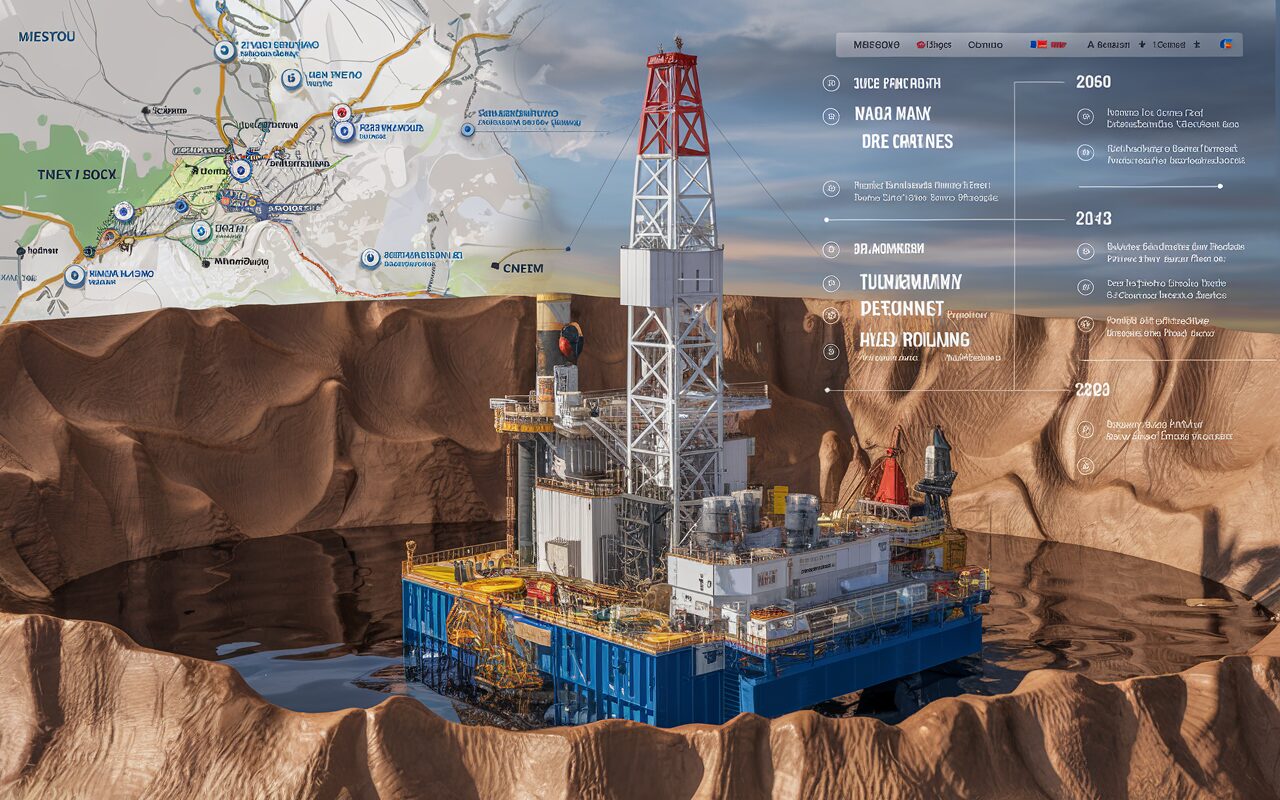
Partnership Between Petrobras and CNPEM Uses the Sirius Superlaboratory to Create Ultra-Detailed 3D Images, Revolutionizing Pre-Salt Exploration with Unprecedented Technology in Brazil.
Petrobras and the National Center for Energy and Materials Research (CNPEM) have completed the first phase of a strategic partnership aimed at applying technology to explore the pre-salt with greater precision. The project uses Sirius, Brazil’s largest scientific infrastructure, to generate 3D images of pre-salt rocks, opening new horizons for oil and gas research and optimizing extraction methods at great depths.
The partnership, initiated in 2021, resulted in the implementation of an automated microstation on the Mogno beamline, capable of analyzing rock samples in a non-invasive, rapid manner with extremely high resolution. The first tests with real samples from pre-salt wells were conducted in November 2024, and the data is in the post-processing phase for the generation of detailed three-dimensional images.
Petrobras and CNPEM Use Cutting-Edge Technology to Study Pre-Salt Rocks
The Mogno beamline at Sirius is one of the central elements of the research. It enables 3D tomographic analyses with micro and nanometric resolution of the rocks, essential for understanding the internal processes of oil reservoirs located beneath thick salt layers.
-
Offshore industrial demand in Macaé skyrockets with the recovery of oil and gas and could grow by up to 396% by 2026 in the Campos Basin.
-
Offshore industrial demand in Macaé surges with the recovery of oil and gas and could grow by up to 396% by 2026 in the Campos Basin.
-
Brazilian giant expands borders in the Southeast: Petrobras confirms new oil discovery in ultra-deep waters in the pre-salt of the Campos Basin.

-
Alert in the global energy market: Severe tropical cyclone hits the coast and disrupts gas production at major plants in Australia, threatening global supply.


The pre-salt rocks, formed over 100 million years ago, represent one of the biggest technical challenges in the oil and gas industry. Due to their extreme depths, it is crucial to understand their internal structure to simulate fluid flow, predict oil recovery, and ensure more efficient and safer operations.
Mogno Beamline Performs Automated and Remote 3D Analyses
The Mogno beamline microstation, installed with support from Petrobras, allows the simultaneous analysis of up to 88 samples, with automated switching during examinations. The operation can be conducted remotely in low-complexity experiments, speeding up data generation and expanding its use by researchers throughout the country.
According to Nathaly Archilha, a researcher at the National Synchrotron Light Laboratory (LNLS), the Mogno was designed to meet research directly related to the oil sector. The technology developed by CNPEM is unprecedented in the world, offering continuous zoom, high resolution, and the ability to apply different thermal, mechanical, and chemical conditions to the samples, reproducing the real environment of the pre-salt underground.
Technology to Explore the Pre-Salt Gains Artificial Intelligence and Supercomputing
The project also includes the development of 3D reconstruction algorithms and post-processing techniques using artificial intelligence, which are essential for generating a digital database of pre-salt rocks. This data will be used to characterize geological structures, simulate extraction scenarios, and predict reservoir behavior.
The intensive processing of these images is supported by Tepui, a high-performance computing center at Sirius, as well as the infrastructure of the Santos Dumont supercomputer, operated by the National Scientific Computing Laboratory (LNCC) in Petrópolis. The integration of data networks is supported by RNP (National Education and Research Network).
Gabriel Moreno, an engineer at CNPEM, emphasizes that the upcoming challenges involve complex simulations, focusing on fluid-thermal dynamics, systems engineering, and geophysical modeling. The expectation is that this structure will become a global reference for the analysis of geological materials.
Exploration of the Pre-Salt with 3D Images at Sirius Can Revolutionize the Industry
With 3D images at Sirius, Petrobras is making significant strides in its ability to predict, simulate, and plan the exploration of pre-salt reserves with unprecedented precision. The technology avoids invasive approaches and accelerates the acquisition of technical results on the analyzed rocks.
The use of artificial intelligence applied to rock images is expected to allow real-time adjustments during extraction and make processes more efficient, with less waste and environmental impact. This capability to anticipate reservoir behavior is considered essential given the complexity of operations at the pre-salt layer.
Scientific Community Will Be Able to Access Microstation at Sirius
With the testing phase completed, the Mogno beamline microstation is now available for use by other researchers. The call for project submissions will open in 2025, with experiments scheduled to begin in 2026.
This opening represents a milestone for Brazilian science, democratizing access to cutting-edge infrastructure and enabling universities, research centers, and startups to develop projects in areas such as energy, geology, materials engineering, and the environment.
Project Puts Brazil at the Forefront of Pre-Salt Research
The partnership between Petrobras and CNPEM represents a strategic advancement for the country in pre-salt research and exploration. By utilizing the most modern particle acceleration, material analysis, and supercomputing techniques, Brazil is taking an important step towards consolidating its technological leadership in a sector essential for its economy.
Sirius, operated by CNPEM, is already considered one of the most advanced scientific facilities in the world. Now, with the Mogno beamline adapted for oil and gas studies, the country expands its role in a highly specialized field of knowledge with significant industrial impact.









Seja o primeiro a reagir!