





 English
  Francês
  Alemão
  Italiano
  Japonês
  Norueguês
  Portuguese
  Spanish
  3 min of reading


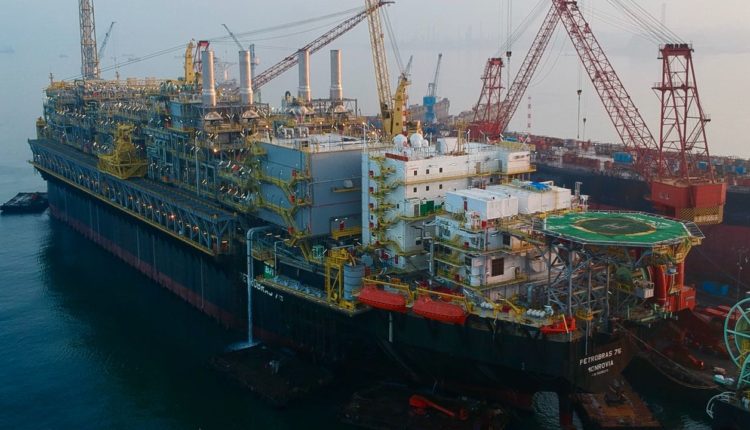
The Brazilian State-Owned Company Petrobras Agrees to the Terms for the Búzios Unit, While Another Aims to Close a Contract for a Floater in Mero-2
Petrobras has reached an agreement with Japanese Modec for a floating production, storage, and offloading unit for the Búzios field, while the Brazilian oil giant has also received a potentially winning bid from SBM Offshore to provide the FPSO Mero-2. Modec and Petrobras began negotiating the terms for the Búzios-5 FPSO in February, following the failure of the original bidder, Exmar, to finalize its financing agreements.
With Petrobras’ legal team apparently convinced that the state-controlled company can negotiate with the runner-up without conflicting with compliance procedures, the company’s negotiators accepted a significantly higher day rate than that proposed by Exmar, at US $ 635,000, still about US $ 100,000 below Modec’s original price of US $ 815,000.
The agreement is still subject to approval by Petrobras’ board, meaning that signing is likely still a month or two away.
-
Government unlocks R$ 554 million for a highway that has been requested for decades and accelerates the duplication of BR.

-
Without bricks, without cement, and without endless construction: the cardboard house that is assembled in modules and can be moved.

-
Billions of barrels on the equatorial margin could lead Amapá to double its oil production in Brazil — the state aims to enter the route of companies in the Campos Basin, attract investments, and boost jobs and businesses in the oil and gas sector.

-
Without bricks, without cement, and without endless construction: the cardboard house that is assembled in modules and can be moved.

There remains a small risk of legal delay, as Brazilian unions have had some success in invoking enforcement procedures to obtain court injunctions, but there are currently no signs that this will happen.
The Búzios-5 unit will provide Petrobras with an additional 180,000 barrels per day of gross processing capacity, along with 6 million cubic meters per day of natural gas handling capacity.
The first oil date has recently been pushed back by a year to 2022, due to contracting delays.
In another major bidding, Petrobras has opened commercial bids for the FPSO Mero-2, with SBM appearing as the lowest offer, providing a day rate below US $ 700,000, sources said.
“This was aggressive. SBM was making a real statement about returning to the Brazilian market,” said a source.
SBM’s price compares to the daily rate of US $ 721,000 that Modec bid to win the contract for the FPSO Mero-1, and easily surpassed the last offer from the Japanese company, estimated at over US $ 790,000.
SBM has not hidden its interest in targeting Mero for its return to Brazil.
The FPSOs Mero-1 and Mero-2 will have the capacity to produce 180,000 bpd of crude oil and process 12 MMcmd of natural gas, and are expected to come online in 2021 and 2022, respectively, operating under 22-year charters.
In a third development last week, Teekay Offshore was disqualified from a tender for two FPSOs in the Marlim oil field, leaving Modec seeking both units, but facing competition from one of Yinson Holdings’ units in Malaysia.
Two in the Race for the Mero 2 FPSO Prize
The disqualification of Teekay occurred when Petrobras disagreed with some contingency factors contained in the proposal, but the Canadian contractor refused to proceed without them.
The FPSO Marlim-1 will have the capacity to produce 80,000 bpd of crude oil and 7 MMcmd of natural gas, while Marlim-2 will produce up to 70,000 bpd of crude oil and compress up to 4 MMcmd of gas.
Petrobras offers a 22-year charter but allowed contractors to submit bids for one or both units. By bidding for both units, Modec can take advantage of economies of scale, although some sources have suggested that the company is willing to moderate its Brazilian workload and may even prefer to have a single unit.
Yinson Holdings is a newcomer in Brazil.






Seja o primeiro a reagir!