





 Português
  Inglês
  Espanhol
  2 min de leitura
  3 comentários


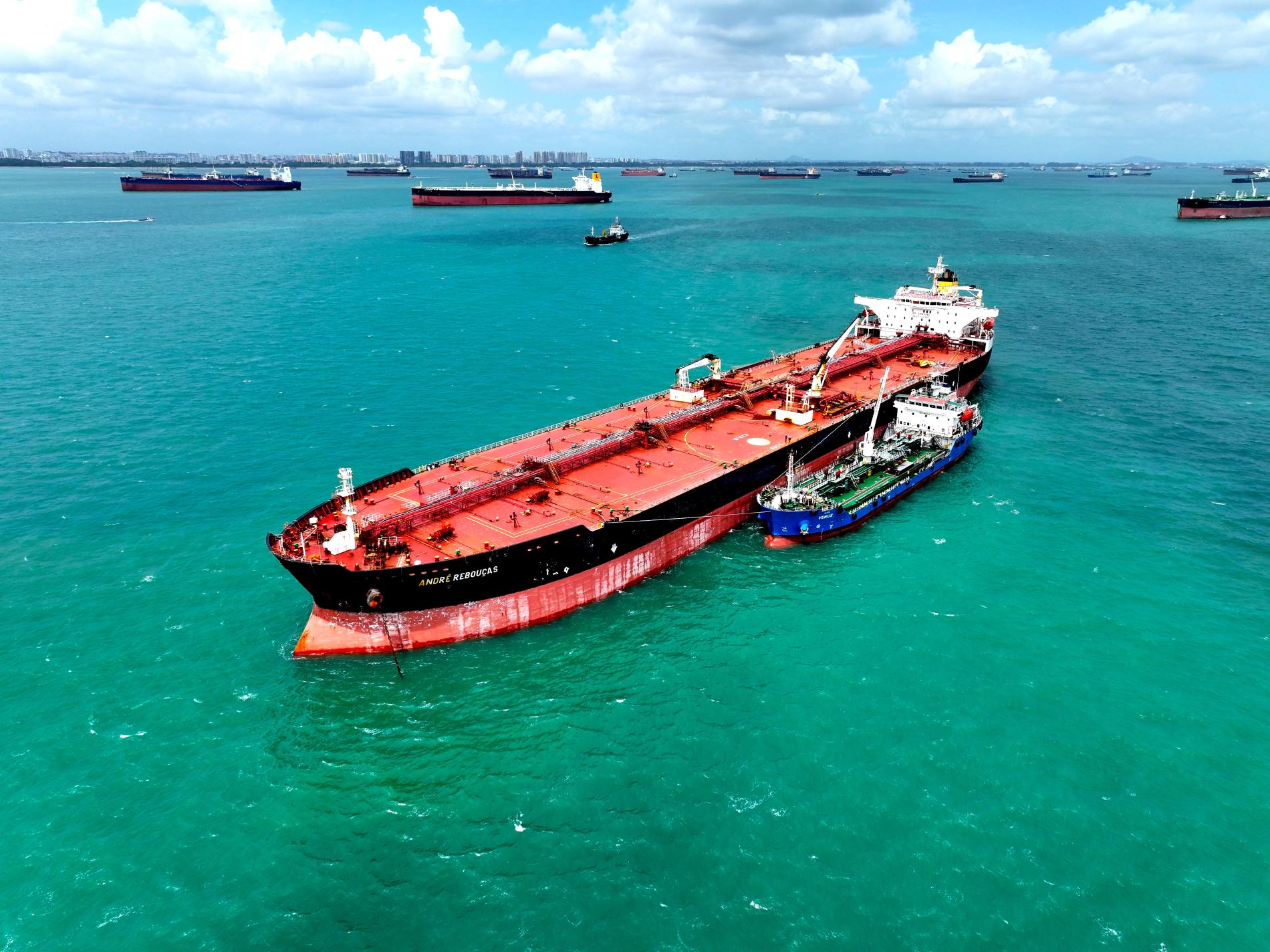


Petrobras and Transpetro Innovate in Ship Refueling Using Renewable Biofuel to Reduce Environmental Impact and Expand Their Presence in the Far East.
Petrobras Singapore carried out, on February 27, 2025, the first VLSFO (Very Low Sulfur Fuel Oil) refueling operation with 24% renewable content (B24) for the Transpetro ship André Rebouças, chartered by Petrobras. The refueling took place in Singapore, supplied by a licensed bunker company by the local port authority.
The product was developed by Petrobras Singapore (PSPL) in its leased tanks in the region, combining 76% fossil fuel oil from the Petrobras System refineries with 24% UCOME, a biofuel derived from processing used cooking oil (UCO) sourced locally.
Petrobras Singapore has ISCC EU certification, ensuring that its products meet strict sustainability criteria as required throughout the logistics chain of the biodiesel involved in this process.
-
Offshore industrial demand in Macaé skyrockets with the recovery of oil and gas and could grow by up to 396% by 2026 in the Campos Basin.
-
Offshore industrial demand in Macaé surges with the recovery of oil and gas and could grow by up to 396% by 2026 in the Campos Basin.
-
Brazilian giant expands borders in the Southeast: Petrobras confirms new oil discovery in ultra-deep waters in the pre-salt of the Campos Basin.
-
Alert in the global energy market: Severe tropical cyclone hits the coast and disrupts gas production at major plants in Australia, threatening global supply.

Strategic Expansion in the Sustainable Fuel Market
According to the specialized website, the refueling of the ship André Rebouças is part of a series of recent sales by Petrobras Singapore, including the first batch of VLSFO with renewable content formulated in early 2025. According to Claudio Schlosser, the company’s director, this operation not only introduces a new type of offering to the market, but also strengthens the other operations of Petrobras in the Far East region.
The development of renewable bunkering aligns with the strategy of Petrobras and Transpetro, which seek to innovate and generate value through sustainable energy solutions. This milestone reaffirms the companies’ commitment to decarbonization and the development of a low-carbon market.
Impact and Trends for the Future
The supply of fuels with lower environmental impact is a direct response to international demands for more sustainable solutions in the maritime sector. The use of B24 on the Transpetro ship demonstrates how Petrobras is advancing in the commercialization of renewable energies, while also strengthening its position in a competitive market.
In 2025, as reported by the sector, the expectations are that new vessels will begin operating with blends of biofuels, gradually increasing the presence of these solutions on major trade routes.
The market for renewable bunkering remains a significant bet for the future of the shipping industry. Petrobras and Transpetro continue to expand research and strategic partnerships to consolidate this trend and reduce the carbon footprint of the sector. Via Petrobras










Mistura óleo de comida no diesel, feijão, etc . A Raízen quer vender
Não sou contra o biodiesel principalmente o de origem de oleos vegetais usados ou de subprodutos de refino ou de frigorificos O problema é que 80% desse biodiesel vem da soja in natura, o que tem inflacionado o óleo de soja para consumo humano e também o óleo diesel combustível. Daqui um tempo só veremos lavouras de soja e cana de açúcar (etanol) para a produção de combustíveis, para cumprir uma agenda global, esquecendo da segurança alimentar da população mundial. Lembrando que maior consumo de combustível renovável implica de maior capacidade de plantio, o que remete maiores quantidades de areas a serem plantadas aumentando o desmatamento, que por suas vez vem contra a agenda global sobre redução das emissões de CO2 no planeta.
O primeiro passo seria buscar meios para coletar o óleo de cozinha usado (o used cooking oil – UCO) para se produzir biodiesel (tal como se faz em Cingapura). E o segundo, regulamentar a adição deste biodiesel no teor de 24% em volume ao óleo diesel marítimo.