





 Portuguese
  English
  Spanish
  5 min of reading
  0 comments



Petrobras Boosts Industry by Expanding Pre-Salt Gas Outflow, Making Energy More Accessible and Strengthening National Industry Competitiveness.
Since its foundation in 1953, Petrobras has stood out as an essential agent in the industrial development of Brazil.
Thus, over the decades, it has consolidated itself as a symbol of energy sovereignty and as a driver of the economy, innovation, and infrastructure.
More recently, however, its actions have taken on new contours with a clear strategy: to expand the outflow of natural gas from the pre-salt to the coast.
-
Brazilian giant expands borders in the Southeast: Petrobras confirms new oil discovery in ultra-deep waters in the pre-salt of the Campos Basin.

-
Alert in the global energy market: Severe tropical cyclone hits the coast and disrupts gas production at major plants in Australia, threatening global supply.

-
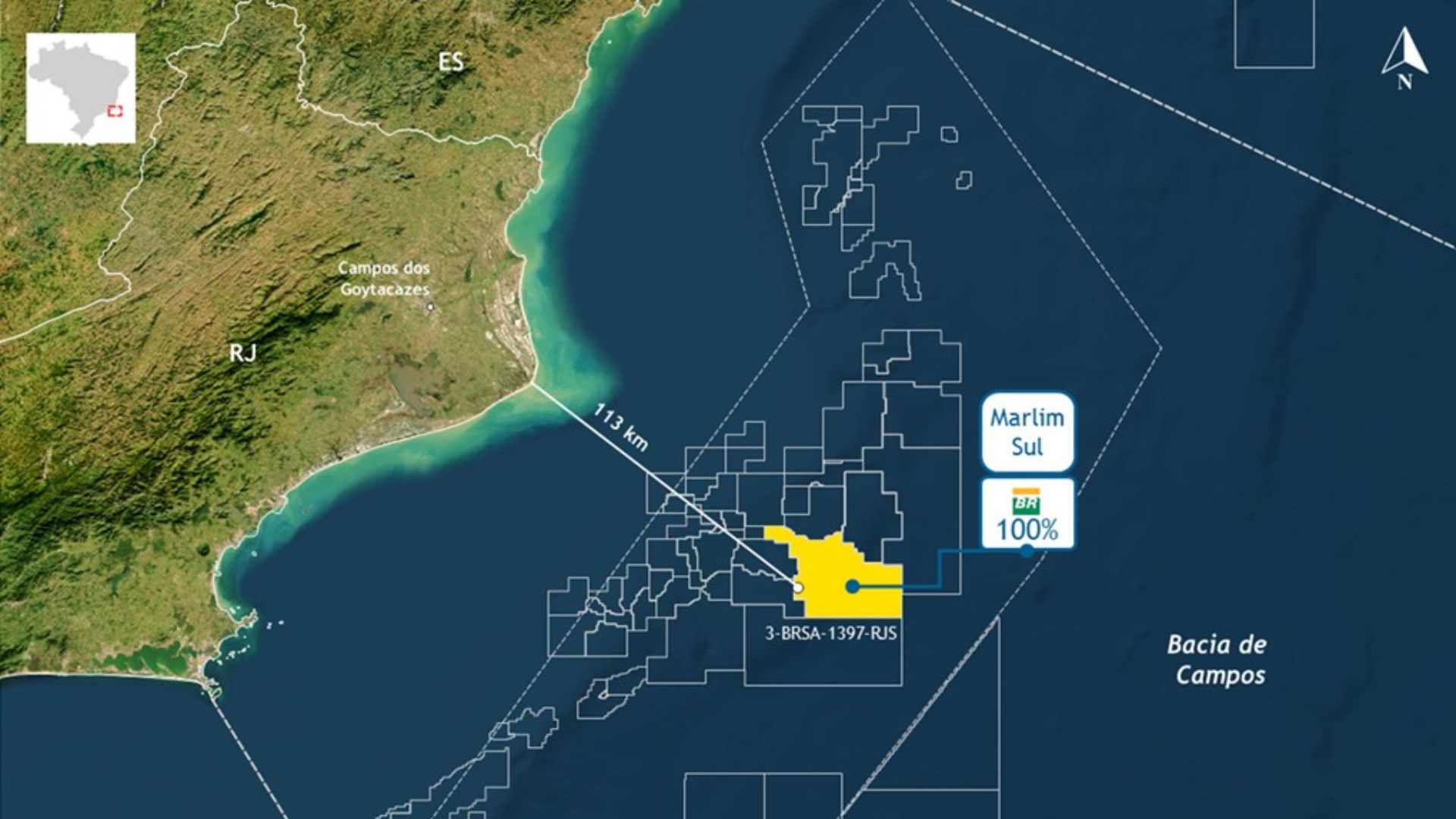
Petrobras finds high-quality oil in the pre-salt at 113 km from RJ and reignites expectations about strategic reserves in the Campos Basin.

-
Ocyan opens registrations for startups focused on innovation in the oil and gas sector and will select projects for Innovation Day with the support of Nexio.


In this way, the state-owned company aims to reduce the cost of inputs for the industry and, consequently, encourage national production.
Although the relationship between energy and industry has always been strategic, Brazil has historically faced challenges in this field.
After all, the availability of reliable and inexpensive energy sources directly influences productive capacity.
For this reason, such a diverse industrial park as Brazil’s still faces energy bottlenecks that limit its competitiveness.
Natural Gas as an Industrial Development Strategy
In light of this, Petrobras began to implement a strategic plan to transport larger volumes of gas to the Brazilian coast.
This initiative, therefore, represents not just a technical decision, but a long-range move.
With this, the aim is to stimulate reindustrialization, balance energy policy, and reduce production costs.
According to Petrobras’s president, Magda Chambriard, the greater the amount of gas delivered to the coast, the lower the final cost.
As a result, industrial consumers will be able to access the input at a lower price.
Additionally, by diluting logistical and operational costs, the state-owned company makes natural gas an even more competitive resource.
It is no coincidence that the Brazilian pre-salt has become one of the largest hydrocarbon discoveries of recent decades.
Despite the distance from the fields — located hundreds of kilometers from the coast — this energy asset has high potential.
Since the start of commercial production in 2010, the importance of the pre-salt has progressively increased. Today, it accounts for a significant share of oil and gas production in the country.
In addition to the economic gains, expanding gas utilization also contributes to the environmental agenda.
As a consequence of increased utilization, gas flaring on platforms is reduced and greenhouse gas emissions decrease.
In this way, Petrobras aligns its operations with global sustainability goals.
The Logistical Challenges of the Pre-Salt
Even so, the outflow of natural gas faces logistical barriers. Although production occurs at scale, many pre-salt platforms were not originally designed to transport gas.
Thus, in many cases, this resource is reinjected into the wells or even flared, which represents a huge waste.
For this reason, Petrobras has invested heavily in logistical solutions. An emblematic example is Route 3, a system that connects the fields of Santos Basin to the Duque de Caxias Refinery (Reduc) in Rio de Janeiro.
Through this structure, it is possible to ensure a continuous supply of gas to the industries and petrochemical units in the region.
Additionally, the Búzios 12 project emerges as a relevant technological innovation. This new floating unit will function as a natural gas hub, centralizing the outflow of various pre-salt fields.
With this, Petrobras aims to increase distribution efficiency and expand the volume available for industrial use.
At the same time, the company promotes adaptations to existing gas pipelines and builds new transport routes.
Thus, the goal is to create more efficient logistical corridors, interconnecting industrial regions in the Southeast and South.
As a result, it will be possible to decentralize supply and further reduce logistical costs.
New Pricing Policy and Its Impacts on Industry
In parallel to these advances, Petrobras also revised its pricing policy.
Instead of solely following international fluctuations, the new directive considers internal production costs and the characteristics of the national market.
In this way, the aim is to provide more stability to consumers and protect the economy from sharp fluctuations.
In this context, natural gas occupies a strategic position. This is because it not only serves as a thermal energy source but also as an essential input for sectors such as fertilizers, glass, ceramics, steelmaking, and petrochemicals.
Therefore, access to cheap gas directly influences the planning and feasibility of new investments.
However, Brazil still faces challenges with high gas costs.
According to a study by the National Confederation of Industry (CNI), the input can cost up to ten times more than in the United States and double the amount practiced in Europe.
This imposes challenges on the industry and limits its competitiveness.
However, as Petrobras expands infrastructure and internal supply, the outlook becomes more optimistic.
With greater available volume and lower operational costs, the country can finally offer natural gas at fairer and more accessible prices for its productive sector.
Petrobras’s Role and National Reindustrialization
Therefore, Petrobras plays an essential role in this transformation. Its actions directly influence the market, both in terms of price and availability of the input.
The Minister of Mines and Energy, Alexandre Silveira, even stated that reducing gas costs is crucial for reindustrializing Brazil.
He also called for balance between Petrobras’s economic weight and the state-owned company’s social commitment.
Although the country still imports some gas from Bolivia and Argentina, this dependency represents a risk.
After all, exchange rate fluctuations, political crises, or instability in external supply can compromise energy security.
Therefore, increasing self-sufficiency and investing in domestic production are urgent goals.
Additionally, Petrobras participates in consortia with Latin American state-owned companies, such as Colombia’s Ecopetrol.
However, it is still unknown if these partnerships will be able to supply the Brazilian market as desired.
Thus, the state-owned company maintains its focus on internal infrastructure and on gas produced on national territory.
Only through collaboration between the government, the industrial sector, and Petrobras will it be possible to build a favorable environment for growth.
To this end, it will be necessary to ensure regulatory predictability, encourage innovation, and make continuous investments in infrastructure.
Petrobras Boosts Industry: Energy, Growth, and Sovereignty
Therefore, by boosting the industry with natural gas, Petrobras reasserts its historical vocation to be more than just an energy provider.
In this new cycle, the state-owned company acts as a catalyst for growth, innovation, and national sovereignty.
Although challenges still require attention and robust investments, the signs indicate a new moment in Brazilian energy policy.
The connection between the pre-salt fields and the country’s industrial hubs represents more than a logistical route — it is a direct pathway to sustainable and competitive development.
In summary, Petrobras Boosts Industry not only with gas but with strategic vision, social responsibility, and focus on the future.










Seja o primeiro a reagir!