





 Portuguese
  English
  Spanish
  3 min of reading


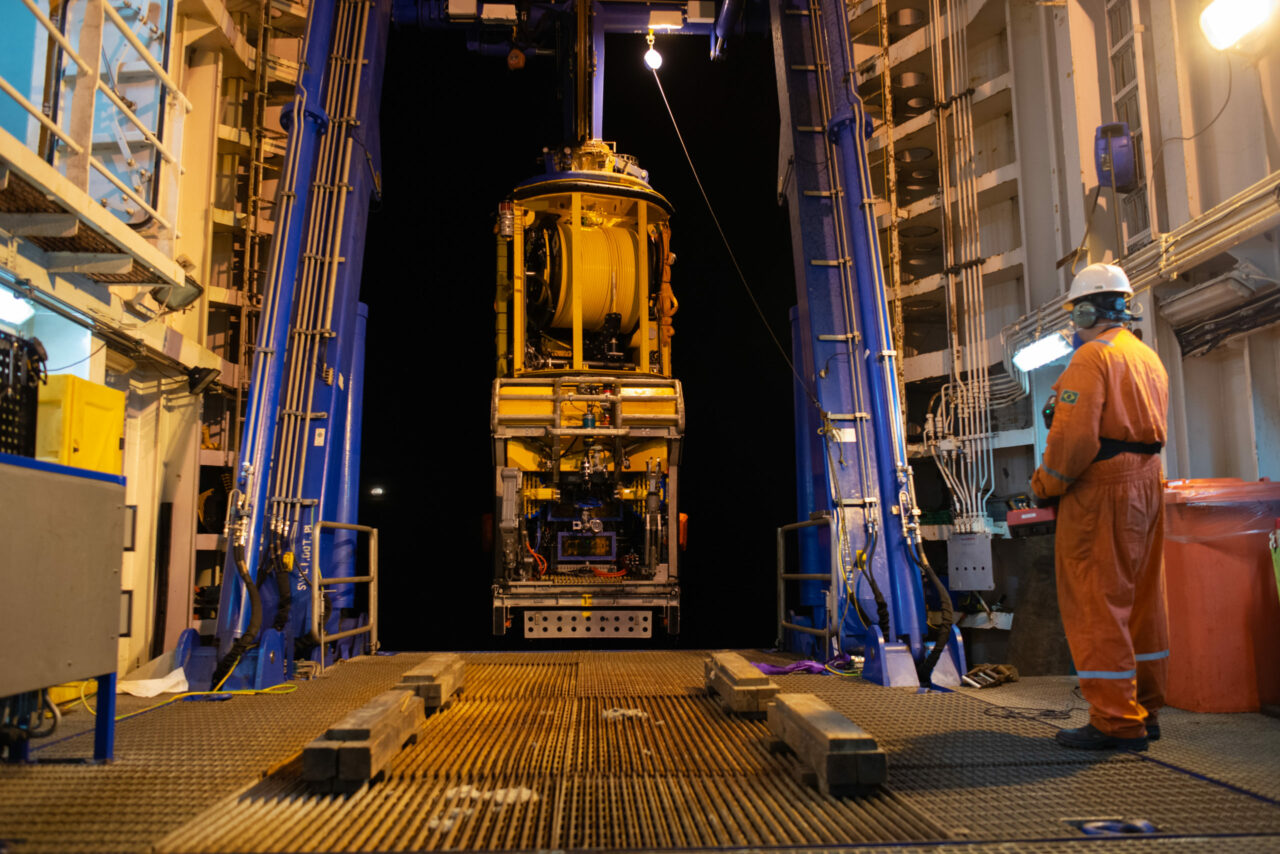
The Significant Investment by Petrobras in the Seismic Campaign for the Tupi Field and the Iracema Area Reflects the State-Owned Company’s Commitment to Exploring the Full Potential of These Pre-Salt Reserves in the Santos Basin.
Petrobras, the Brazilian state-controlled oil company, recently announced a significant investment of R$ 600 million in a seismic campaign in the ultra-deep waters of the Santos Basin, located off the southeastern coast of Brazil. This campaign, completed at the end of April, focused on the Tupi field and the Iracema area in the pre-salt.
The Importance of the Tupi Field and Iracema Area for Petrobras
Covering an extensive area of 3,164 km², equivalent to more than twice the size of São Paulo.
The operations lasted a year and aimed to collect valuable data to enhance the development of Tupi and Iracema.
-
Petrobras evaluates suspension of sales to distributors and considers canceling the cooking gas auction following guidelines from the Federal Government.
-
Lula reveals a masterstroke by Petrobras to undo a deal made by Bolsonaro, which involves the return of an important refinery that currently produces less than half of what was expected and makes Brazil dependent on international diesel.
-
A study confirms that the natural gas sector will reduce greenhouse gas emissions in Brazil by 0.5% and accelerate the energy transition by 2026.

-
Petrobras implements a severe adjustment and confirms a 55% increase in the price of aviation kerosene with a proposal for installment payments for the companies.

The acquisition of seismic data was carried out by Shearwater, a renowned company in the sector.
Tupi, being the first pre-salt field discovered in the Santos Basin, remains one of the most productive assets in the global ultra-deepwater industry, even after 13 years since Petrobras began its development.
With the collected seismic data, Petrobras plans to identify new opportunities for the expansion of projects related to Tupi and Iracema.
The acquisition of this seismic data will generate approximately 400 terabytes of information, equivalent to the storage capacity of 2,000 traditional laptops.
This data will be used to create detailed images of the rock layers beneath the seafloor.
“It was in the Tupi field where we drove our journey into the pre-salt, breaking a series of paradigms, developing new technologies, and paving the way for a new exploratory frontier. Since then, we have accumulated achievements, and this seismic campaign was one of them”, recalled Petrobras’ Exploration Executive Manager, Jonilton Pessoa.
To conduct the campaign, Petrobras mobilized four seismic vessels, two support vessels, and three remotely operated vehicles (ROVs).
About 140 professionals were involved in the seismic operations, ensuring the successful completion of the project.
Efforts to Reduce Greenhouse Gas Emissions
Petrobras employed a triple-source seismic approach, involving the use of three seismic sources simultaneously during the campaign.
This innovative technique, implemented by the company since 2021, has proven to be highly efficient and has expedited the data acquisition process.
As a result, Petrobras was able to reduce the duration of the Tupi and Iracema campaign by approximately 30%.
This significant improvement also led to a corresponding reduction of nearly 30% in greenhouse gas emissions.
“This seismic campaign will allow for the identification not only of remaining oil in the area but also of new targets for complementary projects. The expectation is that the seismic data will provide images of the more complex areas of the region,” added Jonilton.
The Tupi Consortium and Petrobras Partners
The Tupi field is operated by a consortium formed by Petrobras (67.216%), Shell (23.024%), Petrogal (9.209%), and PPSA (0.551%).
This partnership demonstrates the collaborative efforts among industry leaders to maximize the potential of this pre-salt reserve.
Petrobras’ substantial investment in the seismic exploration campaign for the Tupi field and the Iracema area reflects the company’s commitment to harnessing the full potential of these pre-salt reserves.
The data acquired through this campaign will serve as a valuable resource for future projects and will contribute to the sustainable development of Brazil’s offshore oil and gas industry.










Seja o primeiro a reagir!