





 Portuguese
  English
  Spanish
 4 min of reading
  0 comments


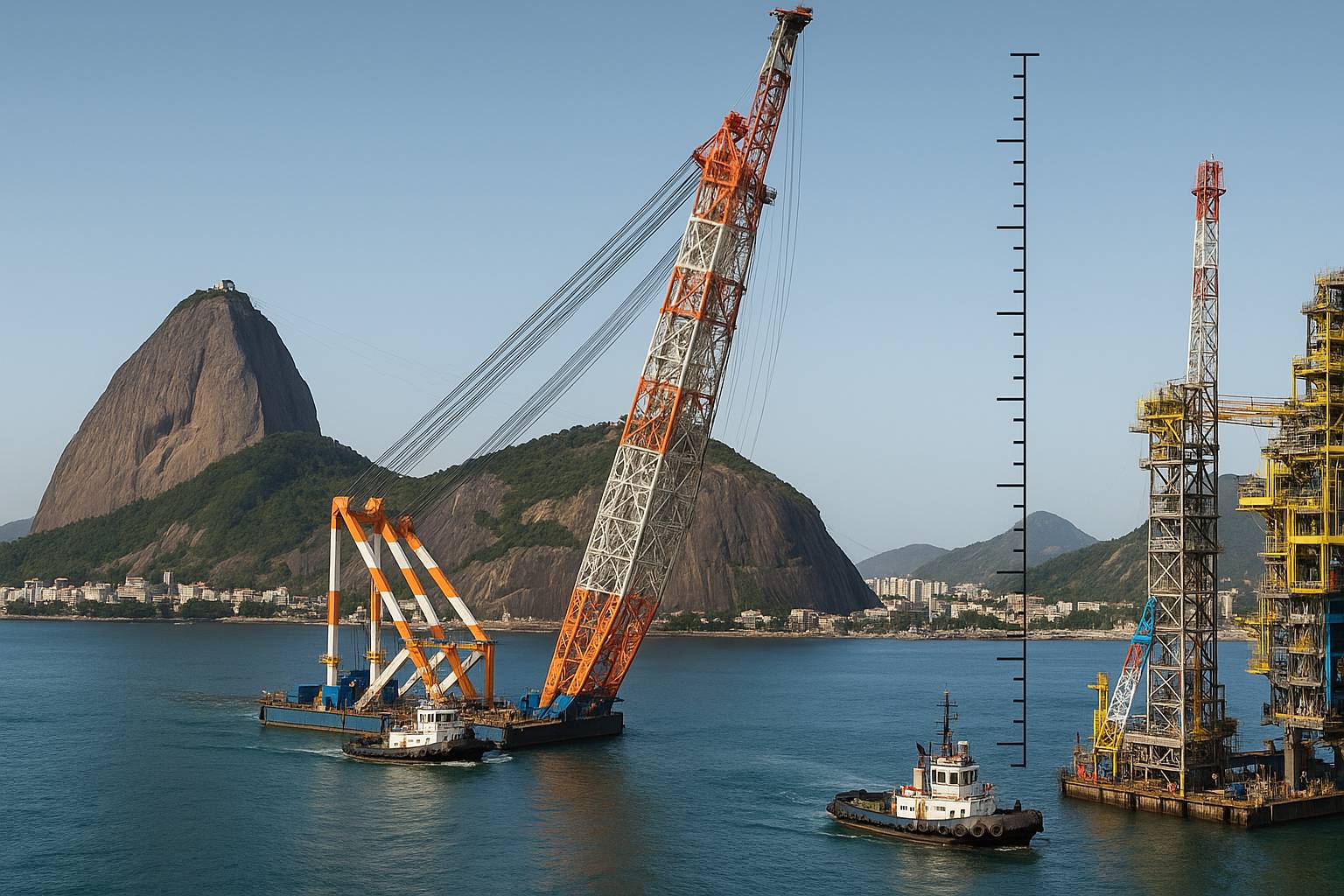
Tower of 182 Meters Will Be Installed in the Búzios Field and Is Equivalent to a 60-Story Building! This Is a New Mark in the History of Petrobras Engineering
On March 26, Petrobras Achieved a Historic and Unprecedented Feat in Its Trajectory in the Oil and Gas Sector. The Company Completed the Largest Flare Lift Ever Done by It, Consolidating Its Excellence in Offshore Engineering.
The Operation Took Place on the FPSO P-79, a Floating Platform that Will Still Be Sent to the Búzios Field in the Santos Basin. The Unit Is Part of the State Company’s Strategy to Increase Production in One of the Richest and Most Productive Areas of Brazil’s Pre-Salt.
The flare, a Structure Responsible for the Controlled Burning of Excess Production Gases, Is an Impressive 142 Meters Long. It Was Lifted Over a Base of 40 Meters, Installed on the So-Called “Avenida Brasil” — the Main Central Route of the Vessel, Above the Deck.
-
Petrobras evaluates suspension of sales to distributors and considers canceling the cooking gas auction following guidelines from the Federal Government.
-
Lula reveals a masterstroke by Petrobras to undo a deal made by Bolsonaro, which involves the return of an important refinery that currently produces less than half of what was expected and makes Brazil dependent on international diesel.
-
A study confirms that the natural gas sector will reduce greenhouse gas emissions in Brazil by 0.5% and accelerate the energy transition by 2026.

-
Petrobras implements a severe adjustment and confirms a 55% increase in the price of aviation kerosene with a proposal for installment payments for the companies.


The Total Height of the Assembly Reaches 182 Meters, Equivalent to a 60-Story Building or Nearly Half the Height of Sugarloaf Mountain, One of the Tourist Landmarks of Rio de Janeiro. The Grandeur of This Structure Impresses Not Only with Its Size but Also with the Logistical Challenge Involved in Lifting It Entirely.
An Unprecedented Feat in the History of Petrobras
Until Today, Operations of This Nature Were Done in a Segmented Manner, with the Flare Being Lifted in Smaller Parts That Were Later Assembled on Site. This Took More Time, Involved Additional Risks, and Required More Complex Assembly Steps.
This Time, However, Petrobras Dared to Go Further. For the First Time in Its History, the State Company Conducted the Lifting of the Complete Flare Structure All at Once, Marking an Unprecedented Advance in Its Heavy Engineering Project Execution Capability.
This Technological Leap Represents a Significant Gain in Safety, Efficiency, and Precision, Reducing Intermediate Steps and Raising the Company’s Level of Excellence in Offshore Operations. It Is the Type of Advance That Reinforces Petrobras’ Leadership in the Global Oil Industry.
FPSO P-79: New Power of the Búzios Field
The FPSO P-79 Will Be the Eighth Production Unit Installed in the Búzios Field, Reinforcing the Oil Flow Capacity of the Region and Significantly Increasing National Production. The Expectation Is That, upon Starting Operations, the Platform Will Produce Hundreds of Thousands of Barrels Per Day.
Petrobras Is the Operator of the Unit, with 88.99% Participation, and Counts on the Support of Chinese Companies CNOOC International (7.34%) and CNODC Brazil Oil and Gas Ltda. (3.67%). The Partnership with the Asians Reflects International Confidence in the Potential of Exploration in Brazil’s Ultra-Deep Waters.
Additionally, the Búzios Field Establishes Itself as the Largest Production Hub of Petrobras in the Pre-Salt, Hosting Some of the Most Modern and Productive Platforms in the World. The Start of Operations of the P-79 Will Be Another Step in Strengthening This Strategic Front.
Team Integration Was Essential for Success
The Lifting Operation Would Not Have Been Possible Without the Synchronized Work of Various Technical Teams from Petrobras and the Responsible Shipyard. The Complexity of the Process Required Total Coordination, Technical Mastery, and Highly Refined Risk Management.
The Teams from SCP79, PRE-OP-P79, SRGE/ESUP, and PDP/IP-II/PROJ-BUZ-8 Directly Participated in This Achievement, Each Contributing Specific Knowledge, from the Lifting Planning to Its Practical Execution on the Platform’s Deck.
This Collaboration Between Different Areas Shows How the Union of Technical Knowledge and Field Experience Makes a Difference in Large-Scale Projects. It Is a Clear Demonstration of the Excellence Standard That Petrobras Has Been Implementing in Its Pre-Salt Projects.
With the Success of the P-79 Flare Lift, Petrobras Not Only Breaks a Record — It Also Signals to the World That Brazilian Engineering Is Prepared for the Greatest Challenges of the Offshore Industry.
An FPSO Flare Is a Tall Metal Tower, Generally Located at the Rear End (Stern) of a Floating Production Unit, Such as an FPSO (Floating Production, Storage and Offloading). It Serves to Burn Excess Gases from the Oil and Gas Production Process, Especially in Situations of Pressure Relief or Emergency.
What Is a Flare and How Is It Used in Offshore Production Units?
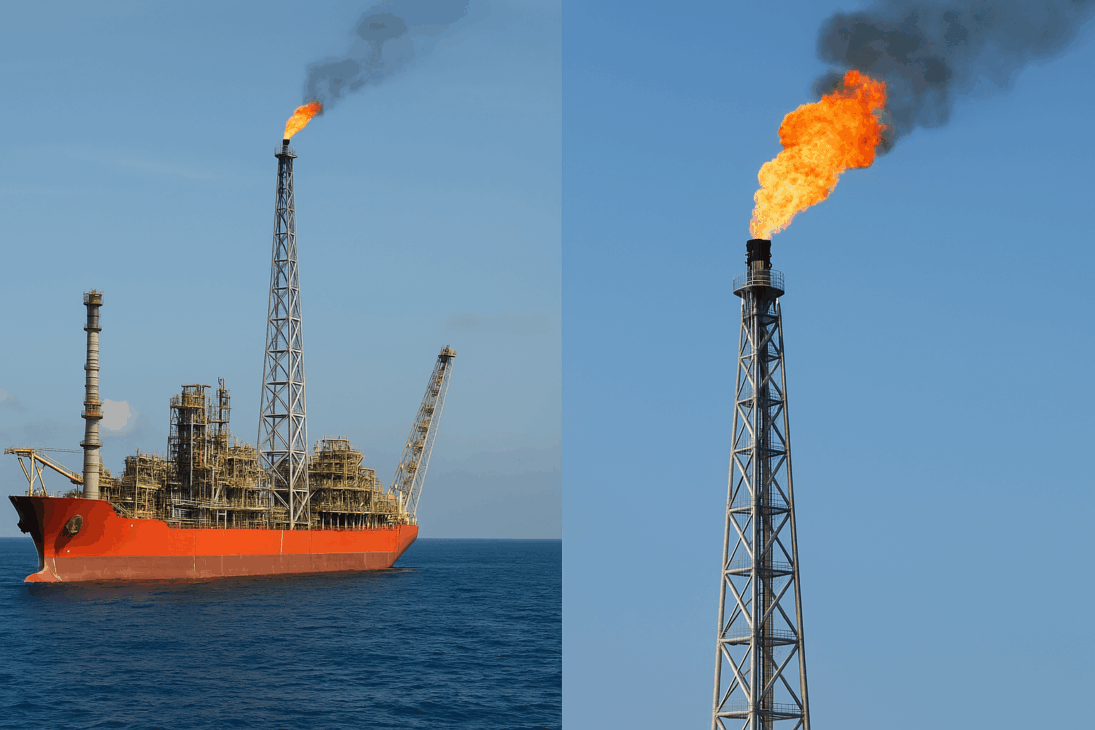
The Main Function of the flare Is to Ensure the Safety of the Unit, Preventing the Accumulation of Flammable Gases in the Production System. These Gases, When Burned at the Top of the Tower, Are Transformed into CO₂ and Water Vapor, Reducing the Risk of Explosions and Releasing a Controlled Form of Emission.
When Is the Flare Used:
- During Startups and Shutdowns of the Plant;
- Emergency Situations (e.g., Overpressure);
- Burning Gas That Cannot Be Re-Injected or Stored;
- During Operational Tests.
Why Is the Tower So Tall?
The Height Serves to Move Heat and Flames Away from the Habited Area of the Unit, Protecting Equipment and Crew. In Cases Like the P-79 from Petrobras, the Flare Can Reach Over 180 Meters in Height, Which Is Equivalent to a Building of Over 60 Stories!
Do You Think Brazil Should Invest in Technologies to Avoid the Use of Flares and Reuse This Gas?
Have You Ever Imagined Seeing a Structure the Size of a 60-Story Building Being Lifted Whole on a Ship? Comment Here What You Thought of This Feat from Petrobras!
With Information from Vitor de Padua, O&G Communicator







Seja o primeiro a reagir!