





 Portuguese
  English
  Spanish
  3 min of reading


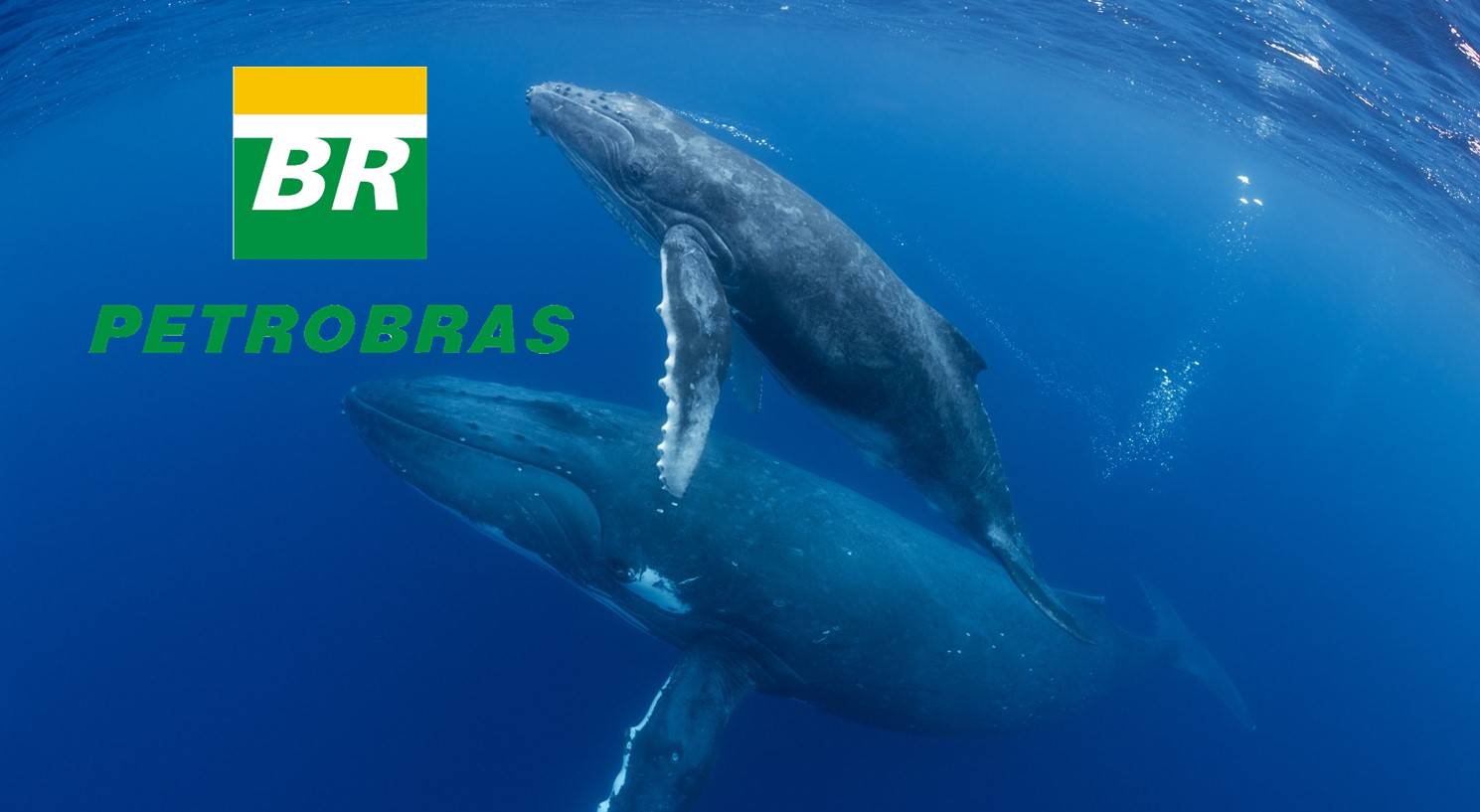
In Partnership With the Humpback Whale Project, Petrobras Conducts the Largest Monitoring Work of Whales and Dolphins Ever Promoted in the Country in Terms of Extent.
Petrobras, November 25, 2019 – Two days after the first attempt, the pilot received authorization from the tower to start the aircraft’s engines, which would take off a few minutes later from Hercílio Luz International Airport in Florianópolis. Unlike regular flights, with dozens of passengers in a hurry to land at their destination, this would be a whale-watching flight. The four people seated in the aircraft also broke away from the usual stereotype of a passenger who travels preoccupied with the problems of the origin or destination of the journey. The main concern for the observers on the flight would be to look carefully out the windows and try to spot the presence of whales and dolphins along the coast.
Divided into two phases, the flights are part of the largest whale monitoring work ever carried out in the country in terms of area coverage. The trip covered a total area of 272 km², equivalent to the sum of the territories of the states of Santa Catarina and Paraná.
A Condition for Exploration and Production in the Pre-Salt
The first phase is part of the Santos Basin Cetacean Monitoring Project (PMC-BS), a necessary condition for the release of Petrobras’s activities for exploration and production in the pre-salt of the Santos Basin. Not everyone knows, but executing an oil extraction project is not just about positioning a drill and producing the oil and gas accumulated in a reservoir rock below the ground. Any exploration and production project must meet a series of prerequisites defined by environmental agencies, which include complementary actions aimed at mitigating impacts.
-
While Brazil wants to end the 6×1 work shift, the president of Argentina wants 12 hours for his workers, increasing political tension in the country.

-
The village where two rivers run side by side without mixing in Santarém and Alter do Chão reveals some of the most beautiful freshwater beaches on the planet.
-
Mars is accelerating, and scientists have discovered that the planet’s day is getting shorter, revealing surprising signs of internal activity.

-
Artemis 2 is set to launch on April 1 at 7:24 PM to orbit the Moon with four astronauts, but a class X solar flare and coronal mass ejection could interfere with communications and threaten the launch.



The PMC-BS, executed by the Socioenvironmental consultancy, aimed to understand the distribution and ecology of cetaceans (whales and dolphins) to assess potential impacts of human activities on the different species of these animals in the Santos Basin. The first cycle of the project, underway since 2015, will continue until 2021 and will collect data to establish guidelines for long-term cetacean monitoring (during the entire exploration of oil and gas in the pre-salt).
Biologist Carolina Bezamat, from Socioenvironmental, participated in the flights and shared a bit about the experience.
As expected for a winter campaign, we saw several whales, especially humpback whales that come to Brazil at this time of year to breed. We also saw a large group of about 300 dolphins. When we passed by them, we didn’t know there were so many, but we suspected it was a large group because observers on both sides saw them. We were happy.
The researchers also spotted a franciscana, the most endangered species of dolphin along the entire Brazilian coast.
For Fernando Gonçalves de Almeida, environmental monitoring coordinator at Petrobras, adopting a monitoring approach with multiple data collection methods positions PMC-BS as one of the largest and most important cetacean monitoring projects ever conducted in Brazil.
The legacy that the development of the project will leave for the technical and scientific knowledge of this group goes far beyond meeting legal requirements. It is currently the most complete and long-lasting cetacean monitoring project developed in Brazil.
The second phase of the monitoring flights, which went from Cabo Frio – RJ to the border between the states of Rio Grande do Norte and Ceará, was not a legal requirement. The research conducted by the Humpback Whale Project, in addition to estimating the population size, helps determine the distribution of whales along our coastline and identifies areas of higher concentrations. The work also allows us to understand potential overlaps with human activities in these areas and work proactively to reconcile uses and mitigate impacts.
About the Humpback Whale Project
Working for 30 years in the research and conservation of humpback whales and the marine environment of Brazil, the project is sponsored by Petrobras through the Petrobras Socioenvironmental Program and is part of the Biomar Network. The network’s projects (Albatroz, Coral Vivo, Rotating Dolphin, Humpback and Tamar) work in an integrated manner to conserve marine biodiversity in Brazil.
Source: Petrobras










Seja o primeiro a reagir!