





 Portuguese
  English
  Spanish
  5 min of reading
  0 comments


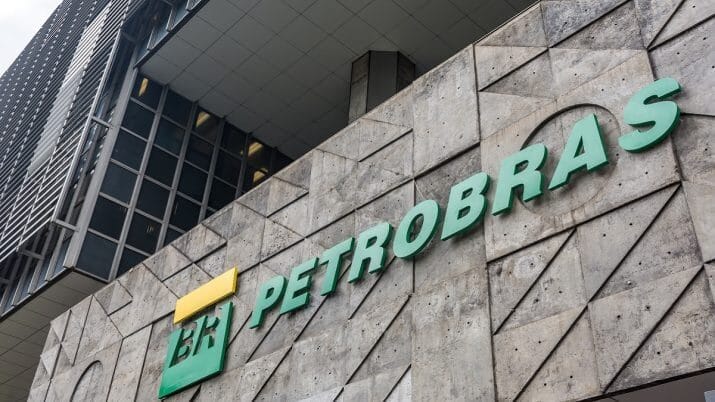
The Financial Scenario of Petrobras, One of Brazil’s Largest Companies, Took an Unexpected Turn in the Second Quarter of 2024.
At a time when most expected a continuation of the astronomical profits that the state-owned company had been recording, the company shocked the market by reporting a loss of over R$ 2.5 billion. But, surprisingly, this loss did not prevent the company from announcing the payment of a robust R$ 13 billion in dividends to its shareholders.
What Explains This Disparity? To understand how a company that reported a billion-dollar loss can still generously reward its investors, it is necessary to analyze the context behind these numbers.
Petrobras justified the negative result mainly due to two factors: currency variation and a massive tax agreement signed with the federal government. The transaction, which involved the settlement of tax liabilities totaling R$ 45 billion, had a significant impact on the company’s balance sheet, but, as highlighted by the company’s management, this effect did not compromise the company’s cash flow.
-
Unemployment rises again to 5.8% at the beginning of 2026, raising alarms about the end of temporary positions and its impact on the Brazilian job market.

-
Document organization can cut invisible costs in small businesses, a simple step that prevents waste, rework, and losses in daily operations.

-
Brazilian giant expands borders in the Southeast: Petrobras confirms new oil discovery in ultra-deep waters in the pre-salt of the Campos Basin.

-
Alert in the global energy market: Severe tropical cyclone hits the coast and disrupts gas production at major plants in Australia, threatening global supply.


The New Leadership and the First Balance Sheet Under Magda Chambriard
The second quarter of 2024 marked the debut of Magda Chambriard as president of Petrobras. She took office amid a storm of controversies, following the dismissal of Jean Paul Prates, who left amid intense debates over the company’s dividend policy.
This leadership change generated varied expectations about Petrobras’s future, and the first financial balance sheet under Chambriard’s management confirmed that the challenge would not be small.
Despite the loss, the new leadership emphasized the strong cash generation of the company. According to Fernando Melgarejo, Petrobras’s Chief Financial Officer, the robust cash flow allowed the company to meet its commitments to shareholders, as well as make significant investments totaling US$ 3 billion during the period.
Impacts and Justifications of the Loss
The loss of R$ 2.605 billion reported by Petrobras in the second quarter was the company’s first negative result since 2020. This performance was drastically different from the profit of R$ 28.782 billion recorded in the same period the previous year and the R$ 23.7 billion achieved in the first three months of 2024. Currency variation and adherence to a billion-dollar tax agreement are cited as the main reasons for this change in scenario.
In June, Petrobras decided to join a program to settle tax and fiscal liabilities with the National Treasury Attorney General’s Office (PGFN) and the Federal Revenue Service. This agreement, which involved amounts exceeding R$ 45 billion, aimed to resolve old tax issues and, according to the company, will bring long-term benefits. However, the immediate effects of this process were felt in the quarterly balance sheet, resulting in the negative impact recorded.
Still, “without these extraordinary events, the net profit for the second quarter would have reached US$ 5.4 billion,” Fernando Melgarejo stated in a report. He also noted that the company’s adjusted Ebitda, which measures earnings before interest, taxes, depreciation, and amortization, would have been US$ 12 billion, in line with the previous quarter’s numbers.
Ebitda, Sales Revenues, and Oil Production
Even with the adverse scenario, Petrobras showed robust numbers in some areas. The company’s adjusted Ebitda reached R$ 49.7 billion between April and June 2024, representing a 12.3% decrease compared to the second quarter of 2023. Compared to the first three months of this year, Ebitda suffered a 17% drop, primarily influenced by lower margins in diesel and gasoline, along with increased imports.
Despite this, the company was able to offset some of these losses with increased revenues from exports, driven by the appreciation of Brent crude oil. The sales revenue of Petrobras totaled R$ 122.3 billion in the second quarter, a rise of 7.4% year-on-year and a growth of 3.9% compared to the previous quarter. These results demonstrate the company’s ability to adapt and seize opportunities even in a challenging context.
Regarding production, Petrobras also showed resilience. Last month, the state-owned company announced that its oil production in Brazil grew 2.6% between April and June compared to the same period in 2023. This increase was primarily driven by the start-up of new platforms over the past year, which have contributed to the increase in production.
The Payment of Dividends: A Controversial Policy
Even in the face of a billion-dollar loss, Petrobras opted to maintain its shareholder remuneration policy. The company’s Board of Directors approved the payment of R$ 13.57 billion in dividends and interest on equity, a decision that has generated intense debates about the priorities of the state-owned company.
“The net result for the quarter should be analyzed in light of events that impacted the accounting result but did not have a relevant impact on the company’s cash flow,” explained Fernando Melgarejo. This dividend policy, which had previously been the target of criticism, continues to be a point of discussion, especially at a time of financial difficulties.
Payments will be made in two installments: the first on November 21, 2024, and the second on December 20, 2024. For shareholders holding common and preferred shares of Petrobras, the amount per share will be R$ 1.05320017.
These amounts will be distributed according to the rules defined by the company, and holders of ADRs (American Depositary Receipts) will also receive their portions on specific dates, as announced by the company.
In any case, it is evident that Petrobras’s recent trajectory reflects the challenges and complexities faced by large corporations, especially in strategic sectors such as energy.
The loss recorded in the second quarter of 2024, combined with the payment of billion-dollar dividends, raises questions about the sustainability of the state-owned company’s financial policies and its ability to face future crises. With Magda Chambriard’s new leadership, the market will be attentive to the company’s next steps, especially in a scenario of economic volatility and regulatory changes.
Will Petrobras be able to balance its financial commitments with the interests of shareholders without compromising its long-term financial health? This is a question that will undoubtedly continue to generate discussions among experts and investors in the coming months.









Seja o primeiro a reagir!