





 Português
  Inglês
  Espanhol
  3 min de leitura


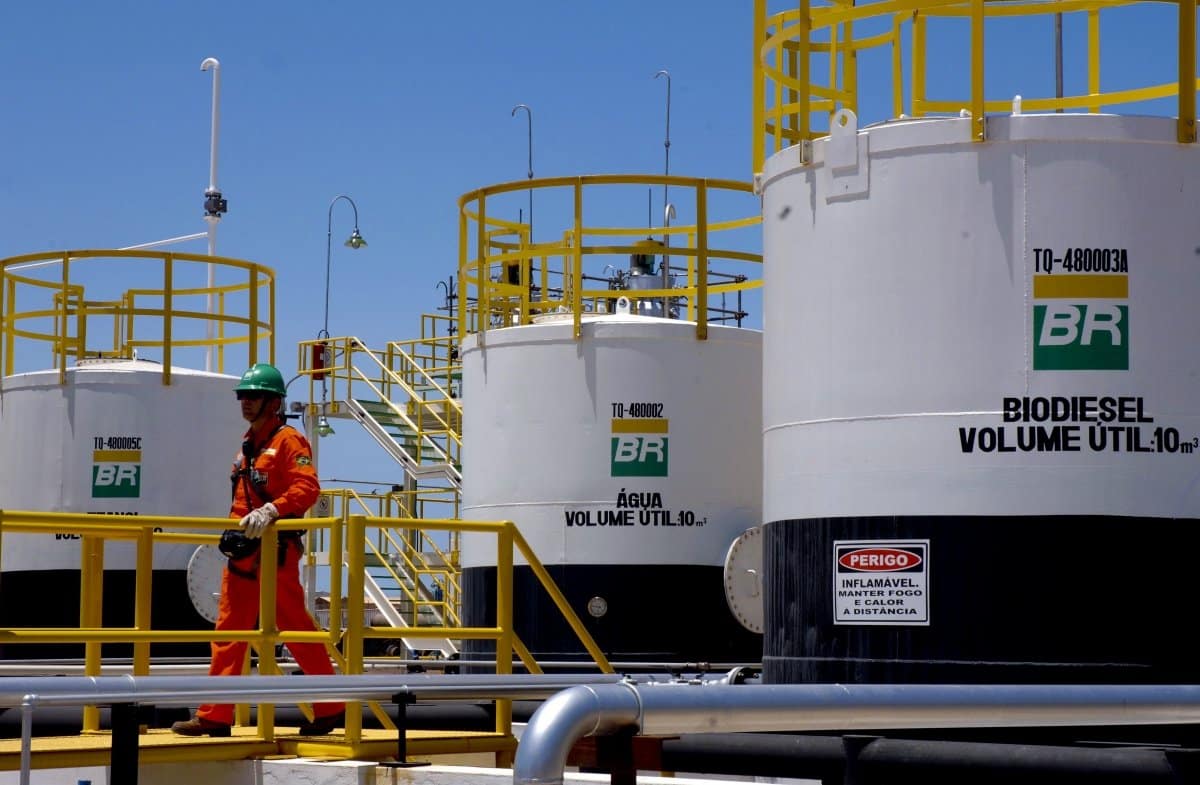
Through the Management of Jean Paul Prates at the Presidency of the State-Owned Company, Petrobras Biocombustible (PBio) Will Return to Being One of the Strategic Pillars of Decarbonization of the Oil Company.
According to sources close to the Federal Government, Petrobras will cancel the privatization of Petrobras Biocombustible (PBio). The owner of three plants located in the Southeast and Northeast, the company will once again become one of the pillars of the state-owned company’s decarbonization strategy. With the future management of Jean-Paul Prates at the presidency, the renewable fuel producer will become another subsidiary of the oil company.
The Future of Petrobras Biocombustible (PBio) and the Return of Investments
The idea is to remove PBio from the divestment program and strengthen its production, reports O Estadão. However, the company does not intend to give up on the development of biofuels.
This includes Renewable Diesel R (R) and bioQAV, which dominate the current administration’s plans. Prates is awaiting the opportunity to assume the presidency of Petrobras.
-
Offshore industrial demand in Macaé skyrockets with the recovery of oil and gas and could grow by up to 396% by 2026 in the Campos Basin.
-
Offshore industrial demand in Macaé surges with the recovery of oil and gas and could grow by up to 396% by 2026 in the Campos Basin.
-
Brazilian giant expands borders in the Southeast: Petrobras confirms new oil discovery in ultra-deep waters in the pre-salt of the Campos Basin.

-
Alert in the global energy market: Severe tropical cyclone hits the coast and disrupts gas production at major plants in Australia, threatening global supply.


According to a source close to Prates, all asset sale processes of Petrobras will be halted for reassessment.
Refineries and PBio are on the table. Experts do not oppose the cancellation of the sale but indicate that the initiative needs to be aligned with a national policy favoring biofuels.
Rodrigo Leão, technical coordinator of the Institute of Strategic Studies on Oil and Natural Gas and Biofuels (Ineep), was part of the transition group. For him, it is essential that the government restore the gradual increase in biodiesel percentages in the diesel blend. The project would provide predictability to the market and return the tax differentiator to biofuels, he assesses.
The government of Jair Bolsonaro (PL) maintained the percentage of biodiesel in diesel at 10%, canceled the guideline to increase it to 15%, and reduced taxes on fossil fuels.
According to Adriano Pires from the Brazilian Infrastructure Center (CBIE), the proposal to sell PBio made sense at the height of Petrobras’s crisis, but with its reversal and the eventual increase in investments, it should not be viewed negatively, as the state-owned company is financially healthy, he analyzes.
“But the economic return rate should prevail and not political interests, which marked the beginning of PBio,” advises Pires.
Rosângela Buzanelli, a representative of the employees on Petrobras’s board, stated on Thursday, (18), that with the arrival of the new presidency, strategic divestment plans will be reassessed. This process directly involves the company’s biofuels.
“Biodiesel will be included (in this review), either as pure biodiesel or as green diesel. We will reopen these plants immediately, if it depends on me,” Buzanelli reported during an interview on the Debate Petroleiro program, published on YouTube.
The Return of Investment Is Valid, but with “Caution”
Adriano Pires, from CBIE, states that the return of Petrobras’s investment in biofuels is valid, but on the condition that it is carried out with “caution.”
“The core business of Petrobras is and should continue to be exploration and production (of oil and gas), where there will still be much demand (for investments) from the pre-salt and throughout the Equatorial Margin.”
Pires emphasizes that there is also a need to pursue economic profitability, which was neglected at the origin of the subsidiary. According to him, the plants were very expensive, and political interests may have influenced the choice of their location, which must not be repeated in any way.










Seja o primeiro a reagir!