





 Portuguese
  English
  Spanish
  3 min of reading
  0 comments


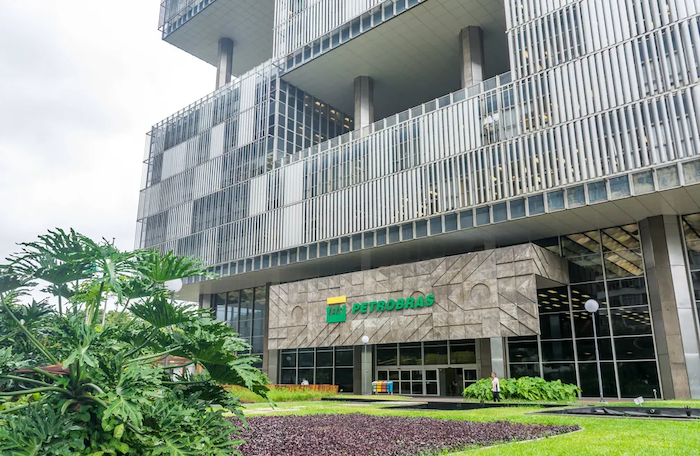
TCU Exposes Irregularities and Demands Explanations from Petrobras
The audit by the Federal Court of Accounts (TCU) identified a multi-million overdose in contracts with Petrobras. Therefore, the investigations into climate stoppages and suspicious contract addendums focused on the refinery in Cubatão.
Thus, the agency demands the correction of values and reimbursement to the public coffers. According to a report released by the TCU in January 2024, the irregularities had already been detected in previous inspections conducted since 2018.
TCU Investigation into Petrobras
TCU Points Out Overpricing of R$ 12.6 Million at Petrobras Refinery in Cubatão
The Federal Court of Accounts (TCU) detected a possible overpricing of R$ 12.6 million in payments related to climate stoppages in the works at the Presidente Bernardes Refinery, located in Cubatão (SP).
-
50 viaducts, 4 tunnels, 28 bridges, and 40 kilometers of bike paths: BR-262 in Espírito Santo will receive 8.6 billion reais for the largest engineering project in the state’s history, inspired by the Immigrant Highway in São Paulo.

-
Brazil produces too much clean energy and doesn’t know what to do with it: over 20% of solar and wind capacity was wasted in 2025 while investors flee and 509 renewable generation projects were abandoned in the last year.

-
Piauí will produce a new fuel that replaces diesel without needing to change anything in the truck’s engine and reduces pollutant gas emissions by half: truck drivers from all over the Northeast are already celebrating the news that will arrive later this decade.

-
A new Brazilian shopping center worth R$ 400 million will be built in an area equivalent to more than 4 football fields, featuring 90 stores, 5 cinemas, a supermarket, a college, and parking for 1,700 cars, potentially generating 3,000 jobs.


In this way, the audit found flaws in the methodology used by Petrobras to calculate indemnities, resulting in a significant price increase. The investigation began in 2019, following an anonymous complaint submitted to the Office of the Comptroller General (CGU).
Petrobras and the Tomé-Technip Consortium signed the contract in 2011, totaling R$ 1.16 billion.
Furthermore, in 2013, the state-owned company approved a contract addendum of R$ 29 million to rent an inflatable cover, aimed at reducing the impacts of weather conditions on the works.
However, despite this structure, the payments for stoppage continued, raising suspicion of irregularities. The final report from the TCU, published in December 2023, confirmed that the calculation of indemnities did not follow the parameters previously established by the agency itself.
Billion-Dollar Contract and Suspicions of Overpricing
Petrobras initially estimated 112 days of stoppage, which would generate a cost of R$ 30.9 million.
However, the actual stoppages totaled 49.7 days, while the amounts paid reached R$ 31.6 million, resulting in a 130% increase in the daily indemnified cost.
Thus, the TCU identified that the methodology used was based on the Price Formation Statement (DFP) from Petrobras, a model previously deemed inadequate by the court.
The allegation of overpricing was initially reported by the newspaper Folha de S.Paulo in June 2023.
In light of the irregularities, the TCU demanded that Petrobras recalculate the values using the correct methodology and promote reimbursement to the public coffers in the event of proven overpricing.
Additionally, the court classified the case as damage to public funds, emphasizing that accountability does not expire. The report from the Federal Public Ministry (MPF), published in February 2024, recommended the opening of an inquiry to investigate those responsible for the contract.
Petrobras’ Position and Developments
Petrobras claimed operational difficulties, including the scattering of documents and changes in the responsible team, as factors that hindered adherence to the TCU’s determinations.
Similarly, the Technip Consortium argued that the execution of the contract adhered to the agreed terms and that any retroactive review would violate the principles of legal certainty and contractual autonomy.
With a 90-day deadline, Petrobras needs to clarify the values and prevent future cases of overpricing.
In this way, the case reinforces the need for greater transparency in public contracts, ensuring the correct application of resources and preventing new financial scandals.









-

Uma pessoa reagiu a isso.