





 Portuguese
  English
  Spanish
  3 min of reading
  11 comments


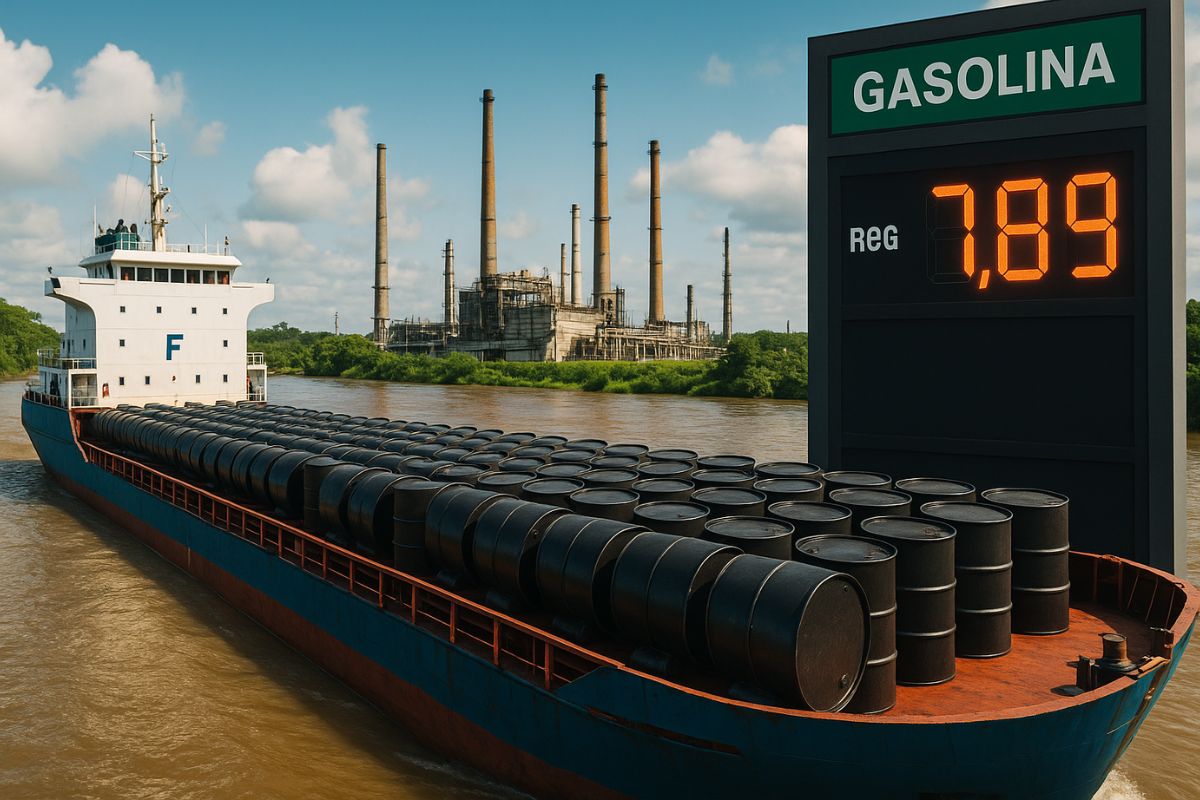


Privatized Manaus Refinery Oil Is Refined in SP. Report Claims That Oil From Privatized Refinery in Amazonas Is No Longer Processed Locally and Goes to São Paulo, Raising Fuel Prices in the Region.
The privatized refinery oil in Amazonas, extracted from the Urucu base, is no longer being processed in Manaus. According to a report from the Union of Oil Workers of Amazonas (Sindipetro-AM), released by the Monitor Mercantil, the product now takes a journey of up to 16 days on barges to São Sebastião (SP), where it is refined by Petrobras. Meanwhile, the Amazon Refinery (Ream), formerly Reman, has remained virtually idle since 2024, operating only as a terminal.
This change has raised fuel prices in the state even further. Gasoline and cooking gas can cost up to 10% above the national average, despite Amazonas being an oil-producing state. For experts, this operation increases logistical costs, jeopardizes the viability of local production, and shifts the financial burden onto consumers.
What Changed After the Refinery’s Privatization?
The Manaus Refinery was privatized in December 2022 for around R$ 1.3 billion paid by the Atem Group. Until 2022, the unit produced an average of 40,000 barrels/day. This volume fell to less than 30,000 in 2023 and plummeted to less than 10,000 in 2024. By February 2025, the refining cycle was completely halted, with no new requests for Urucu oil deliveries.
-
Larger than entire cities in Brazil: BYD is building a 4.6 km² complex in Bahia with a capacity for 600,000 vehicles per year, but the discovery of 163 workers in conditions analogous to slavery has shaken the entire project.

-
With an investment of R$ 612 million, a capacity to process 1.2 million liters of milk per day, Piracanjuba inaugurates a mega cheese factory that increases national production, reduces dependence on imports, and repositions Brazil on the global dairy map.

-
Brazilian city gains industrial hub for 85 companies that is equivalent to 55 football fields.

-
Peugeot and Citroën factory in Argentina cuts production by half and opens a layoff program for more than 2,000 employees after Brazil drastically reduced purchases of Argentine vehicles.


In practice, this meant the depletion of the only refinery in the North Region, leading to increased costs for transporting oil to São Paulo and dependence on imported or processed fuels from other regions.
Billion-Dollar Tax Breaks and Favoritism Claims
Another issue involves the tax breaks received by the Atem Group. According to a study by the Brazilian Institute of Oil and Gas (IBP), the company obtained around R$ 1.3 billion in tax discounts between 2017 and 2024 — an amount equivalent to what was paid for the refinery. Critics argue this represents a “zero-cost privatization,” as the company quickly recovered its initial investment.
The Atem Group, in a statement, rejected the accusations and claimed that the data used in the IBP study were “false and outdated.”
Government and Union Reactions
The Sindipetro-AM filed a complaint with the Administrative Council for Economic Defense (Cade), alleging non-compliance with privatization terms and anti-competitive practices. The Ministry of Mines and Energy (MME) also requested measures from Cade, highlighting that the North is currently paying the highest fuel prices in Brazil.
The National Oil Agency (ANP) conducted inspections in June and issued fines, but has yet to release a final report. For oil workers, there are indications that the refinery has been rendered ineffective, failing to fulfill its strategic role in the Amazon region.
What Is the Impact on Consumers and the Energy Market?
The interruption of refining in Amazonas directly affects consumers’ pockets. The transportation of oil for over two weeks to São Paulo raises logistical costs and reduces regional competitiveness. Furthermore, it weakens the state’s ability to establish itself as an energy hub, even with significant reserves in Urucu.
Experts believe the case exposes contradictions in the privatization policy in the energy sector. While other states receive investments and infrastructure, the North Region faces the risk of shortages and above-average prices.
The case of the privatized refinery oil from Manaus reinforces the debate regarding energy sovereignty, the social impact of privatizations, and regional inequality in Brazil. With Amazonas paying high prices for fuels produced in its own territory, the discussion should gain momentum in regulatory bodies and Congress.
And you, do you think the refinery’s privatization brought more harms than benefits? How can the issue of high fuel costs in the North be resolved? Leave your opinion in the comments — your perspective is important in this debate.










Única solução seria o governo retomar a refinaria
Privatização mal feita é pior que ineficiência estatal. Já a privatização bem feita, pode gerar inúmeros benefícios. Privatizar é diferente de entregar para monopólio privado. O setor teria melhorado se tivessem de fato incentivado a concorrência na região, que diversas empresas pudessem oferecer o serviço de fornecimento de refino. Que dividissem a refinaria em partes menores e vendessem a grupos empresariais distintos e concorrentes. Mas principalmente, com ampla verificação por parte do CADE e setores competentes para garantir que estejam cumprindo as regras sem realizar nenhum abuso ou obter vantagem em detrimento de prejuízo alheio exacerbado.
Me dá um exemplo de privatização bem feita que de fato reduziu o preço para o consumidor. Telefonia não vale pq o q barateou foi o acesso à tecnologia, não a privatização. Antes se comprava um notebook pelo equivalente a 20 mil reais, hj se compra por 3 mil e nao teve estatal x privado envolvidos. O acesso a telefone seria facilitado de qq forma.
Você perdeu uma ótima op5de ficar calado.
Essa a promessa de baixo preço de combustível para o brasileiro. Aqui na Bahia estamos sofrendo também o gosto amargo dessasprivatizações.