





 Portuguese
  English
  Spanish
  4 min of reading
  0 comments


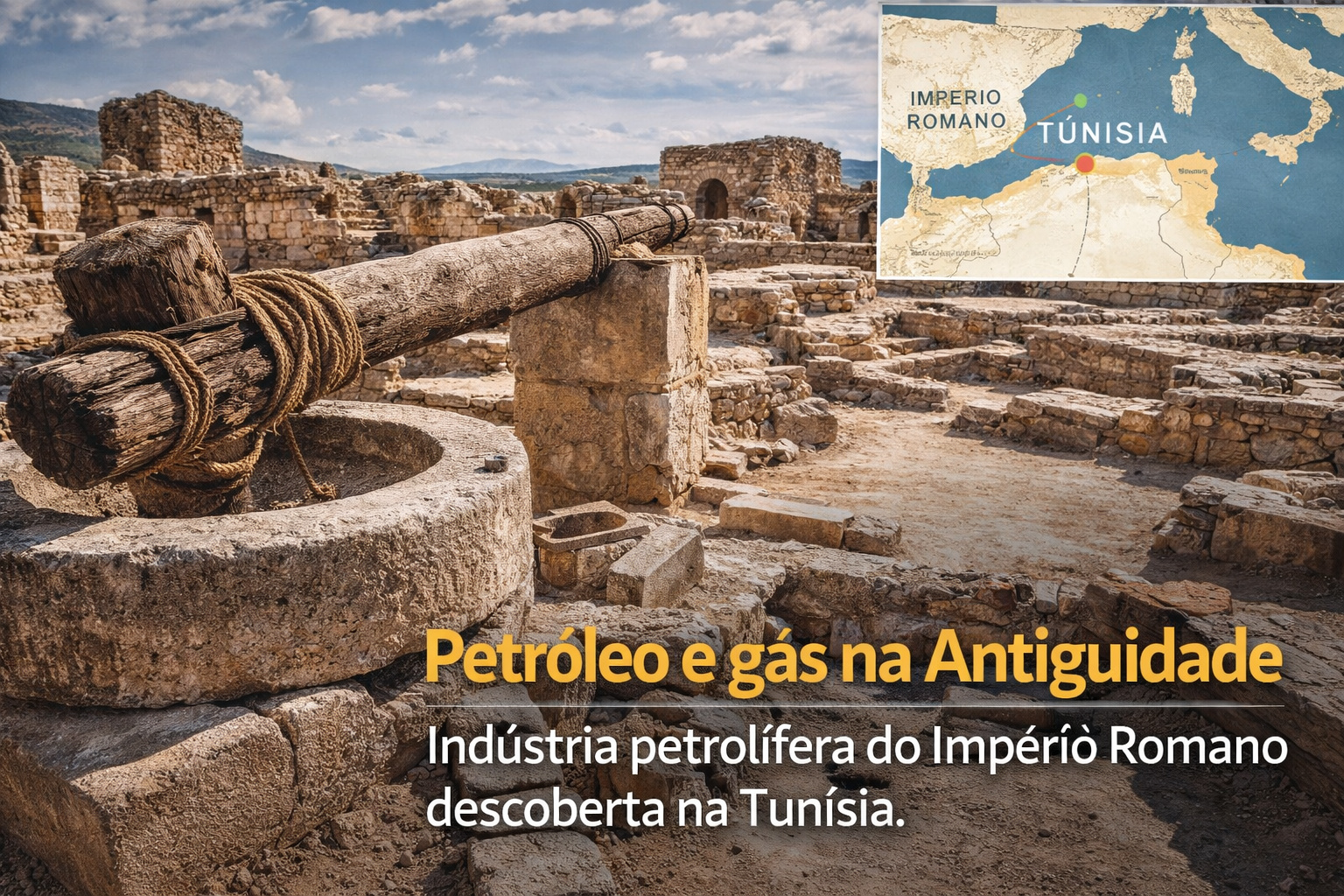
Archeological Discovery In Tunisia Reveals Mega Oil Industry Of The Roman Empire And The Strategic Role Of Ancient Oil.
Oil And Gas In Ancient Times: Discovery Reveals Mega Oil Industry Of The Roman Empire
A major archeological discovery in Tunisia revealed what experts already classify as the second largest structure linked to the oil industry of the Roman Empire, altering the understanding of economy, logistics, and large-scale production in ancient times.
The complex was identified at the site of Henchir el Begar, in the Kasserine region, and functioned for several centuries as an integrated center for production, storage, and circulation of oil, a strategic resource comparable to the current role of oil and gas in modern economies.
Located in the territory of ancient Africa Proconsular, the area housed a mega agricultural and industrial structure planned for high efficiency.
-
Brazilian giant expands borders in the Southeast: Petrobras confirms new oil discovery in ultra-deep waters in the pre-salt of the Campos Basin.

-
Alert in the global energy market: Severe tropical cyclone hits the coast and disrupts gas production at major plants in Australia, threatening global supply.

-
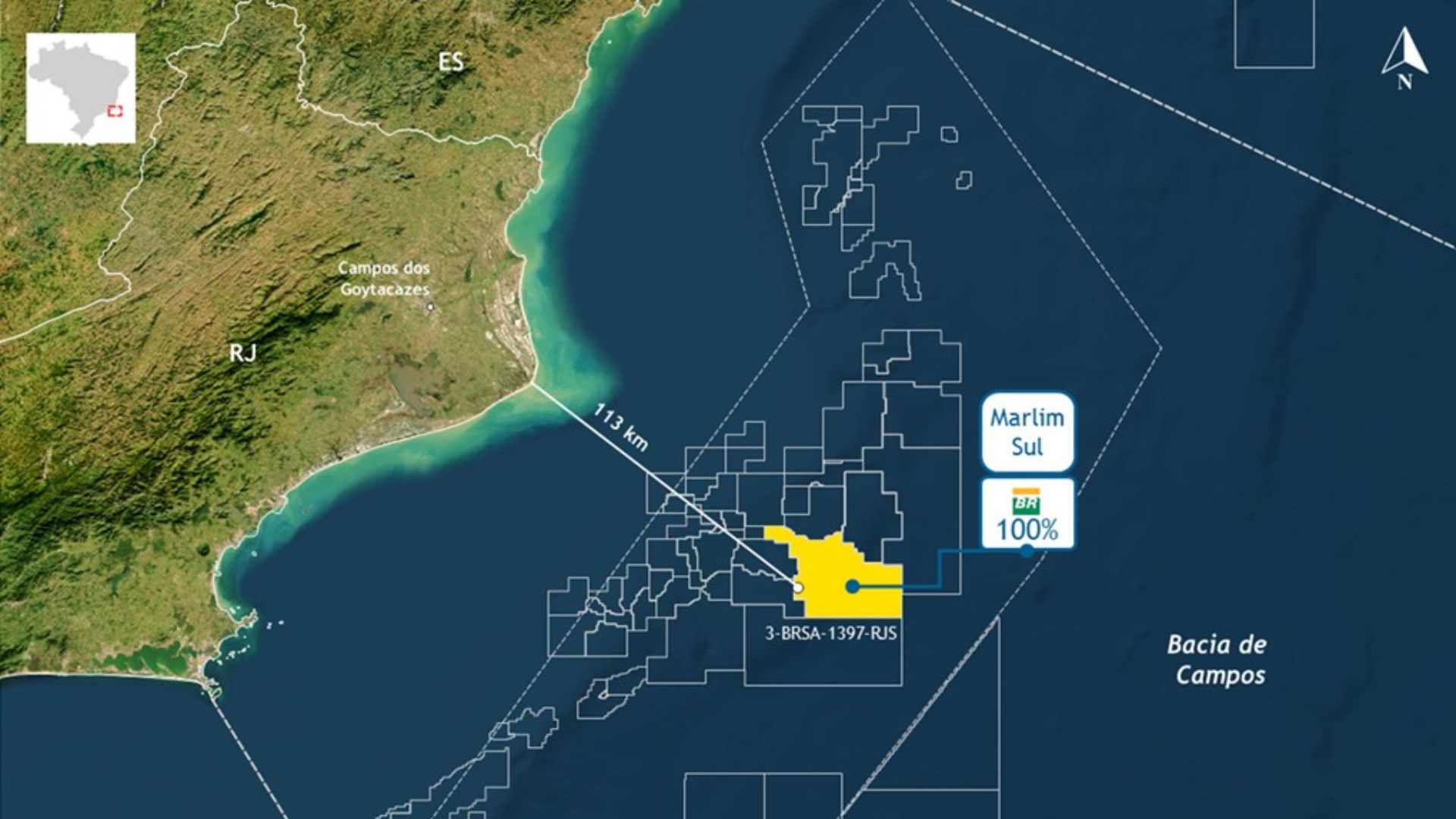
Petrobras finds high-quality oil in the pre-salt at 113 km from RJ and reignites expectations about strategic reserves in the Campos Basin.

-
Ocyan opens registrations for startups focused on innovation in the oil and gas sector and will select projects for Innovation Day with the support of Nexio.


Archeology indicates that the system brought together monumental presses, technical areas, housing, and logistical infrastructure, indicating a continuous and organized operation.
The significance of the finding lies not only in the scale of production but also in the fact that it demonstrates how the Roman Empire structured complex production chains outside of its large urban centers.
Strategic Importance Of The Roman Empire’s “Oil”
Although distant from the modern concept of oil and gas, Roman olive oil played a similar role as an essential input. It was used in food, lighting, religious rituals, medicinal practices, hygiene, and public baths.
Therefore, ensuring its continuous production and distribution was an economic and political priority for the Roman Empire.
In this context, the ancient oil industry required agricultural planning, specialized labor, and long-distance trade networks.
At Henchir el Begar, the presence of 12 large beam presses in a main torcularium, combined with another eight presses in a second sector, reveals a rare scale of extraction in rural areas. This concentration indicates serial production aimed at regional and interprovincial markets.
How The Mega Oil Industry Functioned In Henchir El Begar
The discovery shows that the complex was designed as a true rural industrial park. The structures were adapted to the relief and water resources of the Jebel Semmama massif, ensuring productive and logistical efficiency.
Thus, experts began to define the site as a “mega oil industry,” a term that reinforces its economic dimension.
Among the elements identified by archeology, two large production sectors with aligned presses, adjoining areas for circulation and work, storage facilities, and stone mills for grinding cereals stand out.
Furthermore, residential structures associated with a small vicus were found, indicating the presence of a permanent community linked to industrial and agricultural activities.
Infrastructure And Commercial Networks Of The Roman Empire
The strategic location of the complex was not random. The Kasserine region integrated Africa Proconsular, considered one of Rome’s main agricultural granaries. Specialized in the export of cereals, olive oil, and other products, this province played a central role in supplying the Roman Mediterranean.
The existence of the second largest oil industry of the empire in Henchir el Begar confirms the intense productive vocation of the area. Roads, internal paths, and possible warehouses reinforce the hypothesis of a well-structured logistical network.
Additionally, an inscription dated 138 A.D. records a senatorial decree authorizing the establishment of a periodic market nearby, evidencing the commercial function of the territory.
Olive Oil As A Link Between Rural Production And Imperial Power
The olive oil produced in the complex likely supplied urban centers, local markets, and military units positioned along the empire’s borders. In this way, the archeological discovery reveals how rural production was directly connected to imperial power, ensuring economic stability and territorial control.
Just as oil and gas shape modern geopolitical strategies, olive oil was a key resource to sustain the expansion and functioning of the Roman Empire. The industrial scale observed in Henchir el Begar reinforces that Rome dominated not only territories but also sophisticated productive systems.
Archeology Redefines The Oil Industry Of Ancient Times
By revealing this mega structure, archeology expands the understanding of the Roman economic complexity and shows how traditional techniques integrated into advanced logistical planning to form an efficient production chain.
Thus, the discovery in Tunisia repositions Africa Proconsular as a key piece of the imperial economy and highlights that the oil industry of ancient times operated in a much more organized and strategic manner than previously imagined.
The finding, therefore, reinforces how essential resources have always shaped empires, yesterday with olive oil and today with oil and gas.









-

-

3 pessoas reagiram a isso.