





 Portuguese
  English
  Spanish
  2 min of reading


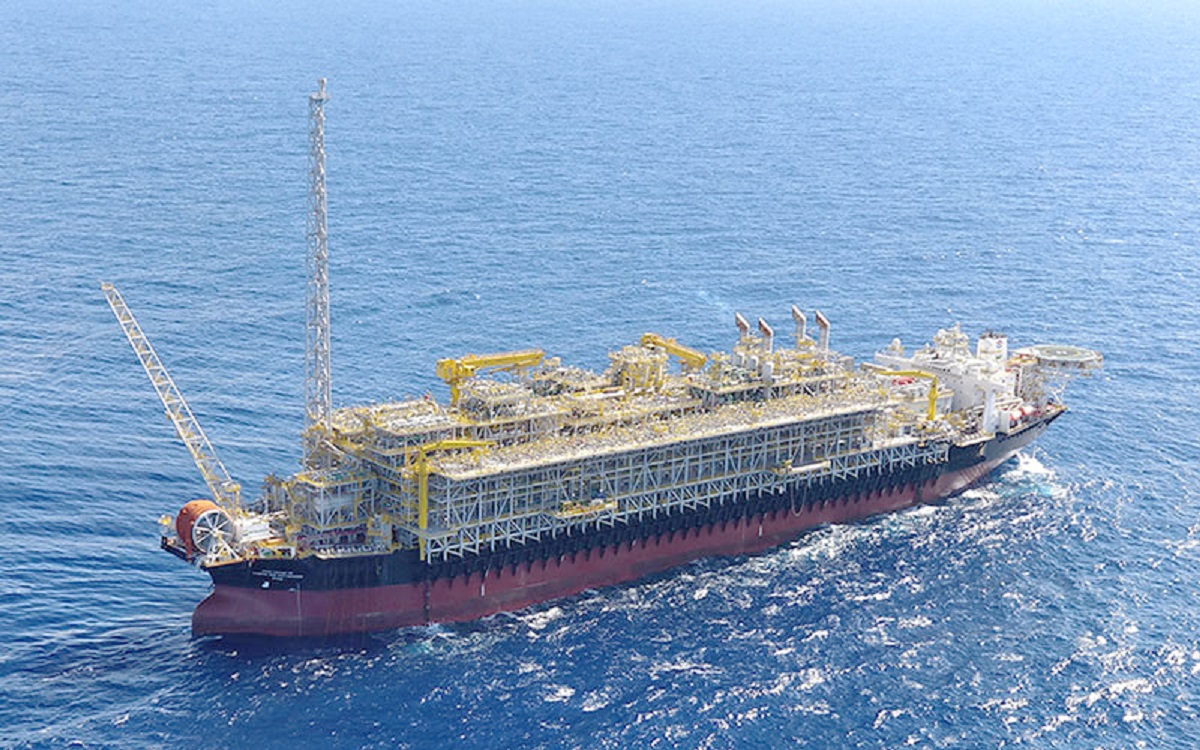
Malaysian Oil Company Signs Agreement with Petrobras to Acquire 50% of Tartaruga Verde Field, Offshore, Strengthening the Company’s Operations in South America.
Petronas, the national oil company of Malaysia, announced the acquisition of a 50% stake in the Tartaruga Verde field, located in the southern portion of the Campos Basin, approximately 125 km off the coast of Macaé.
The deal was made with Petrobras, from whom the Malaysian oil company’s subsidiary in Brazil also negotiated the facilities of module III of the Espadarte field.
The transaction still needs to be approved by CADE (Administrative Council for Economic Defense) and ANP (National Agency of Petroleum, Natural Gas and Biofuels), according to a statement from Petrobras.
-
Haiti’s capital is experiencing an energy and construction crisis, facing blackouts, a blocked port, and buildings at risk after years of instability and a significant earthquake.

-
Government unlocks R$ 554 million for a highway that has been requested for decades and accelerates the duplication of BR.
-
Without bricks, without cement, and without endless construction: the cardboard house that is assembled in modules and can be moved.

-
Billions of barrels on the equatorial margin could lead Amapá to double its oil production in Brazil — the state aims to enter the route of companies in the Campos Basin, attract investments, and boost jobs and businesses in the oil and gas sector.

The share division will be 50% for each company, with Petrobras being the operator of the field.
The acquisition of the Tartaruga Verde field and Module III of the Espadarte fields has been considered an important milestone for Petronas, as it consolidates the company’s presence in the South American market amid diversification of its business.
The Tartaruga Verde Field
The production of the Tartaruga Verde field, in the deep waters of the Campos Basin, started on 06/22/2018, through the FPSO Cidade de Campos dos Goytacazes, chartered by Modec.
The FPSO is located about 127 km off the coast of the State of Rio de Janeiro, at a water depth of 765 meters, with the capacity to process up to 150,000 barrels of oil and 3.5 million cubic meters of gas daily, and to compress 5 million cubic meters of gas.









Seja o primeiro a reagir!