





 Portuguese
  English
  Spanish
  4 min of reading
  0 comments


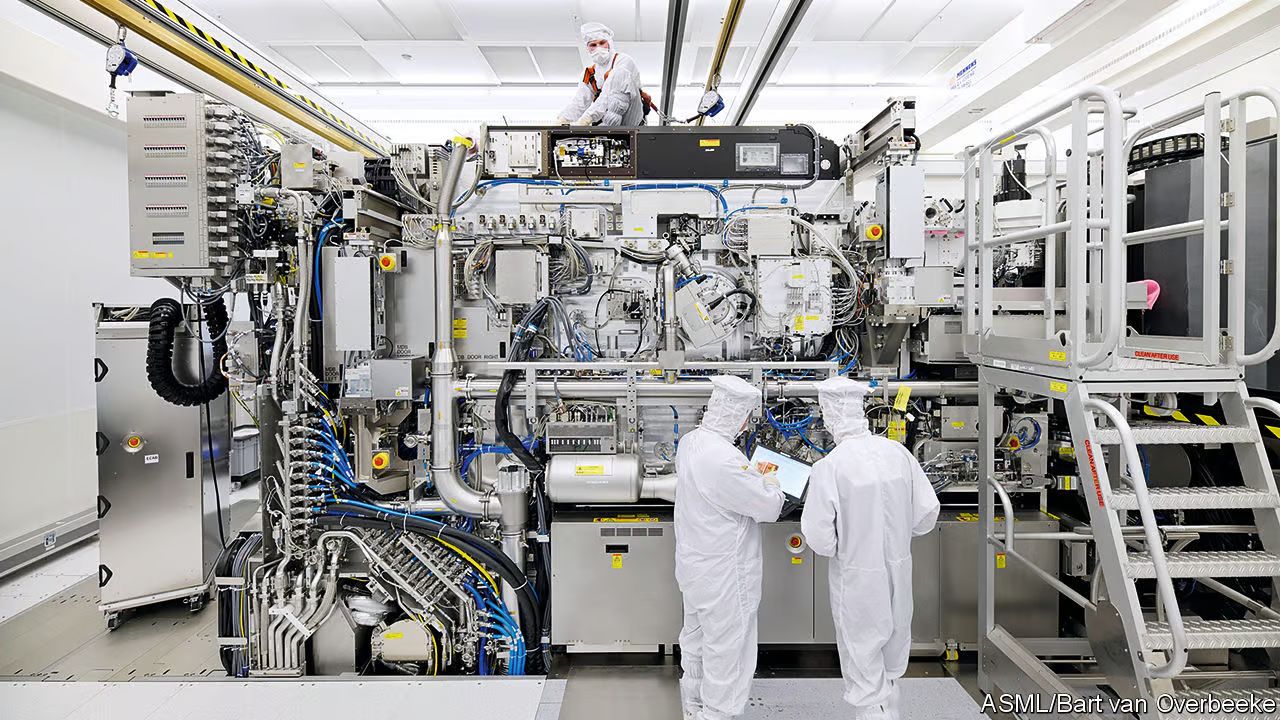
Philips Was Once the Second Largest Semiconductor Manufacturer in the World, but Lost Ground as ASML, a Company It Helped Create, Became the Absolute Leader in Lithography Machine Production. How Did One of the Tech Giants Fall and Lose a Billion-Dollar Market?
Just imagine: you create a market, invest in it for decades, help develop the technology that will revolutionize everything, and in the end, you get left behind and watch another company dominate the game. Well, that’s exactly what happened to Philips.
In the 1970s, the Dutch company was simply the second largest semiconductor manufacturer on the planet, surpassed only by Texas Instruments. And it wasn’t just any company: Philips was a powerhouse, with over 400,000 employees spread around the globe. But while chip technology evolved, it failed to keep pace and ended up being sidelined in its own market.
The most curious part? It was Philips itself that helped found ASML, a company that is now essential for producing the world’s most advanced chips. So how did Philips lose everything? Let’s understand this story.
-
With an investment of R$ 612 million, a capacity to process 1.2 million liters of milk per day, Piracanjuba inaugurates a mega cheese factory that increases national production, reduces dependence on imports, and repositions Brazil on the global dairy map.

-
Brazilian city gains industrial hub for 85 companies that is equivalent to 55 football fields.

-
Peugeot and Citroën factory in Argentina cuts production by half and opens a layoff program for more than 2,000 employees after Brazil drastically reduced purchases of Argentine vehicles.

-
A Brazilian city gains a factory worth R$ 300 million with the capacity to process 200 thousand tons of wheat per year, a mill of 660 tons/day, silos for 42 thousand tons, and an industrial area of 276 thousand m².

Philips’ Dominance in the Semiconductor Sector
If today we think of Philips as a brand of appliances, light bulbs, and medical equipment, in the past it was much more than that. In the 1970s, the company was one of the greatest technological forces in the world.
In the Netherlands alone, there were 90,000 employees. Philips’ portfolio included radios, televisions, appliances, and medical equipment. But the most impressive part was that the company did everything in-house – from design to manufacturing of its products.
Pioneering in Semiconductors
Philips’ interest in semiconductors didn’t happen overnight. Back in the 1950s, the company had already realized that chips would be the future. That’s why it heavily invested in creating research centers and forming partnerships with universities and technology labs.
And Philips didn’t just manufacture chips – it also created its own lithography machines used to produce them. This meant that the company had total control over the process, something few managed to achieve at that time.
The result? By the 1970s, Philips was already at the top of the market, second only to Texas Instruments. But the problem with being at the top is that if you stop innovating, the fall comes quicker than you think.
The Birth of ASML

In the 1980s, the chip market was changing rapidly. Companies wanted smaller, faster, and more efficient chips. And for that, it was essential to evolve the lithography machines.
Philips knew it needed to update but did not want to tackle this challenge alone. That’s when, in 1984, it partnered with ASM International, another Dutch company specializing in semiconductors.
The idea was simple: Philips would bring its expertise in optics and lithography, while ASM would contribute its knowledge in chip manufacturing. From this fusion, ASML (Advanced Semiconductor Materials Lithography) was born, a company that would forever change the semiconductor industry.
Little did Philips know that years later, ASML would become the global leader in lithography machines – and that it would be left behind.
Philips’ Decline in the Chip Sector
As ASML grew and became increasingly essential to the industry, Philips began to lose competitiveness. The market changed, challenges increased, and the company simply couldn’t keep up.
And it wasn’t just a matter of technology. According to experts, Philips was a very bureaucratic and rigid company, struggling to make quick decisions. This caused it to lose ground while other giants, such as Intel and Samsung, made advances.
The Biggest Mistake: Selling ASML Shares Too Early
If Philips had held onto its stake in ASML, would the story have been different? Hard to say. The fact is that the company sold its shares too soon, missing the chance to profit from ASML’s explosive growth.
Today, all the major semiconductor manufacturers in the world – TSMC, Intel, Samsung, SK Hynix, among others – rely on ASML’s lithography machines to produce their chips.
And Philips? It missed out.
ASML: The Giant That Inherited Philips’ Legacy
If you are reading this on a smartphone, computer, or tablet, you can bet that the chips inside it were manufactured with ASML machines.
The company is the only one in the world that produces EUV (Extreme Ultraviolet) lithography machines, a technology that allows for the manufacturing of today’s most advanced chips.
Meanwhile, Philips… well, it no longer has anything to do with this market.








-

-

-

19 pessoas reagiram a isso.