





 Portuguese
  English
  Spanish
  5 min of reading
  0 comments


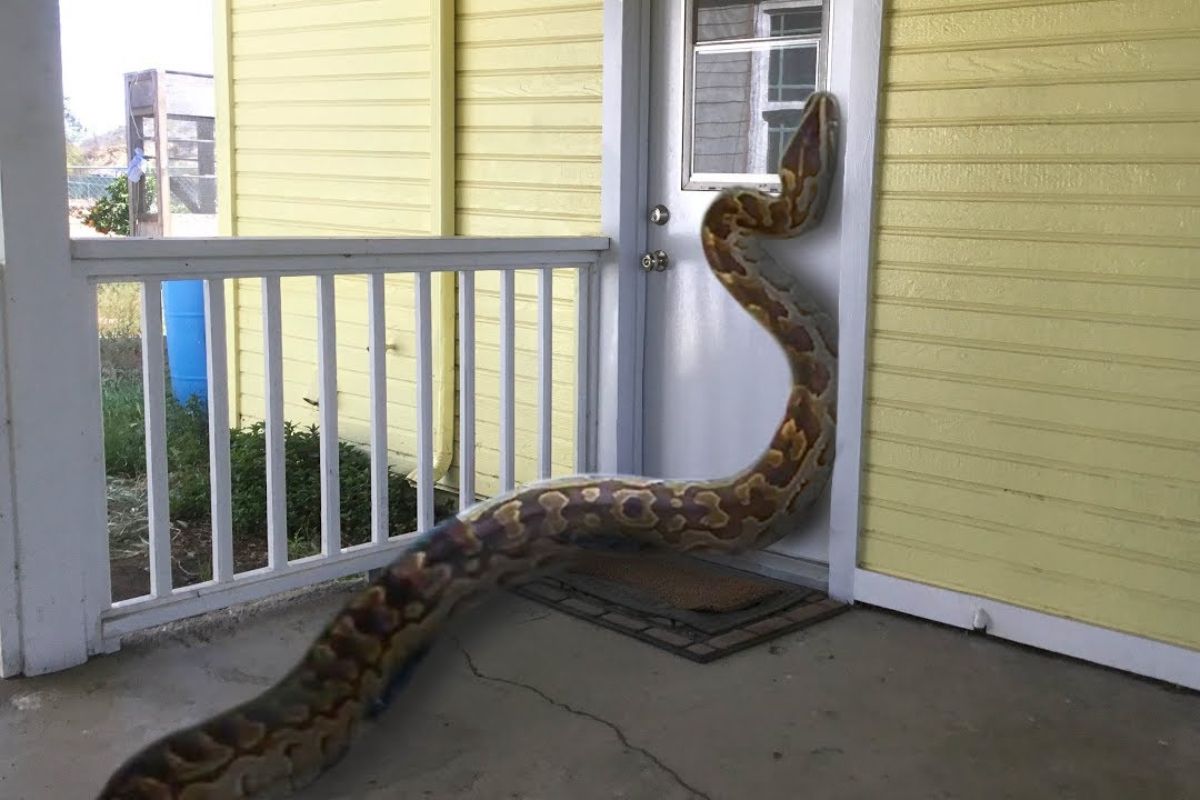
Filmed on April 29, 2016, the scene of the African Python diverting from the door and swallowing a rabbit exposes the real anatomy of snakes: jaws always connected to the skull, pivoting bones, and internal teeth that “walk” to transport the prey through the throat in a recording associated with the University of Guadalajara
The African Python appears in the backyard after escaping and, instead of insisting on entering the house, focuses on a rabbit that served as food. The recording shows the animal ignoring the nearby human activity and calmly starting the ingestion, supported by a capture and transport mechanism that does not depend on chewing.
The episode gained scientific value by detailing, in close-up, how the African Python deals with large prey without “dislocating” its mouth. The scene was used in a master’s thesis in zoology on the feeding behavior of reptiles, and the author reports being in a PhD program connected to reptile venom research, with filming conducted in partnership with the University of Guadalajara, in Mexico.
What Happened in the Backyard and Why the Recording Stood Out

The sequence begins with the African Python already out of control, described as hungry and moving around the residence. The approach to the house occurs, but the behavior changes when the rabbit enters the scene as an immediate food option. The target switch is direct: instead of seeking shelter, escape, or confrontation, the snake prioritizes the available prey.
-
A forgotten cord on the floor of a basement in Vienna leads a plumber to a box containing 30 kilograms of gold with Mozart’s face, hidden before World War II. The treasure, worth 2.3 million euros, was just centimeters away from a worker who ignored the sign a day earlier.

-
A couple buys an old chalet, breaks the kitchen floor for renovation, and finds over a thousand coins of gold and silver hidden since the English Civil War over 4 centuries ago.

-
Rigid bags with their days numbered: new trend prioritizes comfort in 2026.

-
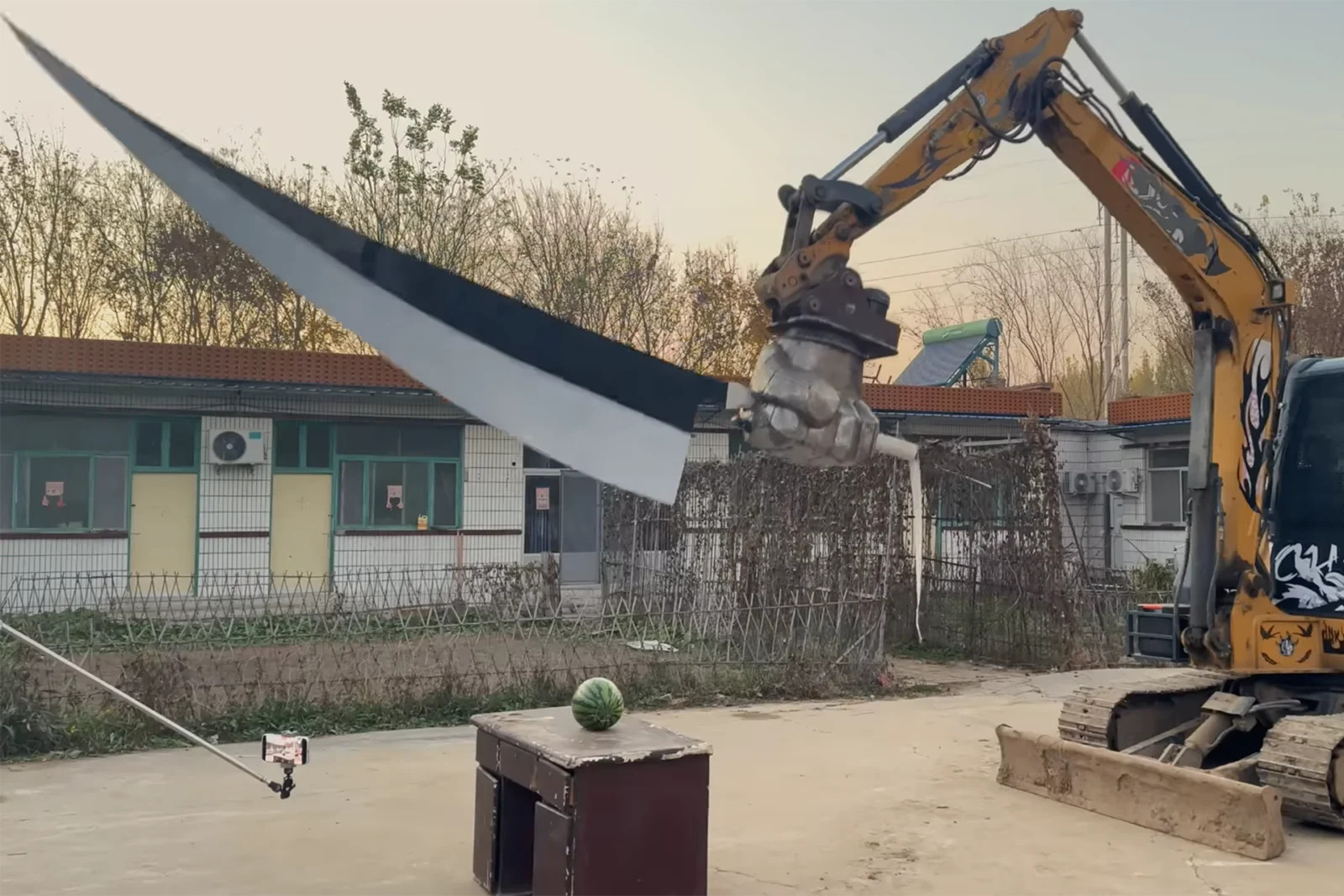
YouTuber creates an excavator equipped with a giant 4.5-meter sword to challenge his brother to a rematch, and the invention quickly goes viral on social media.

The central point, however, is not the pursuit, but the ingestion. The recording focuses on the repetitive movements of the mouth and head, with controlled opening and gradual advances. It is a mechanical pattern, not a single “jerk,” and this helps to dismantle the popular idea that the snake “loosens” its jaw to swallow.
Loose Jaws Are a Myth: What Really Happens
One of the most persistent myths about snakes is that the jaws separate from the skull. In the shown case, the explanation presented is objective: the jaws remain connected to the skull. What changes is the amplitude and mode of movement, as the bony and ligamentous architecture favors a wide opening and alternating displacements.
In mammals, the jaw was “designed” for chewing, with more rigid fittings and force applied in grinding cycles. In snakes, the priority is different: to capture and transport the whole prey. For this, tendons, ligaments, and joints come into play that increase the flexibility of the skull, allowing fine adjustments during ingestion.
Two Halves, Two Movements: The Lower Jaw Works Alternately
The recording reinforces that the lower jaw is not joined in front as in mammals. Instead of a rigid “bar,” there is an elastic ligament connecting the two halves. This allows the left and right portions to move apart and reposition without breaking the structural connection.
The practical effect is evident when the African Python “advances” in small steps: each half of the lower jaw can move independently, alternating the grip on the prey. One side holds, the other repositions, and the cycle repeats. This pattern creates continuous progress, even when the prey has a significant volume relative to the snake’s head.
The Role of Square Bones: Pivots That Expand Opening and Reach


Another point described involves the square bones, positioned at the back of the skull, where the fixation with the lower jaw occurs. The emphasis here is biomechanical: these bones are not rigidly attached, they pivot. This allows vertical and horizontal rotation, expanding the possibilities for opening and accommodating the “profile” of the prey.
In practice, what appears to be a “jaw coming out of place” is, in fact, a set of joints working with controlled slack, combined with elastic soft tissues. The result is a mouth that adjusts to the contour of the food, without losing the connection with the skull at any moment.
The Scariest Mechanism Up Close: Internal Teeth and the Pterygoid Walk
The most technical detail of the recording is in the roof of the mouth. The presented explanation points to a pterygoid bone with a row of internal teeth. This structure moves separately from the jaws and acts as a traction system.
This is where the so-called transport cycle comes in, also described as the pterygoid walk. The logic is simple and disturbing: the snake opens its mouth, fixes teeth on the surface of the prey, and instead of “pulling” with a single movement, alternates micro-advances. The mouth literally “walks” over the food, while the internal teeth help guide the prey in and down the throat.
The close-up shows the alternation of contact and repositioning, with the African Python maintaining grip at different points at each stage. This explains why the process may seem slow, but it is efficient: it does not depend on continuous explosive force, but rather precise repetition.
Why This Type of Recording Is Rare and Useful for Understanding Feeding Behavior
In natural situations, these angles of approach and proximity are not always possible. Here, the recording allows for the complete observation of the sequence: approach, fixation, beginning of ingestion, lateral adjustments, jaw alternation, and the work of the internal palate structure. It is a direct window into the feeding engineering of snakes, focusing on functional anatomy, not assumptions.
The academic context provided also matters: the material was the basis for a master’s thesis in zoology on reptile behavior and later connects to a PhD trajectory in reptile venom research. Within this approach, feeding does not appear as curiosity, but as a piece of the puzzle of the animal’s biology.
What part of the African Python mechanism surprises you the most: the alternating jaw or the pterygoid walk with internal teeth?









-

-

-

-

-

-

13 pessoas reagiram a isso.