





 Portuguese
  English
  Spanish
  4 min of reading
  0 comments


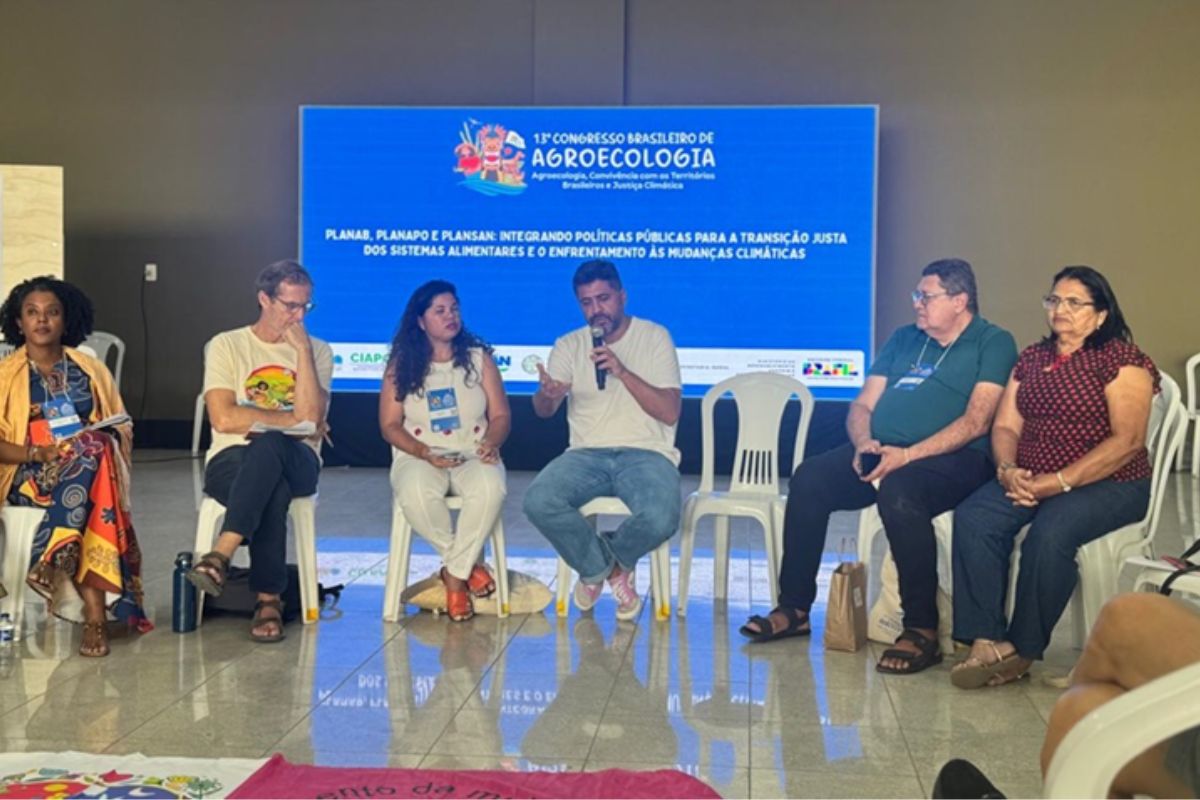
The Integration Between National Plans Strengthens Agroecology and Sustainable Supply. The Planapo 2025 Stands Out as a Strategic Link Between Government and Civil Society in Brazil
The consolidation of the Planapo 2025 (National Plan for Agroecology and Organic Production) marks a decisive advance in the coordination of Brazilian public policies aimed at agroecology, food security, and sustainable supply, according to an article published.
Created to unite interministerial efforts and strengthen dialogue with civil society, the plan reflects the government’s commitment to promoting the production of healthy food, environmentally responsible and socially just.
This movement represents a new moment in the reconstruction of national strategies aimed at sustainability, involving ministries, councils, and committees that now operate in an articulated manner.
-
Brazil has just secured a secret route through Turkey to save agribusiness exports that were threatened by the closure of the Strait of Hormuz amid violent clashes in the Middle East.

-
JBS, founded by the Batista brothers, continues to conquer the world: the entrepreneurs built a ‘factory in the desert’ with 3,000 jobs.

-
With only 1% of Brazilian territory, Santa Catarina has built one of the most competitive industrial parks in the country with 64,000 companies, nearly 1 million jobs, and a growth of 5.3% while the national industry is practically stagnant.
-
China banned the export of 22 tons of meat from Argentina.
During the 13th Brazilian Congress on Agroecology, held in Juazeiro (BA), the Ministry of Agrarian Development and Family Agriculture (MDA) participated in a historic roundtable discussion that brought together, for the first time, representatives from the main bodies responsible for the national plans Planapo 2025, Plansan, and Planab.
This joint action reinforces the state’s role in consolidating policies that connect the countryside and the city, ensuring quality food, incentives for organic production, and strengthening family farming.
Interministerial Cooperation and Strengthening Food Security
The new institutional arrangement driven by the Planapo 2025 is based on cooperation among the Interministerial Chamber for Agroecology and Organic Production (Ciapo), the Interministerial Chamber for Food and Nutritional Security (Caisan), and the Management Committee of the National Food Supply Plan (Planab).
This integration seeks to overcome the historical fragmentation of public policies, creating an environment of continuous dialogue between the government and civil society.
According to Vivian Libório, deputy executive secretary of Ciapo, the initiative already involves 14 ministries and nine public bodies, demonstrating the strengthening of shared governance.
She emphasizes that the advancement of the plan has been essential in promoting structuring actions, such as the Ecoforte Program, aimed at strengthening networks of agroecology, extractivism, and sociobiodiversity, and the Family Agriculture Safra Plan, which includes specific lines of credit, such as Pronaf Agroecology.
These measures have expanded access for family farmers and traditional communities to fostering and rural credit policies, ensuring productive sustainability and local income generation.
The convergence of intersectoral agendas, as experts point out, is fundamental to maintaining food security integrated with environmental conservation and the appreciation of traditional knowledge.
Planapo 2025: Social Participation and Valuation of Sociobiodiversity
The Planapo 2025 reinforces the importance of social participation as a tool for monitoring and controlling public policies.
The articulation between the National Commission for Agroecology and Organic Production (Cnapo), the National Council for Food and Nutritional Security (Consea), and the National Council for Sustainable Rural Development (Condraf) ensures that different voices are heard in the formulation and execution of governmental actions.
For Elizete da Silva, a representative of Cnapo, the integration of the plans is an essential step to transform the debate into concrete practices.
She emphasizes that “agroecology is a project of society that values life and strengthens solidarity among people,” reinforcing the need for policies that communicate with one another.
The joint action of these bodies ensures that popular and scientific knowledge walk side by side, promoting inclusive and sustainable solutions to the challenges of food production and nature conservation.
The role of universities and the Agroecology Study Nuclei (NEAs) has also been decisive in bringing research and rural extension closer, contributing to the technical and social advancement of agricultural communities.
The integration of actions strengthens the concept of sociobiodiversity, expanding the recognition of traditional practices and the appreciation of rural territories.
Sustainable Financing and Challenges of Integrated Management
The consolidation of the Planapo 2025 directly depends on the ability to secure stable resources and coordinated planning among ministries.
According to Leonardo Martins from Caisan, the main challenges lie in ensuring adequate financing and breaking with the sectorial nature of policies.
He highlights that building mechanisms for permanent cooperation is vital to guarantee the effectiveness of actions aimed at food security and sustainable supply.
The meeting held in Juazeiro was a milestone in defining a unified agenda for the strengthening of public policies.
The goal now is to territorialize actions, expanding the presence of the state in rural and urban regions and strengthening dialogue with national councils.
This integrated approach allows Brazil to advance in its agroecological transition, making the production system more resilient, participatory, and committed to collective well-being.
With the Planapo 2025, the country reaffirms its goal of building a public policy for agroecology that unites environmental sustainability, food security, and social inclusion, indispensable pillars for the future of Brazilian rural development.






Seja o primeiro a reagir!