





 Português
  Inglês
  Espanhol
  4 min de leitura
  0 comentários


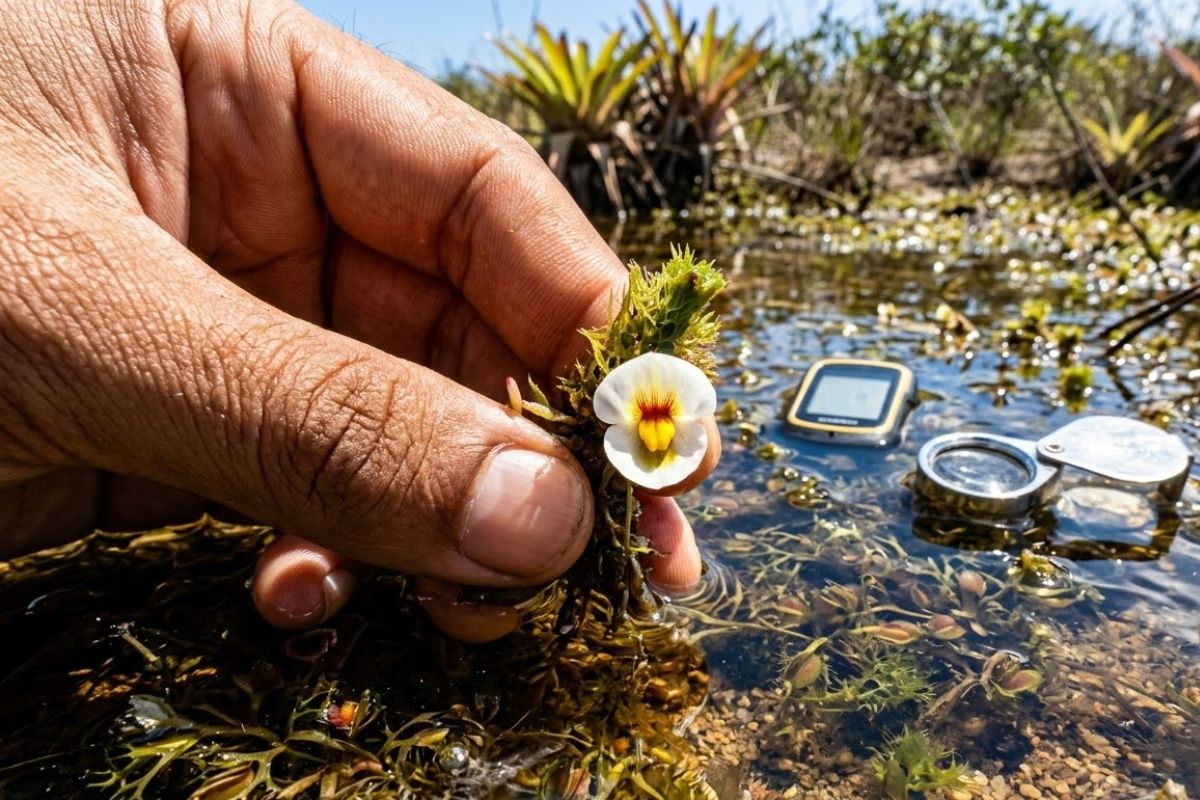
The Rediscovery Of A Rare Carnivorous Plant In A Flooded Area Of The Cerrado In The Interior Of Piauí Surprised Researchers And Raised New Alerts About Environmental Conservation. With No Records In Some Regions Of Brazil For Over Eight Decades, The Species Now Reappears In An Extremely Restricted And Vulnerable Habitat.
The rare carnivorous plant recorded in the interior of Piauí represents one of the most curious botanical findings in recent years in Brazil. The aquatic species Utricularia warmingii was identified by researchers during an inventory of aquatic plants conducted in 2023 in a flooded area in the municipality of Campo Maior, about 80 kilometers from Teresina.
The rediscovery draws attention mainly because there had been no records of the species in some Brazilian regions for over 80 years, especially in the Atlantic Forest. This new record expands scientific knowledge about the distribution of the plant and, at the same time, reveals how little certain species are studied in different biomes across the country.
How The Rare Carnivorous Plant Found In The Cerrado Works
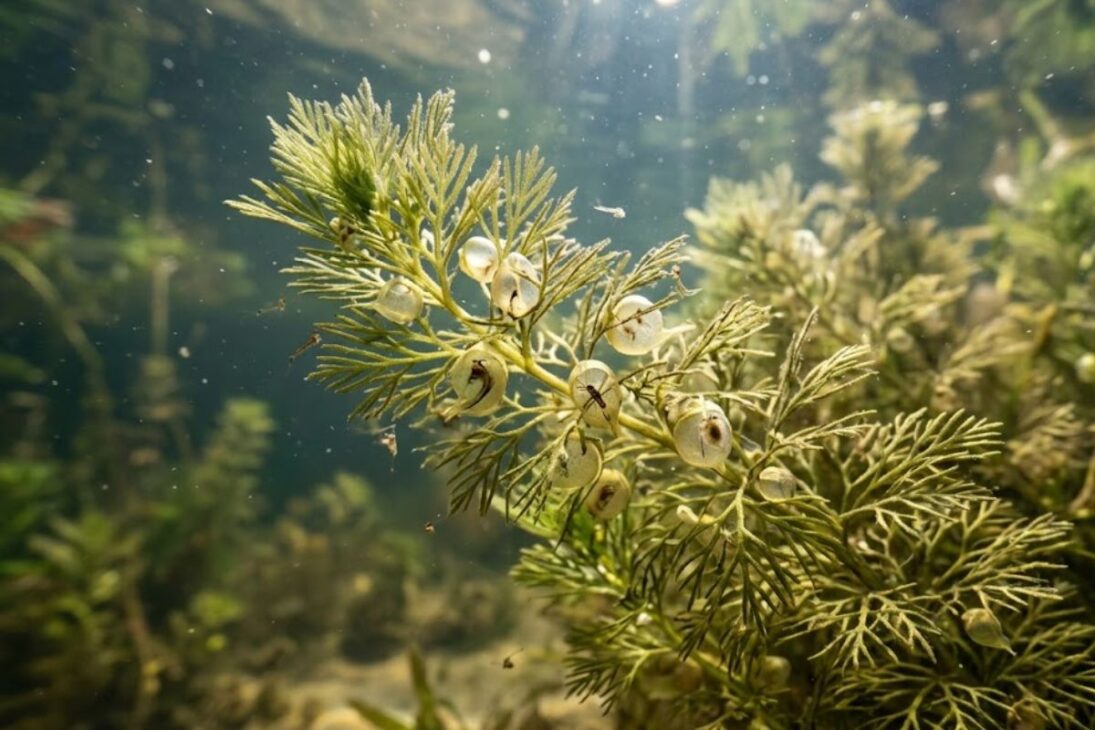
The rare carnivorous plant belongs to the Lentibulariaceae family and exhibits highly specialized biological characteristics. Unlike more well-known terrestrial plants, it lives entirely submerged in shallow waters and typically reaches a height of only about six centimeters.
-
A bright yellow mushroom imported from Asia escaped from a cultivation farm in the United States in 2010 and is now aggressively spreading across 25 states, destroying entire communities of native fungi in American forests.

-
Buried under China, a colossal machine weighing 20,000 tons began operating as the largest neutrino detector on the planet and, in just 59 days, surpassed results that science took half a century to achieve.

-
Iran enters the center of a climate alert after the war emitted 5.6 million tons of CO2 in two weeks, surpassing the annual pollution of entire countries.

-
Lunar exploration may change after a Chinese probe finds a “cavity” of radiation that reduces the impact on astronauts by up to 20% at certain times on the Moon.


Its survival strategy involves microscopic structures called utricles, small natural traps capable of capturing tiny aquatic organisms. These mechanisms function as extremely fast suction devices, allowing the plant to obtain nutrients in environments low in organic matter.
In addition to its unique capture system, the species also has delicate flowers. The white flowers with yellow and red hues emerge on an inflated air-filled stem, a structure that helps the plant float on the water’s surface, facilitating pollination.
A Species With Rare Records And Fragmented Distribution
Although the rare carnivorous plant occurs in some South American countries, such as Bolivia, Colombia, and Venezuela, records of the species are historically scarce and widely spaced. In Brazil, there were old records in the Pantanal and in some areas of the Southeast.
In the state of São Paulo, for example, there have been no confirmed records of the species since 1939, which raises the possibility of local extinction. A similar situation may have occurred in Minas Gerais, where the plant was originally described in the 19th century.
This geographic fragmentation shows that the species may appear in scientific maps as widely distributed, but in reality occupies only small fragments of extremely specific habitat, making its survival more fragile.
Why The Plant Can Disappear Easily
The new population identified in Piauí seems to be restricted to a single known location so far. New searches conducted by researchers in the same region did not locate any other occurrences of the species, which reinforces the extremely limited nature of its distribution.
This factor is concerning because the environments where the plant lives, including shallow ponds and temporary flooded areas, are among the most threatened ecosystems on the planet.
Changes in flooding regimes, agricultural expansion, and alterations in landscape can quickly compromise these habitats.
Another issue involves water quality. Agricultural fertilizers, invasive species, and environmental changes can alter the chemical balance of the ponds, making the environment unsuitable for highly specialized species like this plant.
Area Of Occurrence In Brazil Is Extremely Small
Available data indicate that confirmed populations of the species in Brazil are separated by large distances and occur in few isolated locations. This means that the actual area occupied by the rare carnivorous plant in the country is extremely small.
Estimates suggest that the total area occupied may be around 36 square kilometers, a number considered very small to ensure long-term population stability.
When species have such isolated populations, the possibility of natural recolonization becomes minimal if a habitat disappears, significantly increasing the risk of regional extinction.
What The Discovery Reveals About The Knowledge Of Brazilian Flora
The discovery of the rare carnivorous plant in the interior of Northeast Brazil also highlights something important for science: there are still many gaps in knowledge about Brazilian flora.
Regions in the interior of the country remain underexplored by systematic botanical inventories. Areas that seem commonplace can hide rare species, unknown populations, or even organisms not yet described by science.
This underscores the importance of expanding field studies and environmental monitoring, especially in natural aquatic ecosystems. Temporary wet environments, often neglected in conservation policies, may house highly specialized and sensitive species.
The rediscovery of this rare carnivorous plant in the Cerrado of Piauí reveals at once an encouraging piece of news for science and a warning about the fragility of natural environments.
A species that went decades without records in several regions of the country now reappears in a single known point, dependent on an extremely specific habitat.
This type of discovery shows how Brazilian biodiversity still holds surprises but also how it can silently disappear if its environments are degraded.
Now the question that many people have been asking after learning this story is: how many other rare species may exist hidden in poorly studied areas of Brazil?
Do you believe that there are still many unknown plants or animals in poorly explored regions of the country? Share your opinion in the comments and join the discussion.







Seja o primeiro a reagir!