





 Portuguese
  English
  Spanish
  5 min of reading
  6 comments


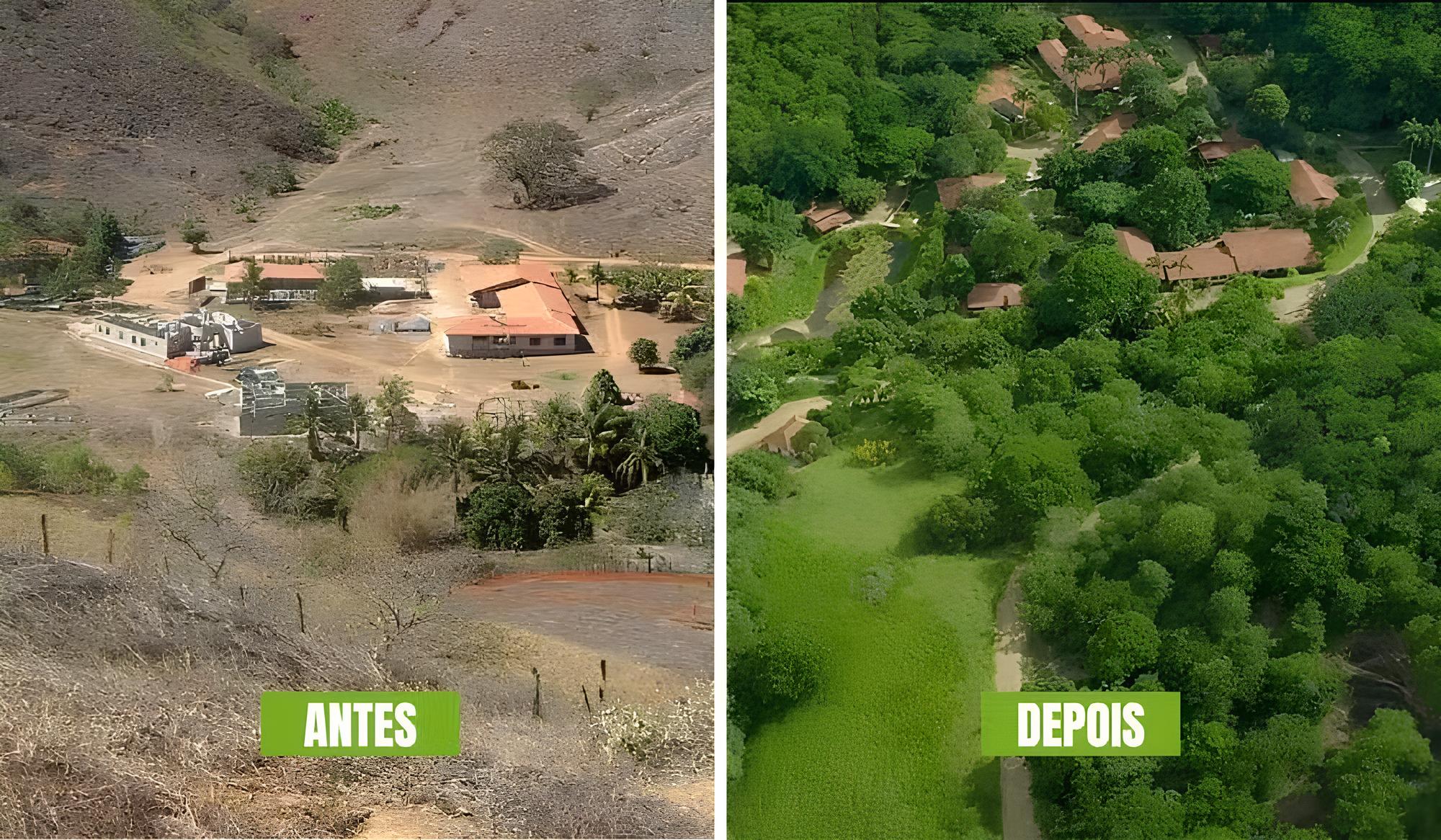


In More Than 20 Years, Instituto Terra Planted More Than 3 Million Trees and Recovered Degraded Area of the Atlantic Forest in Minas Gerais.
The scenario was desolate. By the end of the 1990s, the former Fazenda Bulcão, located in Aimorés, in eastern Minas Gerais, was a portrait of the environmental degradation that marked much of the Brazilian Atlantic Forest throughout the 20th century. Depleted pastures, eroded soil, dry springs, and almost no remaining native vegetation. It was in this environment that photographer Sebastião Salgado and cultural producer Lélia Wanick Salgado decided to start one of the country’s largest private reforestation projects.
The initiative officially took shape in 1998, with the creation of Instituto Terra, a non-profit organization focused on environmental recovery and ecological education. The following year, the property was recognized as a Private Natural Heritage Reserve (RPPN), a category provided for in Brazilian legislation that guarantees permanent protection for the area.
What began as an attempt to recover a family farm transformed into a large-scale restoration project, with environmental impacts that exceeded the boundaries of the original property.
-
Friends have been building a small “town” for 30 years to grow old together, with compact houses, a common area, nature surrounding it, and a collective life project designed for friendship, coexistence, and simplicity.

-
This small town in Germany created its own currency 24 years ago, today it circulates millions per year, is accepted in over 300 stores, and the German government allowed all of this to happen under one condition.

-
Curitiba is shrinking and is expected to lose 97,000 residents by 2050, while inland cities in Paraná such as Sarandi, Araucária, and Toledo are experiencing accelerated growth that is changing the entire state’s map.

-
Tourists were poisoned on Everest in a million-dollar fraud scheme involving helicopters that diverted over $19 million and shocked international authorities.


From Barren Land to Regenerating Forest
When the project began, the area was severely degraded by decades of intensive cattle ranching. The near-total removal of native vegetation compromised the local hydrological cycle, directly affecting springs and small watercourses that feed the Rio Doce basin.
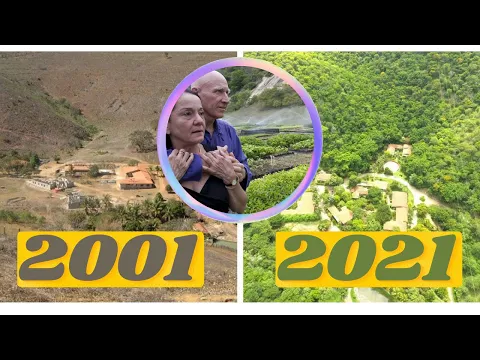

The strategy adopted by Instituto Terra was clear: to restore the original vegetation of the Atlantic Forest with native species from the region. For this, a dedicated forest nursery was created, capable of producing hundreds of thousands of seedlings per year.
Since the beginning of planting in 1999, more than 3 million trees have been planted, according to official data from Instituto Terra and widely reported stories in national and international press. The restored area exceeds thousands of hectares, considering both the former farm and associated projects in the region.
The reforestation followed technical principles of ecological restoration, prioritizing species diversity, soil recovery, and reactivation of the water cycle.
The Environmental Engineering Behind the Recovery
The restoration was not simply about planting trees. The process involved soil analysis, selection of native species adapted to the biome, and planning for ecological succession.
Pioneer species were initially used to stabilize the soil and provide shade. Subsequently, secondary and climax species were introduced to reconstruct the original forest structure.

The reconstitution of vegetation helped to recover the local microclimate, reduce erosion, and increase water infiltration into the soil. This process favored the gradual return of springs, many of which had completely dried up.
Over time, natural regeneration began to complement the initial planting. Areas previously dominated by grass began to exhibit closed canopies, forming continuous ecological corridors.
Return of Wildlife and Recovery of Springs
One of the most relevant indicators of the success of the restoration was the return of wildlife. The presence of birds, mammals, and small reptiles began to be gradually recorded.
According to data released by Instituto Terra, dozens of bird species began to frequent the restored area. The recovery of vegetation provided shelter and food, reactivating ecological interactions that had been practically interrupted.
Furthermore, the reforestation directly contributed to the recovery of water resources. Previously intermittent springs became permanent, strengthening small watercourses and enhancing the region’s resilience during dry periods. The restoration was not limited to visual aspects. It altered fundamental ecological processes.
Regional Scale and Impact on the Rio Doce Basin
Instituto Terra expanded its operations beyond the original farm. Technical training programs, environmental education, and seedling production began to support restoration initiatives in other properties in the region.
The Rio Doce basin, historically impacted by deforestation and intensive economic activities, became a strategic focus for the recovery of degraded areas.
The production of native seedlings reached millions of units over the years, contributing to reforestation projects in different municipalities. The environmental transformation achieved in Aimorés has become an international reference in the restoration of tropical ecosystems.
From Skepticism to International Recognition
When the project started, many considered it unfeasible to recover such a degraded area. The Atlantic Forest is one of the most fragmented biomes on the planet, with less than 15% of its original coverage preserved.

The insistence on planting native trees where only dry pasture existed was seen by some as excessive idealism. However, over more than two decades, the landscape has changed completely.
Today, the area is covered by dense forest, with plant diversity and active watercourses. Instituto Terra has become a reference in ecological restoration and environmental education, receiving national and international recognition.
The Structural Lesson of Restoration
The case of Fazenda Bulcão demonstrates that large-scale environmental restoration is possible when there is technical planning, long-term investment, and ongoing commitment.
The transformation did not occur in a few years. It required decades of work, seedling production, monitoring, and management. What was once degraded soil has become functional forest. What was once a dry spring has started producing water again. What was once ecological silence is once more home to life.
The story shows that areas considered lost can be regenerated when ecological science and persistence go hand in hand. More than just planting trees, the project reconstructed natural processes.
In a region where almost nothing remained of the original Atlantic Forest, thousands of hectares have been restored, demonstrating that environmental recovery does not solely depend on public policies, but also on technical initiative and long-term vision.
The landscape that can now be seen in Aimorés is not just forest. It is the concrete result of over 20 years of planned, monitored, and scientifically-based restoration.
Where there was degradation, today there is biodiversity. Where there was exposed soil, today there is forest cover. Where there was disbelief, today there is an example.










🫱🫱🫱🫱🫱
Esse casal foi muito especial deixou obras que jamais o deixarão esquecido!!!
Infelizmente, Sebastião já partiu, deve estar admirando sua obra lá de cima!!!