





 Português
  Inglês
  Espanhol
  4 min de leitura
  0 comentários


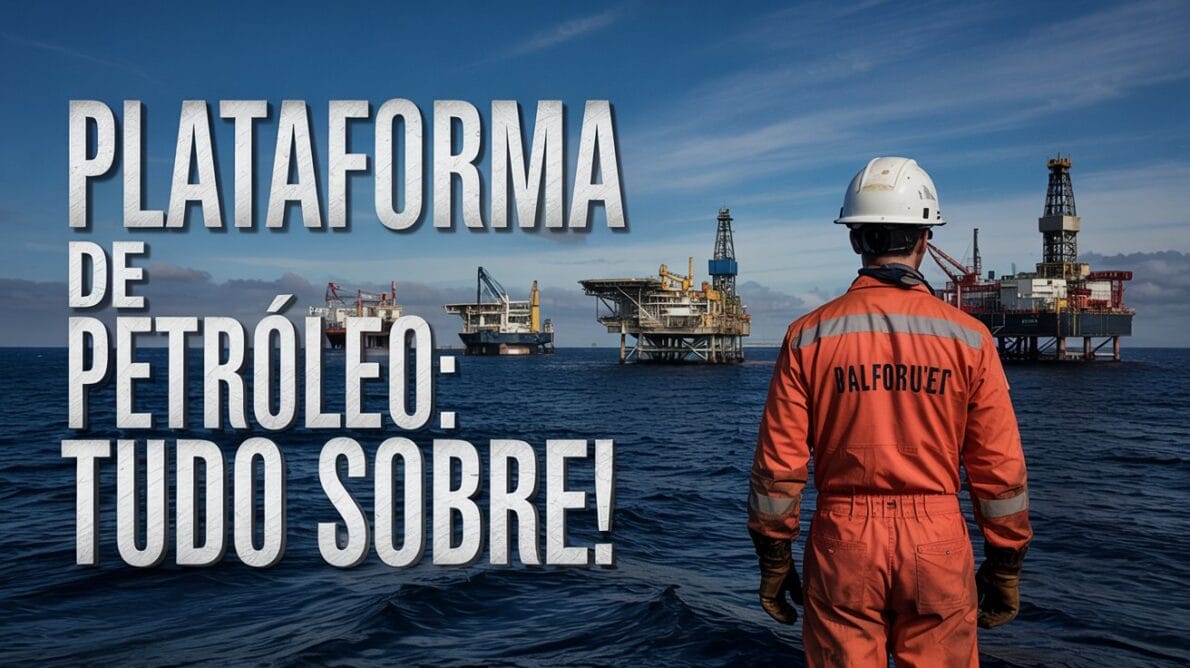
Understand Everything About Offshore Platforms: Types, Functioning, Professions, Salaries, and How to Work Onboard. A Complete and Updated Guide for Beginners and Professionals.
If you have always wanted to understand how an offshore platform works, what types exist, what the work routine is like, the risks, the salaries, and even how to start a career in this field, this complete guide is for you. Let’s get straight to the point, with clear language and total focus on keeping you informed on the subject.
What Is an Offshore Platform?
An offshore platform is a structure installed at sea with the primary goal of exploring, producing, and, in many cases, storing oil and natural gas. The word “offshore” literally means “off the coast”, that is, far from land. These platforms are true floating cities, equipped with drilling, production, processing systems, dormitories, dining areas, helipads, and much more.
What Is an Offshore Platform Used For?
The main function of an offshore platform is to drill the seabed in search of oil and natural gas reservoirs. After finding these resources, the platform extracts them and, depending on the type, may also process, store, or transfer these resources to vessels or pipelines. In addition to production itself, a platform also serves as a support base for hundreds of workers specialized in various areas: engineering, mechanics, electricity, safety, hospitality, and logistics.
-
Offshore industrial demand in Macaé skyrockets with the recovery of oil and gas and could grow by up to 396% by 2026 in the Campos Basin.
-
Offshore industrial demand in Macaé surges with the recovery of oil and gas and could grow by up to 396% by 2026 in the Campos Basin.
-
Brazilian giant expands borders in the Southeast: Petrobras confirms new oil discovery in ultra-deep waters in the pre-salt of the Campos Basin.

-
Alert in the global energy market: Severe tropical cyclone hits the coast and disrupts gas production at major plants in Australia, threatening global supply.


Types of Offshore Platforms

Offshore platforms are divided into several types, depending on water depth, reservoir type, and technology used. Check out the main ones:
1. Fixed Platforms
Installed on piles driven into the seabed, they are common in shallow waters (up to 500 meters). They tend to be permanent.
2. Floating Platforms (FPSO, Semi-submersible, TLPs)
FPSO (Floating Production, Storage, and Offloading): vessels converted or built to produce, store, and offload oil.
Semi-submersible: float partially submerged and are stable even in deep waters.
TLP (Tension-Leg Platform): platform anchored to the seabed with tensioned cables.
3. Jack-up Platforms
Heavily used in shallow waters, they have legs that elevate from the seabed and can be towed to new locations.
4. Drillships
These units are used only for drilling and are not permanently installed.
What Is Work Like on an Offshore Platform?
Working on an offshore platform requires physical, psychological, and technical preparation. Shifts are generally on a boarding schedule, such as 14 days onboard followed by 14 days off (14×14), or 28×28. During this period, the professional lives aboard the platform, where there are dormitories, dining areas, gyms, rest rooms, and limited internet. The routine is intense but well organized.
Most Common Professions on Offshore Platforms

Did you know that there are dozens of professional areas on an offshore platform? Here are the main ones:
- Engineers (petroleum, mechanical, electrical, civil, etc.)
- Technicians (instrumentation, electrical, mechanical, safety)
- Production Operators
- Platform Workers and Drillers
- Cooks and Kitchen Assistants
- Doctors and Nurses
- Painters, Boilermakers, and Welders
- Riggers, Seamen, Radio Operators
How Much Do Offshore Platform Workers Earn?
The salaries on offshore platforms are attractive. This is due to the isolation, technical responsibility, and the risks involved. Here is the average salary by profession:
| Profession | Average Monthly Salary |
|---|---|
| Offshore Safety Technician | R$ 8,000 to R$ 12,000 |
| Production Operator | R$ 10,000 to R$ 15,000 |
| Offshore Engineer | R$ 15,000 to R$ 30,000 |
| Offshore Cook | R$ 4,000 to R$ 7,000 |
| Platform Worker | R$ 5,000 to R$ 8,000 |
- Additionally, many positions offer benefits such as:
- Hazard pay
- Health and dental insurance
- Life insurance
- Meals and accommodation
- Profit sharing (PLR)
How to Get a Job on an Offshore Platform?
To enter this field, you need to:
- Have a technical or higher education degree in the desired area.
- Have mandatory courses such as CBSP and HUET, required for boarding.
- Have proven experience, especially for technical positions.
- Be available for travel and rotating shifts.
Companies like Petrobras, Modec, SBM Offshore, Subsea7, Ocyan, Priner, and others regularly offer vacancies. Job platforms like CPG Click Petroleum and Gas are great channels to stay informed.
What Are the Risks and Challenges of Offshore Work?
Safety is the top priority. Despite this, risks exist:
Extreme weather conditions
Gas or oil leaks
Fires and explosions
Mechanical accidents
Isolation and stress
Therefore, training is constant, and all operations follow strict safety standards, such as those from NR-37 and NR-34.
What Is the Future of Offshore Platforms?
Even with the growth of renewable energy, offshore platforms will remain essential to meet global demand for oil and gas, especially in Brazil with the pre-salt. Additionally, new technologies such as automation, artificial intelligence, underwater robotics (ROVs), and even offshore wind energy projects are expected to transform the landscape soon.
Curiosities About Offshore Platforms
The largest platform in the world is Hibernia, in Canada, weighing over 1.2 million tons.
In Brazil, the Búzios field, in the pre-salt, is one of the most productive in the world.
Some platforms have cinemas, barbershops, gyms, and even onboard psychology services.
Transport is mainly done by helicopters and support boats.










-

2 pessoas reagiram a isso.