





 Portuguese
  English
  Spanish
  4 min of reading
  26 comments


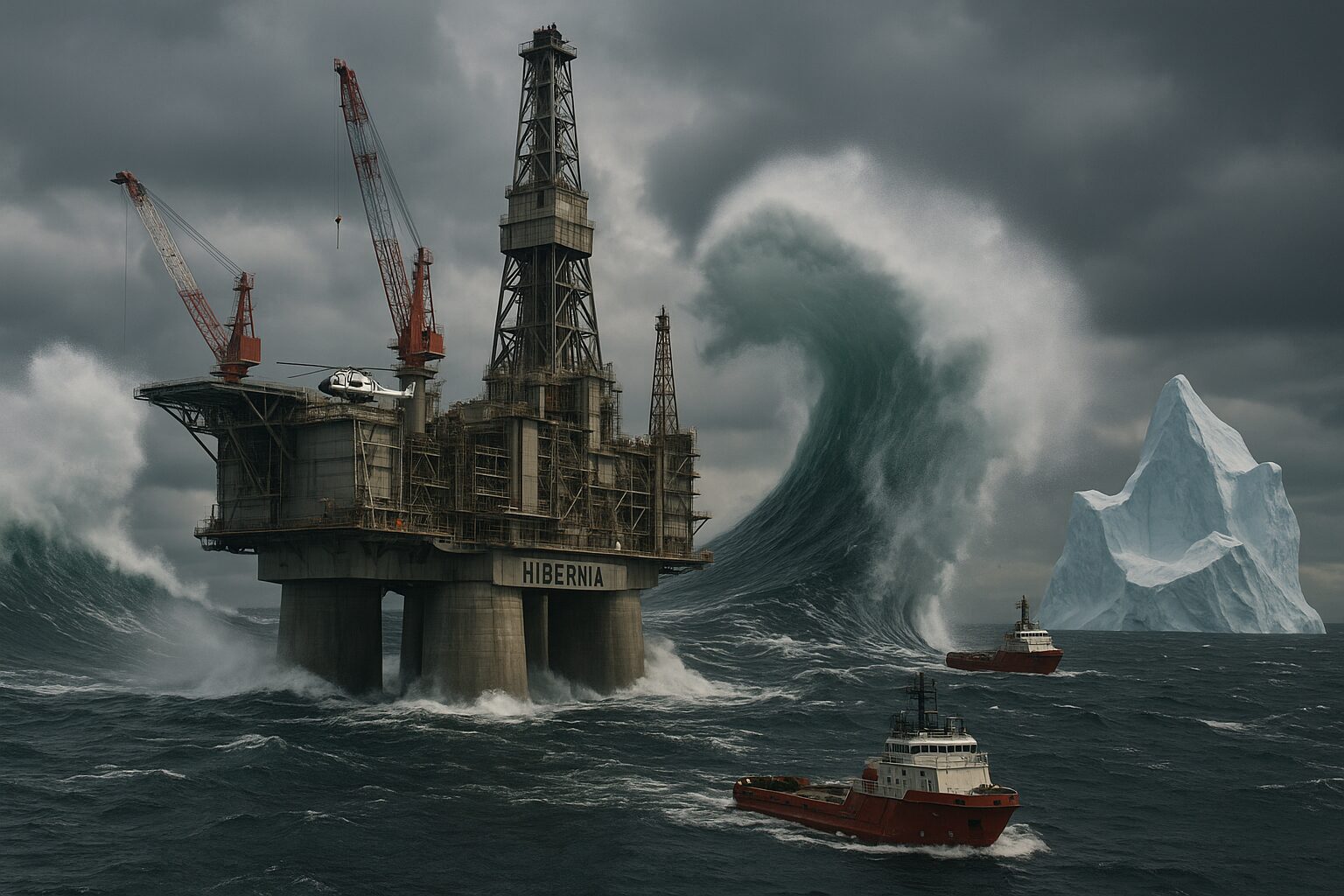


Installed in the Atlantic Ocean, the Hibernia platform has been operating since 1997 and extracts oil in one of the most inhospitable regions of Canada, with the capacity to withstand large icebergs. Check below for all the details.
The Hibernia offshore platform, located in the North Atlantic Ocean, about 315 kilometers off the east coast of Canada, is one of the largest oil extraction structures ever built. In operation since 1997, the unit is part of the Hibernia field in the province of Newfoundland and Labrador and was developed to withstand severe conditions, such as the impact of icebergs and rough seas.
The structure belongs to the category known as GBS (Gravity Base Structure), built from reinforced concrete and designed to be fixed to the seabed. The goal is to ensure stability even in areas subject to intense natural forces. The concrete base weighs about 600,000 tons, serving as a support for the upper modules, which house production, drilling, and accommodation systems for the workers.
Structure Was Designed to Withstand Icebergs
The design of the Hibernia offshore platform was conceived to operate in one of the most demanding regions on the planet regarding oil exploration. The engineers responsible developed a structure capable of withstanding the direct impact of icebergs weighing up to 6 million tons.
-
With Announcement for ROV Course in Partnership with Zen, Rio das Ostras Aims to Transform Technical Qualification into Real Jobs in the Competitive Offshore Market
-
Free Offshore Steward Course in São Gonçalo Emerges as a Strategic Opportunity for Those Seeking Qualified Work at Sea

-
Messer Gases Reopens Branch in Macaé to Serve Offshore Oil and Gas Market in Northern Fluminense with Supply of Oxygen, Argon, and CO₂
-
Offshore Profession Simplified: Comprehensive Guide Reveals How to Trade Common Routine for High Salaries and Long Breaks in Life Aboard in the Oil Sector
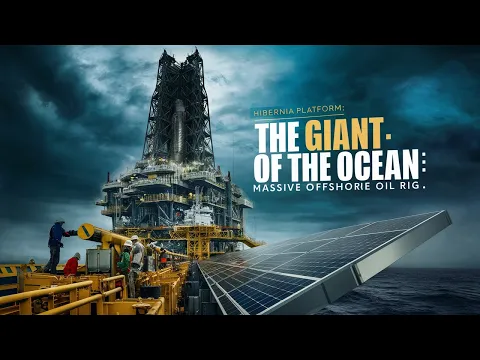

This resistance capability is related to the gravity base, which keeps the unit firmly anchored to the seabed. Above this base, the upper modules house the extraction and processing equipment, as well as spaces allocated for the operational team. The platform accommodates around 185 professionals in a rotation schedule.
Production Started in 1997 and Continues Active
Oil production at the Hibernia field began in November 1997, following the platform’s installation on-site. Since then, the unit has maintained stable extraction levels, making a significant contribution to Canada’s energy sector. It is estimated that the field contains about 1.2 billion recoverable barrels of oil.
The oil extracted from the Hibernia offshore platform is light, with a sulfur content between 0.4% and 0.6%, which favors refining. After extraction, the oil is transported by tanker ships to the transshipment terminal at Whiffen Head, also in the province of Newfoundland and Labrador.
Ownership Divided Among Several Companies
The Hibernia is operated by the Hibernia Management and Development Company (HMDC), a consortium that brings together several companies operating in the energy sector. The largest share belongs to ExxonMobil Canada, with 33.125%. Other consortium members include Chevron Canada Resources (26.875%), Suncor Energy (20%), Canada Hibernia Holding Corporation (8.5%), Murphy Oil (6.5%), and Equinor Canada (5%).
This composition reflects the joint interest in exploring the region’s energy resources, considered economically viable due to the quality of the oil and the estimated volume of reserves.
Loading System Operates in Open Water
For the transportation of production, Hibernia uses a system known as the Offshore Loading System (OLS), responsible for transferring the oil directly to vessels. This method avoids the need for underwater pipelines and reduces the time between extraction and the arrival of the product at the terminal onshore.
The use of the OLS system is also well-suited to the conditions of the Atlantic coast of Canada, where factors such as weather and sea ice require technical solutions appropriate to the realities of deep and cold water exploration.
Environmental Monitoring Is a Regulatory Requirement
Since the beginning of operations, the project has been subject to strict environmental rules established by Canadian authorities. There are continuous systems for monitoring marine life and water quality around the platform.
In 2019, an operational failure led to an oil spill at sea. The incident resulted in a temporary suspension of activities and the imposition of legal penalties. The operator implemented corrective measures to prevent new occurrences and resumed activities after approval from regulatory bodies.
Operations May Continue Until 2040
According to the projections released by the consortium managing Hibernia, the offshore platform has the potential to continue operating at least until 2040. The estimate considers constant preventive maintenance, investments in system upgrades, and improvements in the extraction process.
The Hibernia project stands out among the oil structures in operation in Canada, both for the size of the construction and its economic importance. Offshore oil extraction is a consolidated activity in the Newfoundland and Labrador region, and other platforms operate near Hibernia.
Offshore Oil Is an Energy Priority in the North Atlantic
The east coast of Canada contains some of the country’s main offshore oil fields. The sector involves investments from national and foreign companies and plays a central role in energy supply, as well as generating jobs and tax revenue for the province of Newfoundland and Labrador.
In the global scenario, Canadian offshore production is considered a stable source with good quality levels. Platforms like Hibernia continue to operate based on technical and regulatory standards set by the federal government and the regulatory agency of the region.










Tropa dos que leram tudo e não tão reclamando!😎
Ótimo conteúdo, bem informativo! Sou um amante de plataformas de petróleo kkkk e ler um artigo sobre isso é fascinante, irei acompanhar mais o site!
Se não quer que leiamos as matérias,blz .deixa logo bloqueadas ,pois já desistir de lera matérias até importante,devido a quantidade de anúncios,que vcs nos obriga a ler ou mesmo ver .chato ,chato chato .quer que leiamos os anúncios e só colocar crédito em nosso telefone .aí blz