





 Português
  Inglês
  Espanhol
  4 min de leitura
  0 comentários



Learn About The US Oil Wells That Can Be Activated In Weeks Helping To Mitigate Supply Shocks And Stabilize Oil Prices In Times Of Crisis.
Few people know, but part of the United States’ strength in the global energy market comes from a well-thought-out strategy: keeping thousands of US oil wells already drilled but not yet completed, ready to come online when necessary. These are the so-called DUCs (Drilled but Uncompleted Wells). This technical reserve acts as a real trump card to help the country respond to supply shocks and stabilize oil prices in the global market.
What Are The Wells That Can Be Activated In Weeks?
DUCs are wells that have already undergone the entire initial drilling phase. This means that the hole in the ground is ready, the well is structured, but the final step is missing: the completion, which typically involves processes such as hydraulic fracturing and the installation of extraction equipment. As this final phase can be carried out in just a few weeks, these wells are like an ace up the sleeve for companies and the US government when there’s a need to quickly increase production.
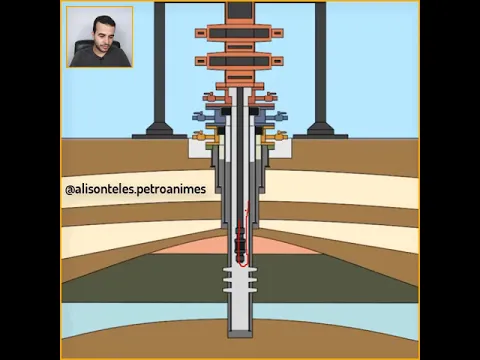

Currently, the United States has between 5,000 and 6,000 of these wells spread mainly across Texas, New Mexico, and North Dakota, in regions such as the Permian and Bakken Basin. This structure gives the country a flexibility that few producers in the world possess.
-
Offshore industrial demand in Macaé skyrockets with the recovery of oil and gas and could grow by up to 396% by 2026 in the Campos Basin.
-
Offshore industrial demand in Macaé surges with the recovery of oil and gas and could grow by up to 396% by 2026 in the Campos Basin.
-
Brazilian giant expands borders in the Southeast: Petrobras confirms new oil discovery in ultra-deep waters in the pre-salt of the Campos Basin.

-
Alert in the global energy market: Severe tropical cyclone hits the coast and disrupts gas production at major plants in Australia, threatening global supply.


How DUCs Help Control Oil Prices
When supply shocks occur — whether due to international crises, sanctions on producing countries, or natural disasters impacting global production — the market reacts almost instantaneously, and oil prices skyrocket. It is in this scenario that the US oil wells ready for activation come into play. They allow companies to quickly ramp up domestic production, alleviating pressure on the market and helping to curb price increases.
This is what happened, for example, during times of tension in the Middle East or in the early months of the post-pandemic economic recovery. The US’s ability to bring more barrels to the market in a short time became central to price stability.
Why Does The US Keep This Stock Of Ready Wells?
Having a “stock” of uncompleted wells is a strategy that serves different interests. From the companies’ perspective, drilling wells in advance and completing them at the most advantageous moment helps optimize costs. Completing a DUC costs less than drilling a new well from scratch, allowing operators to adjust production to market dynamics with greater efficiency.
For the government, these wells reinforce the country’s energy security. They act as a kind of cushion against sharp fluctuations in the global market, helping to maintain supply and, as a result, stabilize the economy.
Who Owns The Oil Wells Ready For Activation In The US?
The US oil wells ready for activation, known as DUCs, are primarily owned by private companies. These are oil and gas companies, such as ExxonMobil, Chevron, ConocoPhillips, and various independent operators, who drill the wells and decide the most strategic moment to complete them and begin production.
Although many of these wells are located on federal land — especially in regions like Texas, New Mexico, and North Dakota — this only means that the government owns the land and grants exploration rights to the companies through contracts and licenses.
The government does not own the wells or the oil production itself, but acts as a regulator and overseer, ensuring that operations comply with environmental and safety standards. This model provides the private sector with the flexibility to adjust production according to market rhythms and fluctuations in oil prices.
Limits And Impacts Of Using DUCs
Although they are a powerful tool, DUCs also have limitations. They are not an infinite resource: if a large volume of these wells is activated all at once, the stock can be depleted quickly. Additionally, the completion of wells requires specialized labor, equipment, and materials that are not always immediately available, which can create bottlenecks during high demand periods.
Another point of concern is the environmental impact. DUCs, while waiting to be completed, can already pose risks if not properly sealed and monitored, such as methane leaks or other gases. Therefore, oversight and regulation of these wells are topics that are gaining more prominence in public debate.
Wells Ready For Activation
With the energy market becoming increasingly volatile and the transition to renewable sources advancing, the role of DUCs in the United States strategy may undergo changes in the coming years. Still, in the short and medium term, the US oil wells that can be activated in weeks remain one of the most important elements for the country’s energy security and for avoiding spikes in oil prices during times of crisis.
This model shows how the US oil and gas sector combines agility, planning, and technical capacity to respond to the challenges of a global market marked by uncertainties. And, while the world adapts to new energy matrices, DUCs will continue to be a key piece in the chess game of oil geopolitics.










Seja o primeiro a reagir!