





 Portuguese
  English
  Spanish
  3 min of reading
  0 comments


Events Registered Between January and March Show Arrival of Dust Rich in Phosphorus, Iron and Calcium to the Amazon, Coming Directly from the Sahara
Between January and March 2025, Brazilian researchers recorded the arrival of dust from the Sahara Desert to the Amazon rainforest. There were three documented episodes during this period. The dust traveled over 5,000 kilometers and brought nutrients such as phosphorus, iron, potassium, and calcium.
These minerals are considered essential for the Amazon ecosystem, especially after wildfires that harm soil quality.
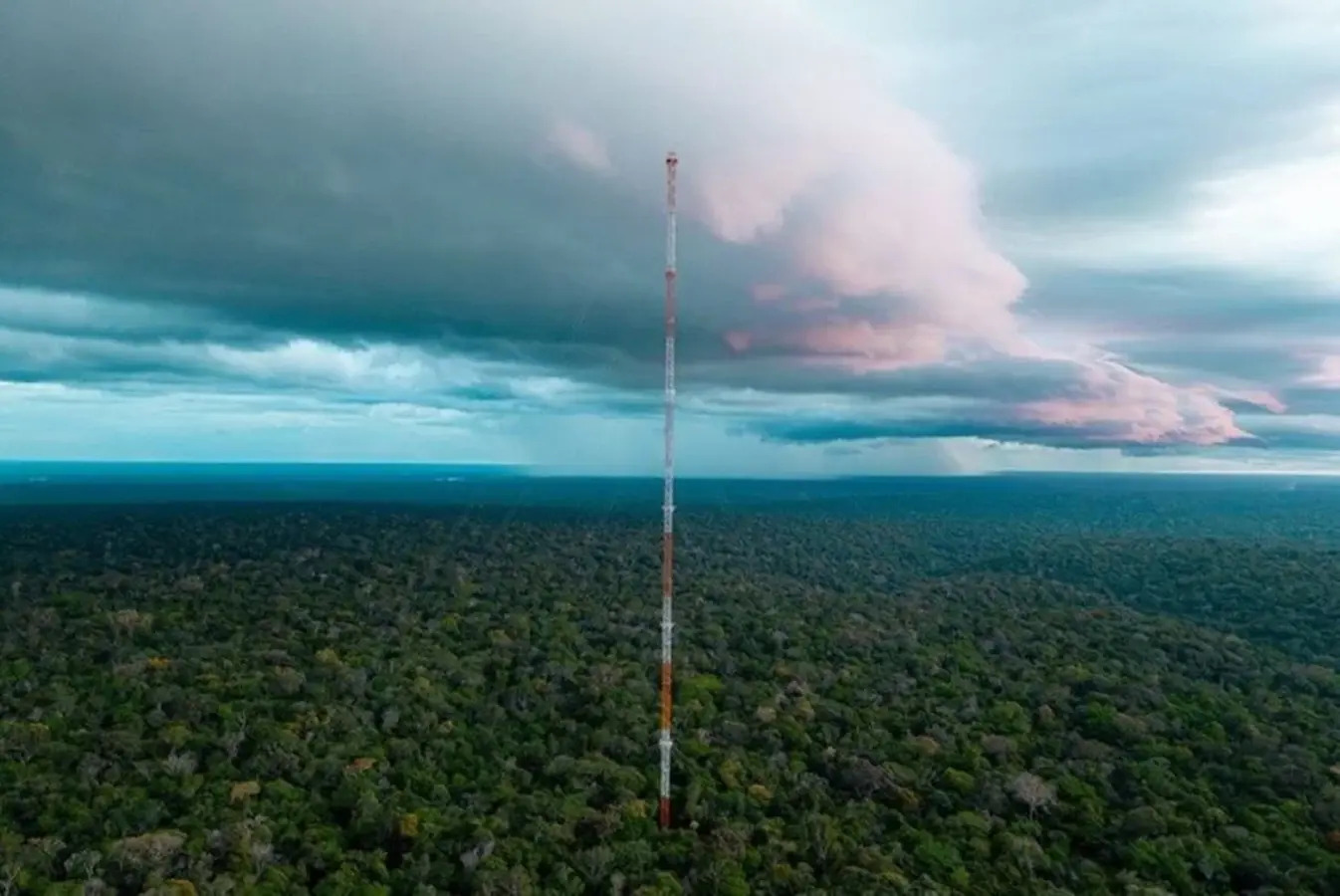
The detection was made by the Amazon Tall Tower Observatory (ATTO), located in São Sebastião do Uatumã, Amazonas.
-
Motorola launched the Signature with a gold seal from DxOMark, tying with the iPhone 17 Pro in camera performance, Snapdragon 8 Gen 5 that surpassed 3 million in benchmarks, and a zoom that impresses even at night.

-
Satellites reveal beneath the Sahara a giant river buried for thousands of kilometers: study shows that the largest hot desert on the planet was once traversed by a river system comparable to the largest on Earth.

-
Scientists have captured something never seen in space: newly born stars are creating gigantic rings of light a thousand times larger than the distance between the Earth and the Sun, and this changes everything we knew about stellar birth.

-
Geologists find traces of a continent that disappeared 155 million years ago after separating from Australia and reveal that it did not sink, but broke into fragments scattered across Southeast Asia.

The structure is 325 meters tall and has sensors that monitor air composition. During the episodes, fine particulate (PM2.5) levels were up to five times above the average recorded in the rainy season.
Phosphorus and Forest Productivity
The research coordinator, Alberto Quesada, PhD in Forest Ecology, emphasized the importance of phosphorus for the forest.
He explained that Amazon soils have naturally low levels of this nutrient. The Sahara dust, by bringing small amounts of phosphorus and other minerals, helps to compensate for this deficiency.
“The Sahara dust enters these events with small amounts of nutrients. This does not resolve the shortage, but helps maintain forest productivity,” said Quesada.
Journey of the Dust and Wind Influence
The dust travels at altitudes between 2 and 5 kilometers, being transported by strong winds generated by storms in the Sahara.
The crossing of the Atlantic Ocean is favored by the Intertropical Convergence Zone, a belt of low atmospheric pressure.
During summer in the Southern Hemisphere, this zone shifts further south, facilitating the path of the dust to the Amazon.
Researcher Rafael Valiati explained that the presence of dust depends on several factors, such as the amount of particles generated in the Sahara, wind patterns, and rainfall along the route.
He emphasized that it is still impossible to assert whether the phenomenon is intensifying. “It is not possible to say that the phenomenon is intensifying solely based on the number of occurrences in 2025,” he stated.
Impacts on Health and Climate
Despite the elevated concentrations of particles, researchers assure that there is no risk to the health of the local population.
“The observed amount is not sufficient to cause respiratory impacts, as has occurred in parts of Europe,” explained Valiati.
In addition to soil fertility, dust can also influence cloud formation. The atmospheric effects of these events are still being analyzed.
The Tower That Sees Far
The ATTO Tower is the largest atmospheric research structure in the world. It was built with resources from Brazil, Germany, and the state of Amazonas.
The investment was approximately 8.4 million euros. According to Quesada, the tower functions like an 80-story building and is essential for understanding the workings of the forest and its relationships with the global climate.
First Clear Detection
The three episodes of dust arrival occurred between January 13 and 18, January 31 to February 3, and February 26 to March 3.
For Quesada, this is the first time the phenomenon has been recorded clearly by the ATTO Tower. He states that, although it is not possible to establish a direct link to climate change, the episodes indicate ongoing changes.
“It is difficult to assert with certainty that it is already a consequence of climate change, but these events indicate changes underway. We need to continue monitoring,” he concluded.
With information from Tempo.com.







-

2 pessoas reagiram a isso.