





 Portuguese
  English
  Spanish
  4 min of reading
  0 comments


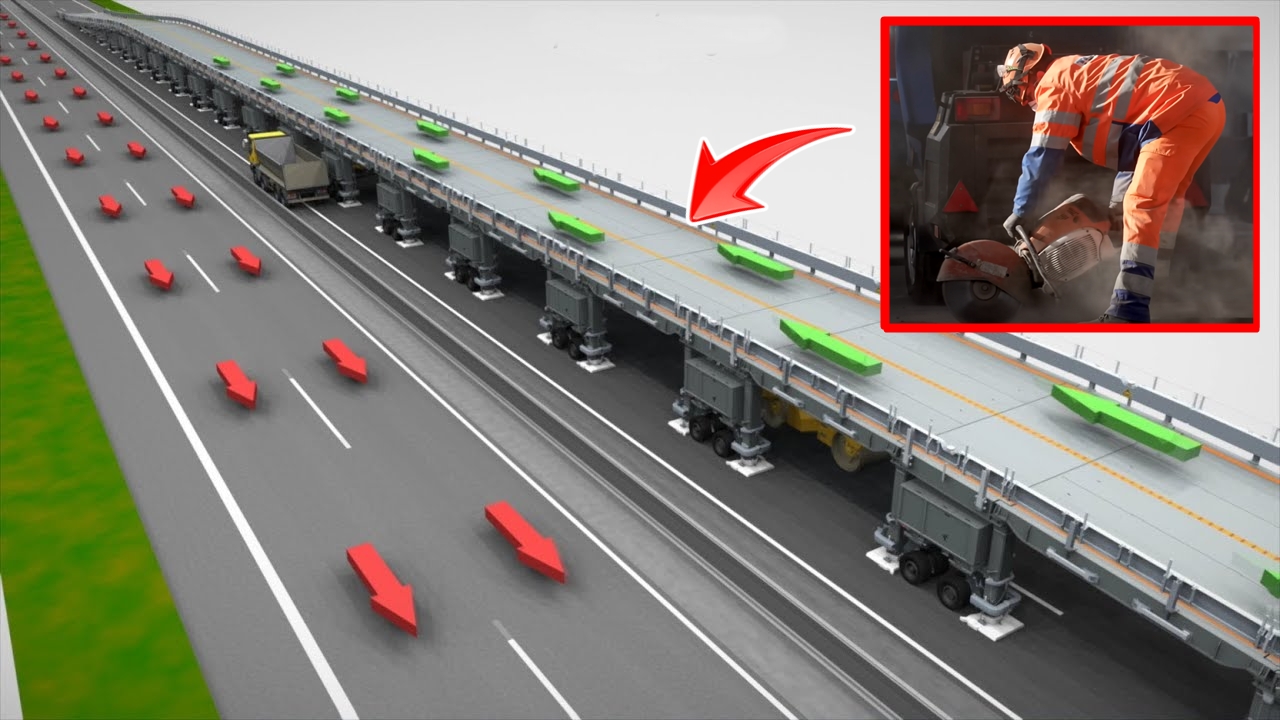
A New Mobile Bridge Is Revolutionizing Road Maintenance Work. With It, Teams Are Able to Carry Out Repairs on Damaged Sections Without Interrupting Traffic Flow, Ensuring Safety and Avoiding Congestion.
A simple yet revolutionary solution is transforming the way roads are paved in Switzerland. This is the Astra Bridge, a mobile structure that allows for construction work without blocking traffic.
Anyone who has been stuck in traffic due to road construction knows how frustrating it can be. Despite efforts to minimize impacts, congestion is still inevitable when maintenance is performed on roadways. But now, an initiative from the Swiss Federal Roads Office could change this scenario.
The Astra Bridge, at 257 meters long, allows vehicles to continue their route normally while teams work on the road below. Simple in concept, complex in execution, the bridge draws attention for its potential to change the logic of road construction.
-
A French brand placed a car on four huge red balloons to prove that its suspension made the vehicle “float,” and the surreal scene became one of the most iconic and unusual images in automotive history.

-
Jeep Avenger begins production in Brazil, debuting as the brand’s new entry-level SUV and inaugurating an unprecedented phase by becoming the first national Jeep manufactured outside of Goiana, as part of a R$ 3 billion plan.
-
Costing R$ 12,490, the new Shineray Urban Lite 150 “cheap one” arrives in Brazil with a CVT transmission, digital dashboard, and LED lights, making it more affordable than the Biz and targeting those who want to abandon the bus.
-
Ducati brings to Brazil the Superleggera V4 Centenario: 228 hp that become 247 with a track kit, carbon fiber and carbon-ceramic brakes, estimated price between R$ 1.5 and 2 million, deliveries only in 2027.
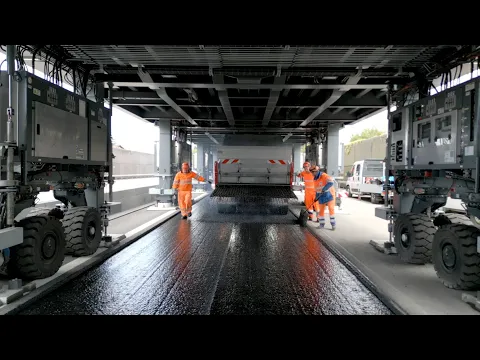

Mobile Bridge – Old Idea, Modern Solution
Engineer Jürg Merian, known as “Mr. Astra Bridge,” was inspired by an Austrian ramp he saw over ten years ago.
At that time, the Austrian model already allowed vehicles to pass over construction work but was limited. The structure was not mobile, difficult to install, and uncomfortable for workers.
Under the old ramp, the space was very small — only 1.6 meters — and the noise from cars could exceed 100 decibels.
This made the work environment unhealthy and inefficient. Switzerland used this ramp, but the problems led to the search for a better alternative.
The First Attempt Failed
A few years later, Merian decided to improve the concept. Thus, the first version of the Astra Bridge was born. It was wider, taller, and, importantly, mobile.
The bridge was placed on wheels and offered soundproofing, improving the work environment. The height was increased to three meters, and the width became five.
However, new problems arose. During tests in 2022, the bridge had to be disassembled before the completion of the work.
The slope of the access ramps was too steep — 6.1% — causing heavier vehicles to almost stop. This created long lines and caused complaints.
New Version Is a Success in Tests
Now, the bridge has returned in an improved version. The ramp slope has been reduced to only 1.25%, allowing vehicles to travel at up to 60 km/h.
The new bridge is being tested in the city of Recherswil, in Solothurn, and has shown good results.
There are almost no traffic jams. Drivers still slow down when seeing the structure — after all, it’s not every day one sees a 257-meter bridge in the middle of the road — but the impacts on traffic are minimal. Some even slow down out of curiosity, but this does not cause significant delays.
More Safety and Comfort for Workers
In addition to keeping traffic flowing, the mobile bridge offers advantages for the professionals involved in the work.
It protects against sun and rain and allows work during the day, avoiding the inconvenient night shifts that were previously considered necessary to avoid disturbing drivers.
This benefit has increased the number of companies interested in participating in the project. There were five bids to execute the paving where the Astra Bridge was used — a number above average, according to the Swiss department.
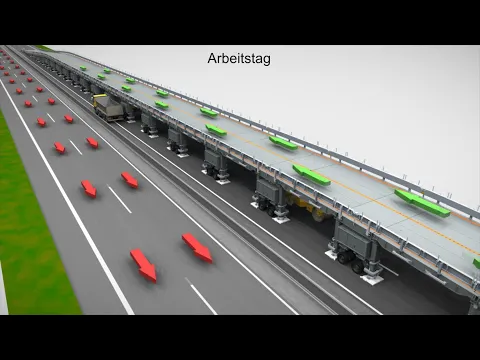
Operation Requires Care, but Is Worth It
The assembly of the bridge requires planning. It must be installed directly over the section to be renovated and then towed at a speed of 0.5 km/h to the next segment. This slow movement limits productivity: the team can pave only half of what they would do on a completely closed road.
Even so, the Federal Roads Office considers the outcome positive. Traffic continues to flow, workers have better conditions, and public acceptance of the work increases.
International Interest Grows
The Astra Bridge was recently unveiled but is already capturing the attention of other countries. Norway, Germany, and the Netherlands have expressed interest in adopting the solution. Switzerland, in turn, is open to collaboration.
Interestingly, the technology has not been patented. According to the authorities, the goal is not to profit from the idea. The function of a federal agency, they say, is not to act as a commercial company but to serve the public.
This decision could accelerate the adoption of the model in other places. If successful, the Astra Bridge could become a global reference in road maintenance with minimal impact on traffic.










Seja o primeiro a reagir!