





 Portuguese
  English
  Spanish
  3 min of reading
  7 comments


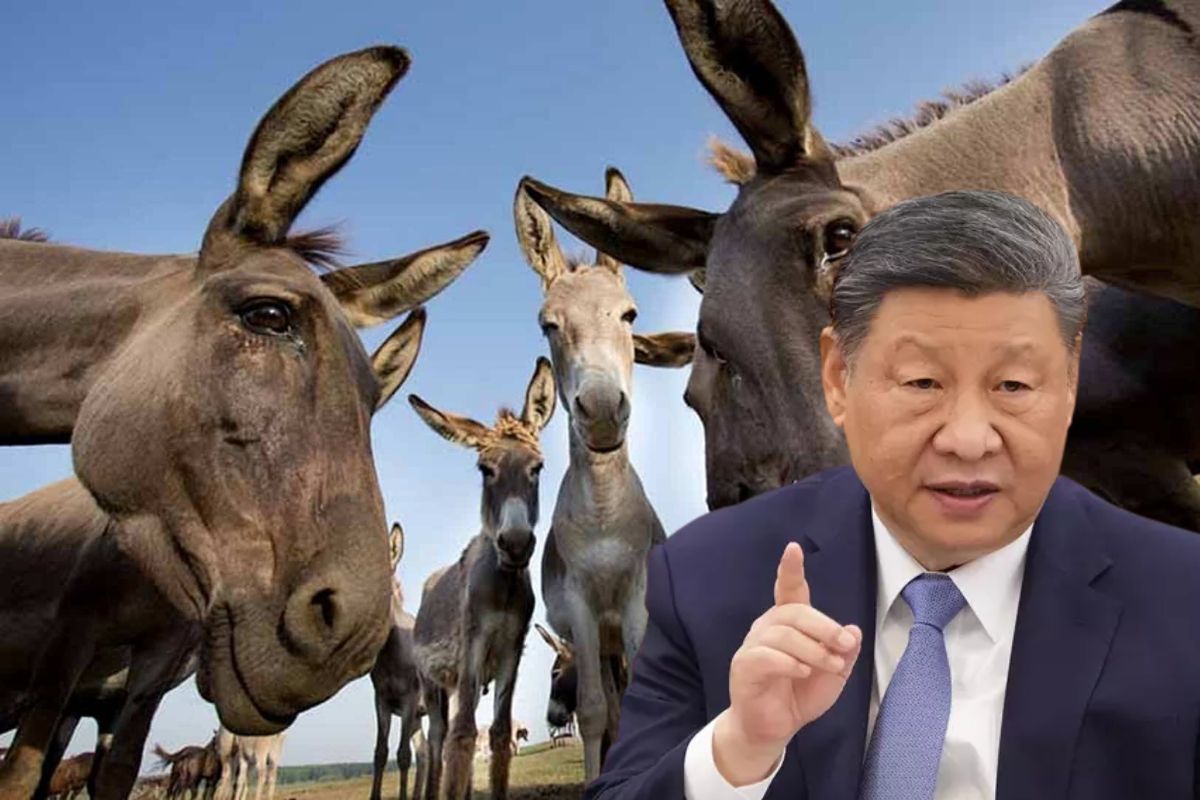


China Is Buying Donkeys Globally to Produce Ejiao, a Traditional Gelatin. The Growing Demand Threatens the Species and Causes Social and Economic Problems in Various Countries.
China has been buying donkeys on a large scale in the international market since 2010. This intense and growing demand puts the animal at risk of extinction in various regions, especially in Africa.
But why this specific interest in donkeys? The answer lies in a traditional Chinese product called ejiao, made from the animal’s skin.
Ejiao: The Ancient Donkey Gelatin Coveted by China

Ejiao (pronounced “ê-jiau”) is a traditional gelatin. It is produced from the collagen found in donkey skin. Its use in China dates back millennia, primarily in traditional medicine. Historically, it was an expensive remedy restricted to imperial courts. It was believed to strengthen the blood, improve sleep, and balance energies.
-
Larger than entire cities in Brazil: BYD is building a 4.6 km² complex in Bahia with a capacity for 600,000 vehicles per year, but the discovery of 163 workers in conditions analogous to slavery has shaken the entire project.

-
With an investment of R$ 612 million, a capacity to process 1.2 million liters of milk per day, Piracanjuba inaugurates a mega cheese factory that increases national production, reduces dependence on imports, and repositions Brazil on the global dairy map.
-
Brazilian city gains industrial hub for 85 companies that is equivalent to 55 football fields.

-
Peugeot and Citroën factory in Argentina cuts production by half and opens a layoff program for more than 2,000 employees after Brazil drastically reduced purchases of Argentine vehicles.


Recent research mentions other supposed benefits. Among them: delaying aging, increasing libido, and assisting in cancer treatments. Today, ejiao is extremely popular in China. It is found in tonics, capsules, cosmetic creams, and even foods, such as cakes and fruits covered with the gelatin.
The Global Impact of Chinese Demand for Donkeys
The consumption of ejiao has skyrocketed in China. In the 1990s, the industry needed about 200,000 donkey skins per year. This demand was met by domestic Chinese production. Currently, the annual need has jumped to 4 to 6 million skins.
This number represents about 10% of the world’s donkey population. If the pace continues, the species could be globally extinct in less than 10 years. The donkey population in China itself has fallen by 76% since 1992. With the lack of animals in the country, China Is Buying Donkeys abroad. It started in Asia and then moved to Mexico, Brazil, and mainly Africa.
Crisis in Africa and Brazil: Thefts and Illegal Slaughter
Africa is home to over 40% of the world’s donkeys. In these countries, donkeys are vital to the rural economy. They are used for transporting loads, plowing fields, and protecting herds. The intense demand from China Is Buying Donkeys has driven prices up.
This has led to an increase in the theft of these animals. Criminals steal donkeys even from small properties. The animals are taken to slaughterhouses, often clandestine. The skin is removed, dried, and sent in boxes to China. Frequently, the carcass of the animal is discarded, wasting food.
The Ban on Donkey Slaughter in Africa and the Situation in Brazil
The situation has become an economic and security problem. Governments have begun to take action. In February 2025, the African Union approved a ban on the slaughter of donkeys for skin export. The measure aims to curb the decline of the animal population and applies to the 55 member countries. In Brazil, a similar situation occurred.
An agreement with China in 2012 regulated skin exports. Slaughter increased so much that the donkey population fell by more than 60% between 2017 and 2022. The courts even banned slaughter in Bahia in 2018, but the ban was overturned in 2019. Brazil now supplies the Chinese demand for ejiao and the Vietnamese demand for donkey meat.
Why Not Simply Raise More Donkeys?


If donkey skin has become so valuable, why not raise more animals? The answer is that large-scale donkey farming is not economically viable. Gestation is very long (about 12 months). The average is less than one foal per year per female. The pregnancy of the mare (which produces the donkey when breeding with a jack) is delicate, with a high risk of miscarriage.
Additionally, donkeys and mules (females) are usually sterile because they are hybrids. This prevents mass reproduction without constantly breeding jacks and mares, which is costly and time-consuming. Donkeys also need about 4 years for their skin to be ready for extraction. The cost of raising the animal for so long (food, care) exceeds the value of the skin.







Ah se a China importar todos **** e jegues do Brasil,vai ser uma boa pra nós,pq assim os que ficarem aqui ,os mais bons ,saberão votar e assim acaba com a festa dos abestados ****…kkkkk
Ter como símbolo de ideologia política entre essa discussão e desprezível :
O **** é o mais forte resistente atua tanto em longas caminhadas ou curtas ,carrega pesso e ao longo da história do mundo teve grande influencia no uso das construções e tração, apesar de ser chamado de **** é mais inteligente que muitos outros animais e se força fosse sinônimo de inteligência o ****,mula ou cavalo andava montado em cima do homem
Já estou vendo os eleitores do **** em extinção