





 English
  Francês
  Alemão
  Italiano
  Japonês
  Norueguês
  Portuguese
  Spanish
  3 min of reading


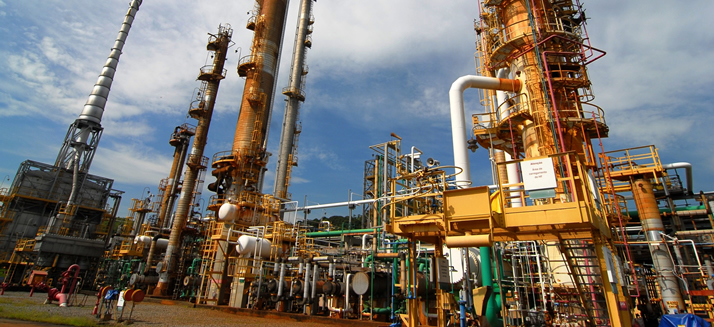
Brazil Holds the Largest Oil Reserves in the World, but Due to Quality and Lack of Specialized Refineries, We Have to Pay Almost 4 Times More for Our Own Product
Yes, Brazil is self-sufficient in oil if we look at the perspective of volume produced per day. But when we talk about processing it and its derivatives, that’s where the “problem” arises for our country and why it is so expensive at the pump or converted into the products of our daily life. Remember that we will use colloquial terms in this article to better illustrate the content for those who are unfamiliar with the subject; all data is updated and relates only to processing and marketing, excluding government taxes. So let’s get to the point:
Production, Quality, and Import/Export of Oil
- Production – Currently, our nation consumes approximately 1.8 billion barrels of oil every day, an amount equivalent to what our offshore units or platforms can produce daily as well. But if we can produce the same amount that we consume, why is it so expensive to import it?
- Quality – There are 2 types of oil that determine its quality: light oil and heavy oil. Light oil is easy to process, and we can extract gasoline and different high-value products at low cost. The problem is that only 6% of our current reserves are of the light category. Heavy oil is more recommended for asphalt and large machinery, but we are also capable of converting heavy oil into gasoline; the problem is that it becomes very costly. Even though we can extract gasoline from heavy oil, why do we have to import?
- Import/Export – It turns out that it is much cheaper to buy light oil from abroad, mix it with national heavy oil production, and then process this mixture than to process only the heavy oil. What remains of this heavy oil is sold at a low price for export. To illustrate with a practical example: if you wanted a chair, would it be cheaper to buy a pre-made chair or go to the forest, cut down the tree, process it, take measurements, and spend on materials, labor, etc.?
Why Are Our Refineries Inefficient in Processing This Type of Oil?
The problem is that before the 1990s, our explored reservoirs were only of light oil, and due to this factor, our refineries were also configured this way. The new reserves discovered after this period mostly consist of heavy oils. Petrobras, despite being able to produce in quantities never seen before, had no choice but to import light oil from abroad, as our refineries are inefficient in this regard.
-
Government unlocks R$ 554 million for a highway that has been requested for decades and accelerates the duplication of BR.
-
Without bricks, without cement, and without endless construction: the cardboard house that is assembled in modules and can be moved.

-
Billions of barrels on the equatorial margin could lead Amapá to double its oil production in Brazil — the state aims to enter the route of companies in the Campos Basin, attract investments, and boost jobs and businesses in the oil and gas sector.
-
Without bricks, without cement, and without endless construction: the cardboard house that is assembled in modules and can be moved.

At the current average price, we export our heavy oil at $46 and import/buy at $64. CALCULATION (46 – 64 = -18), got it? Even so, we end up with a negative balance; the math never adds up! To compensate for these values, production costs are passed on to the final consumer. This is because we are only mentioning processing costs; extracting oil in Brazil’s offshore basin requires a lot of technology and equipment capable of reaching more than 2 km below the ocean floor.


What Can Be Done to Reduce Costs?
Actually, Petrobras has already started the works of COMPERJ (Petrochemical Complex of Rio de Janeiro), which will be able to refine both types of oil, including it is hiring for the works of this June 2018 for the initial phase of the project; check it out here. Petrobras also announced recently that it is making interesting discoveries of new wells with light oil, which will reduce production costs in the not-so-distant future.
Remembering that these are production factors, but about 50% of the final pump price is related to government tax collection, and since oil is a commodity, it is traded in commercial dollars (US$). At the rate on the date of this article, the value of our currency is R$ 3.72 for each US$1.00; that is, we pay almost 4 times for a product that we produce but that is governed by the international market.









Seja o primeiro a reagir!