





 Português
  Inglês
  Espanhol
  5 min de leitura
  0 comentários


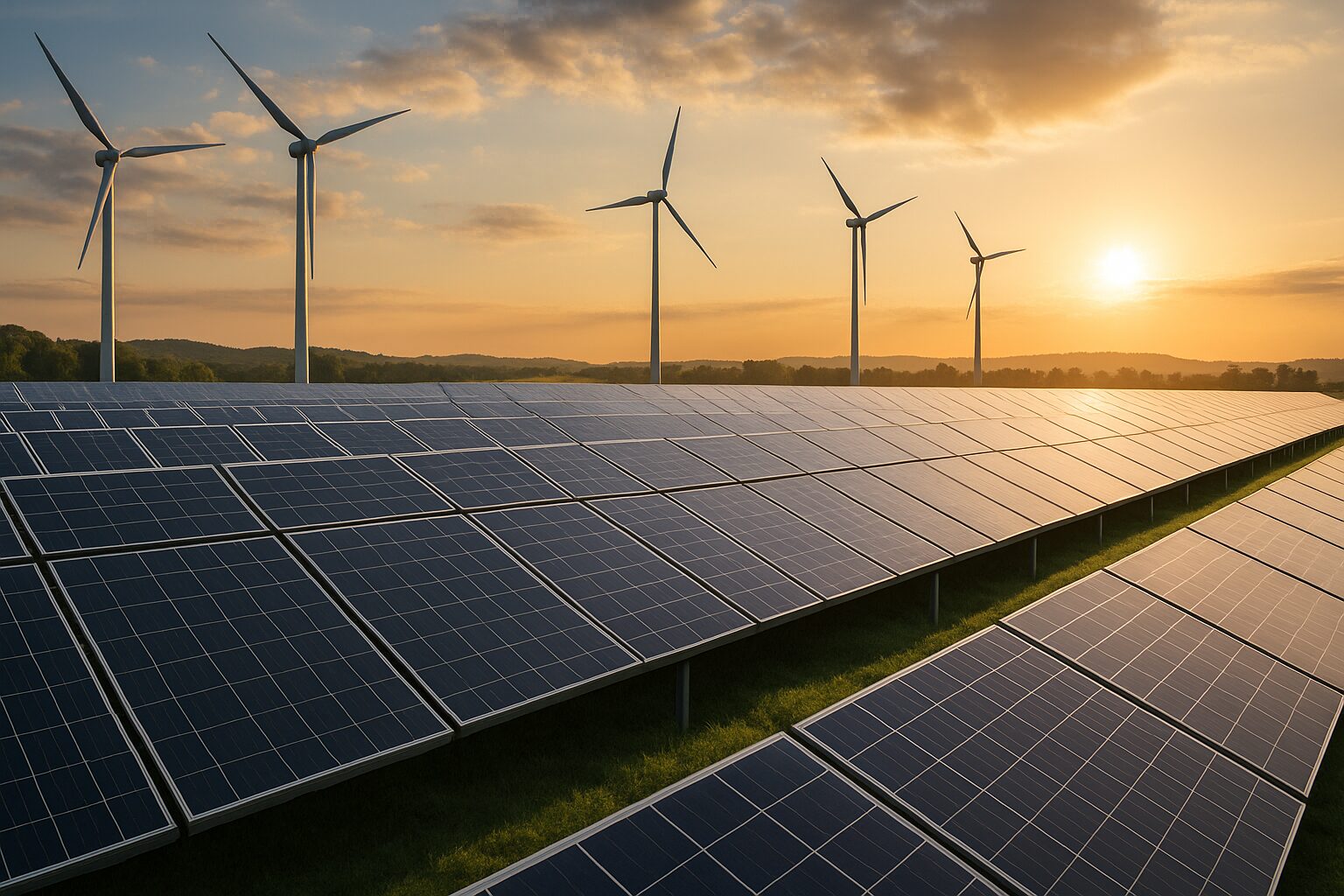
Understand Why The Costs Of Renewable Energy Impact The Environment, The Economy, And The Future Of The Next Generations — And How This Transformation Is More Accessible Than Ever.
The debate about energy sources has never been more important than it is today.
After all, as the world faces the challenges of climate change, resource scarcity, and economic instability, the search for sustainable alternatives is intensifying.
In this context, the costs of renewable energy stand out. They have become a central issue not only for governments and companies but also for ordinary citizens.
-
Renewable energy advances over protected areas in Brazil, and a survey by the Energy Transition Observatory reveals silent impacts that challenge environmental conservation and pressure sensitive traditional territories.

-
Rio Grande do Sul accelerates energy transition: State invests in renewable technologies and consolidates decarbonization strategies and pathways to attract billions in new industrial investments.

-
With 160,000 m² of collectors, an area larger than 20 football fields, Silkeborg, in Denmark, hosts a solar thermal plant that heats 19,500 homes and could become the largest solar heating plant in the world.

-
A study reveals the expansion of renewable energy procurement in Brazil and shows how companies are taking advantage of opportunities to reduce expenses, ensure energy efficiency, and strengthen strategic environmental commitments.


Thus, understanding what involves the cost of clean energy goes far beyond the financial value.
It is connected to the future of the planet, the quality of life of future generations, and the transition to a more balanced energy matrix that is less dependent on fossil fuels.
Therefore, this article explores the main historical, technical, and social aspects that make the costs of renewable energy essential today.
Moreover, understanding these costs helps to demystify some misconceptions that still circulate. For example, the idea that clean energy is always expensive or inaccessible.
However, reality shows that the scenario has changed. These costs have been steadily decreasing, making renewable energy an increasingly competitive and advantageous alternative.
A Brief Look At The Past
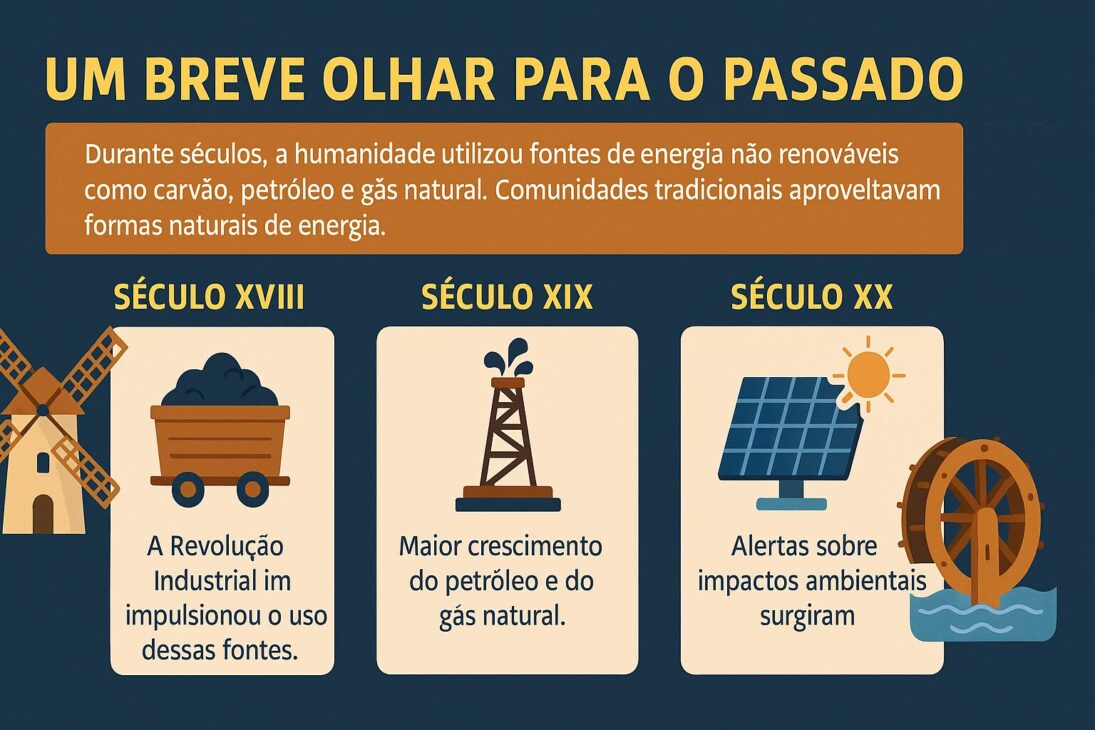
For centuries, humanity relied on non-renewable energy sources such as coal, oil, and natural gas.
The Industrial Revolution, which began in the 18th century and intensified in the 19th century, marked the growth of the use of these sources.
According to the website of the International Renewable Energy Agency (IRENA), this historical phase represented a significant increase in energy consumption.
However, there was also a sharp increase in greenhouse gas emissions.
In the 20th century, with the first scientific warnings about the environmental impacts of the rampant consumption of fossil fuels, renewable energy began to be seen as a viable alternative.
In 1981, the company Enel built the world’s first concentrating solar power plant in Adrano, Italy, considered a significant milestone for solar technology, as emphasized by the Enel Green Power website.
Even before industrialization, traditional communities were already harnessing natural forms of energy. The force of the winds was used for navigation, and the energy of water was used to power mills.
These uses are recorded in historical studies available on the website of the ECREEE (Centre for Renewable Energy and Energy Efficiency in West Africa).
Initially, the use of sources like solar, wind, and hydropower remained limited and costly. The installation and maintenance costs of clean technologies were high, restricting their adoption.
However, over the past few decades, this scenario has changed radically.
The Drop In Costs And Technological Advancements
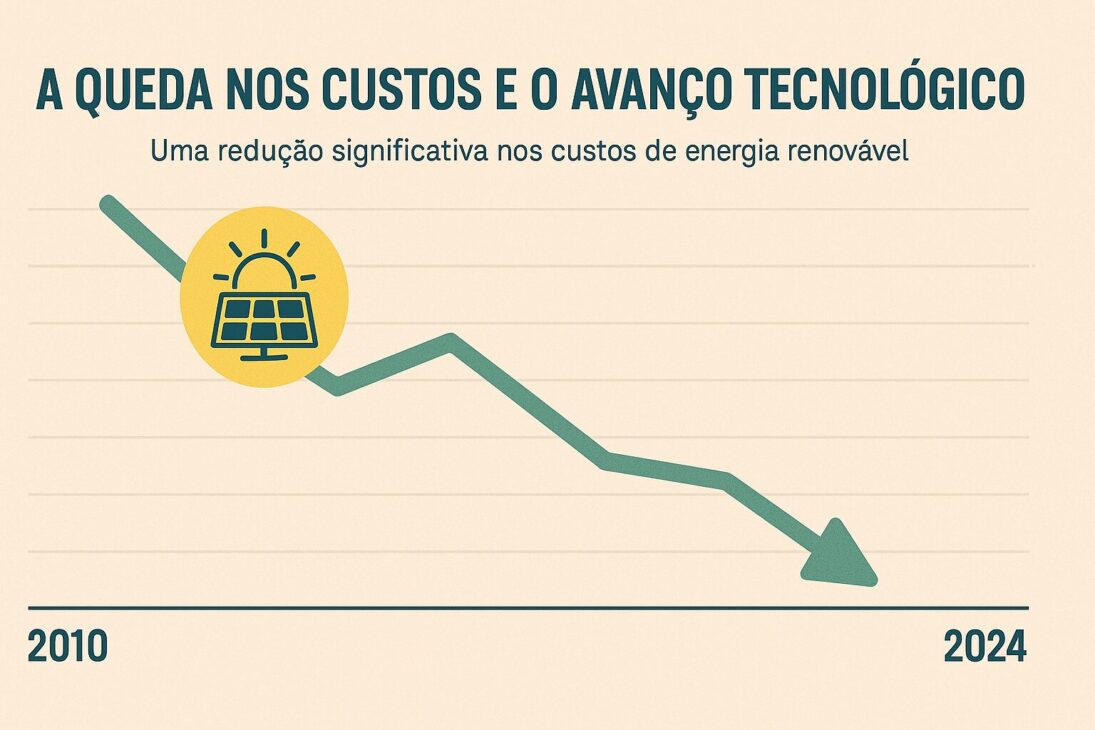
One of the biggest transformations in the energy sector has been the significant reduction in renewable energy costs.
According to data from IRENA in 2024, 81% of renewable energy additions that year were cheaper than traditional fossil sources.
This occurred because technological advancements allowed for the development of more efficient and durable equipment, such as solar panels and wind turbines.
Additionally, industrial-scale production has lowered access to these technologies.
Solar photovoltaic energy, for example, has seen a drop of over 80% in costs over the last decade in some regions, as highlighted in the report from ECREEE.
Wind energy has followed the same path, becoming competitive with traditional sources.
Another important advancement came with biomass and biofuels technologies.
Although they still face scaling challenges, these renewable sources help to complement the clean energy matrix and are mentioned in the annual report of IRENA as promising for the future.
Thus, nowadays, in many countries, the cost of producing renewable energy exceeds the cost of fossil sources without relying on subsidies.
This highlights that clean energy is a smart financial choice, as indicated in studies by the International Energy Agency.
Renewable Energy As A Strategic Investment
The analysis of renewable energy costs requires a broader perspective.
It’s important to consider not only the price per megawatt-hour generated but also the long-term benefits.
By investing in sustainable sources, one reduces dependence on oil and gas imports, stabilizes the economy, and minimizes environmental impacts.
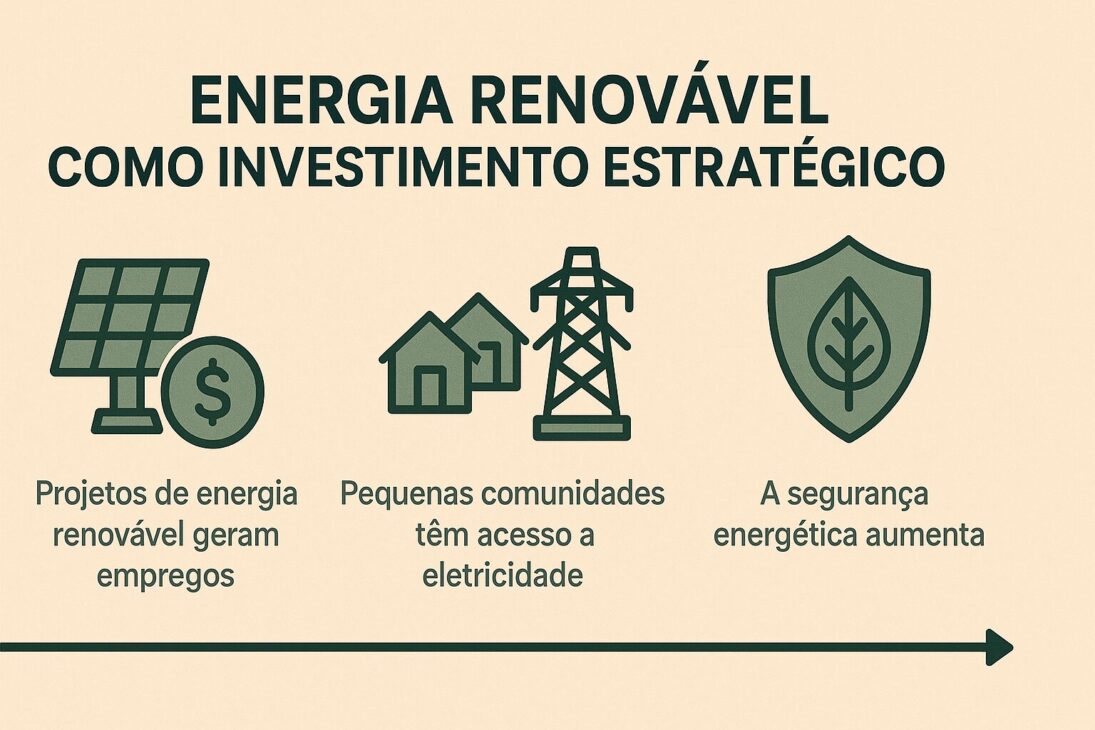
Renewable energy projects create jobs and promote local development.
With more clean energy available, small communities gain access to electricity more cheaply and stably, driving social inclusion.
This scenario is highlighted in the 2023 report of IRENA, which points out the positive impact of renewable energies on the global economy.
Moreover, energy security increases, as renewable sources help mitigate geopolitical risks linked to oil.
Countries investing in these technologies seek to ensure autonomy and protection against fluctuations in the international market.
For this reason, the energy transition has been a priority in public policies worldwide.
Diverse governments, such as those in the European Union and the United States, have launched programs to accelerate investment in renewable energy, according to the official website of the European Commission.
The Role Of Costs In The Fight Against Climate Change
Climate change is a real and urgent threat.
Extreme events like droughts, floods, and heatwaves are becoming more frequent.
The massive use of fossil fuels is one of the main causes.
In this context, the decline in renewable energy costs accelerates the transition to a sustainable energy model.
The more accessible clean energy becomes, the more countries can adopt it.
This is crucial for ensuring climate justice, enabling developing nations to partake in this change as well.
Expanded access to renewable energy also stimulates innovation in sectors such as electric transportation and sustainable agriculture.
The positive impact of these technologies goes beyond energy generation, as reported by studies from IRENA and the Intergovernmental Panel on Climate Change (IPCC).
The costs of renewable energy are fundamental today because they influence the pace of the transition to a sustainable energy matrix. Understanding the role of costs in this process helps make informed decisions for a better world.
Investing in renewable energy means, therefore, ensuring sustainability, economy, and hope for future generations.











Seja o primeiro a reagir!