





 Português
  Inglês
  Espanhol
  6 min de leitura
  0 comentários



Discover Why Knowing How to Handle Job Market Projects Is Essential to Grow Professionally, Stay Relevant, and Seize Opportunities in a Constantly Changing World.
Throughout history, the world of work has undergone profound changes. First, the Industrial Revolution marked a period where labor was concentrated on repetitive tasks and mass production. According to the website Histórias do Mundo, the Industrial Revolution, which began in the late 18th century, transformed the way production and industry operated, creating new job opportunities while also imposing changes in how time and tasks were managed.
Over time, the service sector grew, technology advanced, and we entered the era of information and innovation. According to the Institute for Applied Economic Research (IPEA), in the 1980s and 1990s, globalization and the digital revolution reshaped the job market, demanding greater adaptation and continuous learning from professionals.
In this current scenario, where everything is changing rapidly, knowing how to handle projects in the job market has become not just a differential, but a basic necessity for any professional.
-
Employee Fired After Accumulating 114 Days of Medical Leave in One Year, Labor Court Upholds Company’s Decision

-
Employee Fired While Treating Depression Wins in Court and Vale Is Required to Rehire Him Following Decision Based on the CLT and INSS Benefits

-
Workers Should Be Aware! March 6 Will Be The Fifth Business Day Of March And The Final Deadline For Companies To Pay Salaries According To The CLT

-
2026 FGTS Anniversary Withdrawal Is Released According to Birth Month, Sets Amounts by Balance Range, Establishes Deadlines for March and April, and Changes Rules in Case of Dismissal


In the past, it was enough to learn a function and repeat it throughout one’s professional life. However, this logic no longer works. Globalization, technological advancements, and digital transformation demand more flexible, creative professionals who are prepared to solve real problems.
According to the Global Employment Report from the International Labour Organization (ILO), published in 2021, the new market demands make skills in innovation, collaboration, and project management even more relevant for those who want to remain competitive.
This is where projects come in — the key to adaptation and growth in the job market.
What Are Projects and Why Do They Matter?
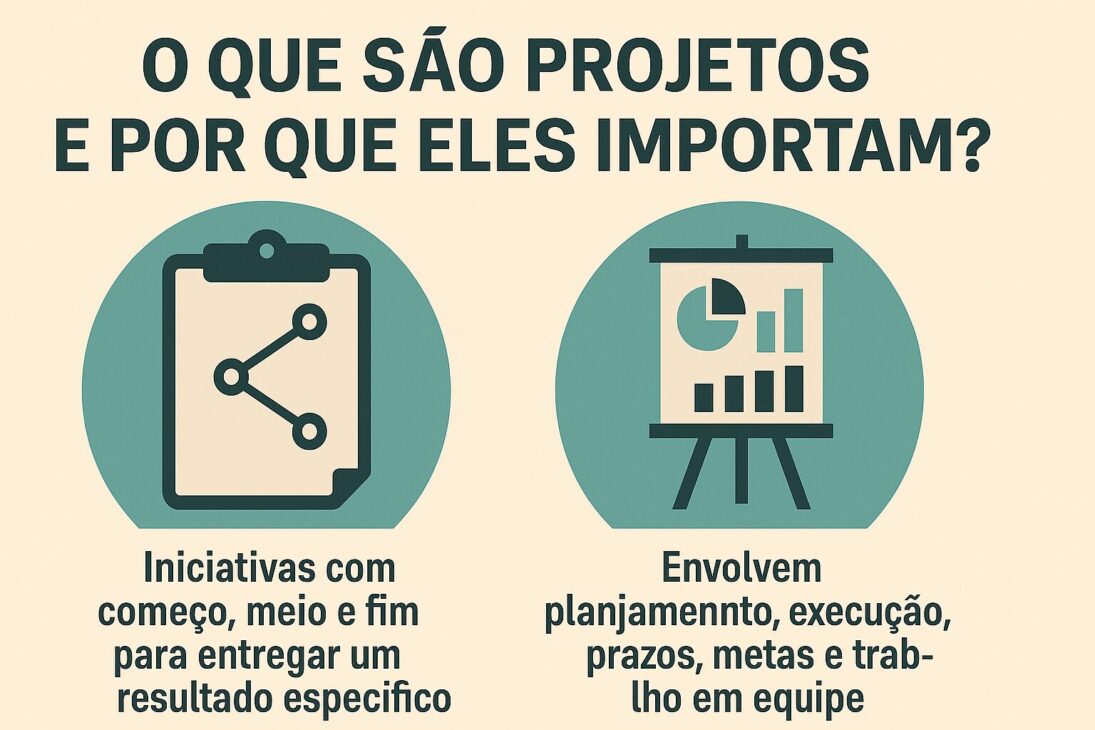
Simply put, projects are initiatives with a beginning, middle, and end, created to deliver a specific result, whether a product, service, or solution. According to PMI – Project Management Institute, project management involves planning, executing, and monitoring all stages to achieve an objective efficiently.
In the professional environment, virtually every area uses projects, from creating a new application to implementing internal processes.
With the market becoming increasingly competitive, companies seek to innovate and stand out. To do this, they rely on well-structured projects, led by prepared professionals.
Being familiar with project logic has become a significant differential for those looking to grow professionally.
The Historical Evolution of Projects
Although the word “project” seems modern, the idea of organizing tasks to achieve a goal has existed for millennia.
For example, the Egyptians built the pyramids based on some form of project management, albeit rudimentary. The same applies to the Great Wall of China and the Age of Discovery. According to the website História e Geografia, these works were organized with complex planning, even with the limited resources of the time.
As time passed, the organization of tasks gained more method and strategy.
In the 20th century, especially after World War II, countries needed to rebuild cities, develop technologies, and reorganize their economies. This need led to the emergence of methodologies such as the Gantt chart, created in 1917 by Henry Gantt, according to the Project Management Institute (PMI).
Furthermore, approaches like PMI, PRINCE2, Scrum, and Agile emerged — widely used today. According to the Global Project Management Report of 2020, these methodologies provide more flexible and agile ways to execute projects.
This historical evolution shows how projects have driven significant changes and remain relevant to this day.
The Role of Projects in Today’s Job Market
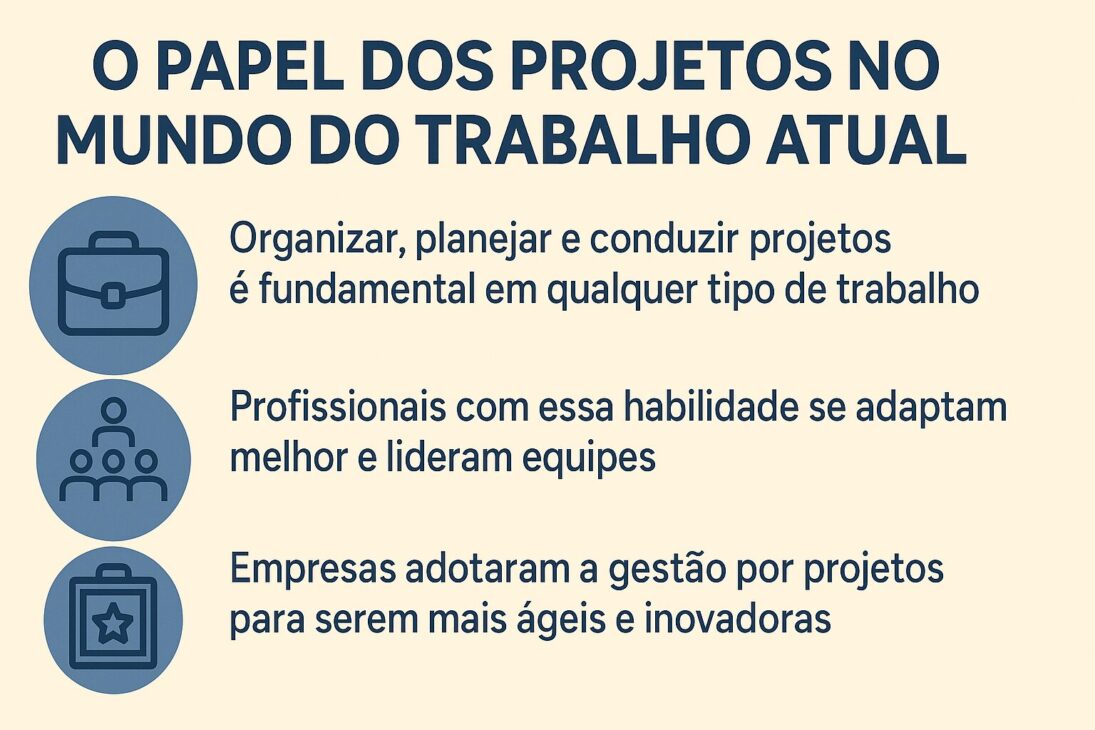
Today, it doesn’t matter if you work in a large company, a small business, or as a freelancer: organizing, planning, and conducting projects is fundamental.
Professionals who master this skill adapt better, lead teams more confidently, and solve problems more swiftly.
In addition, many companies have adopted project management as their primary model. They assemble specific teams to develop short or medium-term projects. According to the International Labour Organization (ILO), companies that adopt this approach manage to remain more agile and innovative.
This logic also influences the hiring of professionals. Today, companies look not only at diplomas but also at practical experiences, concrete deliveries, and results in projects. According to LinkedIn, skills such as project management and leadership are among the most valued in the 2024 job market.
Therefore, having a good project portfolio can make as much of a difference as a good resume.
Projects and Employability
When discussing projects and the job market, we also talk about employability.
Professionals who know how to manage projects have a better chance of maintaining relevance in the market. They demonstrate initiative, strategic vision, and teamwork — qualities that companies seek.
Additionally, many professionals are migrating to more flexible models, such as remote work and freelancing. According to the United Nations (UN), the increase in this model intensified after the COVID-19 pandemic and is expected to continue growing, especially in areas like technology, marketing, and design.
In this context, those who can deliver a complete project, with quality and on time, gain more space and autonomy in their careers.
The Future of Work Is Project-Based
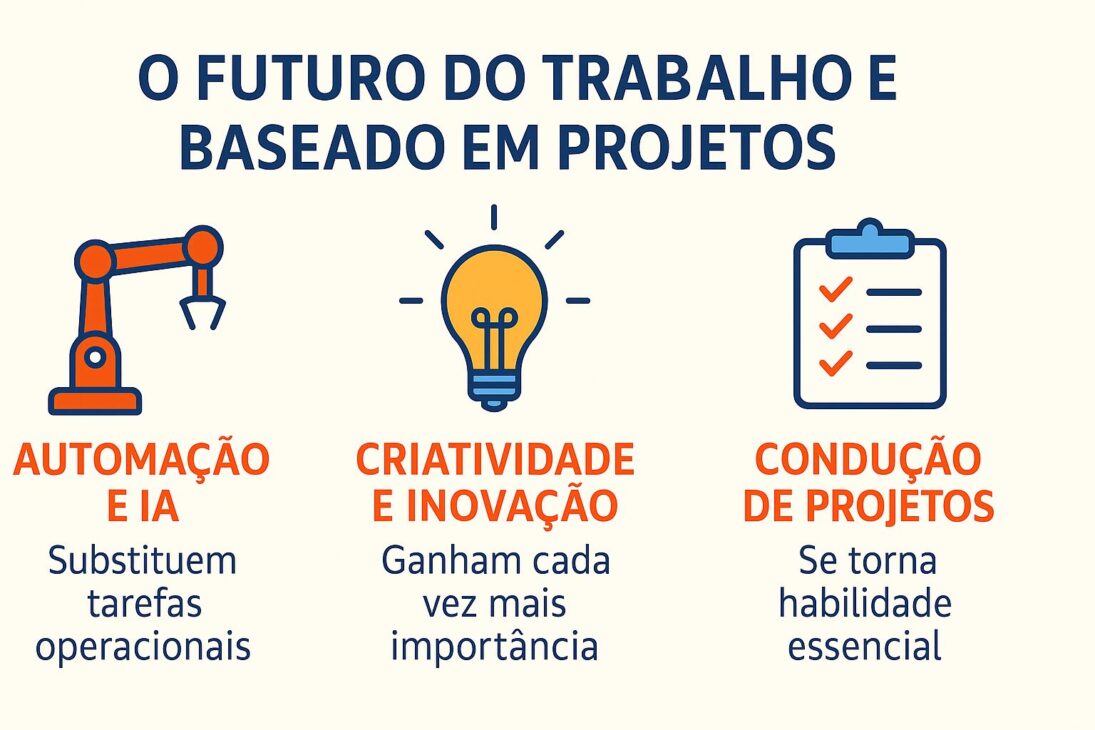
With automation and artificial intelligence taking on operational tasks, humans are moving into roles that require creativity, problem-solving, leadership, and innovation. According to the Future of Work report from McKinsey & Company, these skills will become increasingly essential.
And all of them are linked to project execution.
Education itself is already starting to prepare young people for this. Schools and universities have begun to adopt the “project-based learning” model, encouraging students to solve real challenges. According to the Ministry of Education (MEC), this model helps students develop practical skills that align with the current job market.
Those who learn early to work with goals and deliverables arrive more prepared for the professional world.
It’s Not Just for Leaders or Managers
It’s a misconception to think that working with projects is something exclusive to high positions or technical sectors.
In fact, anyone can propose and execute projects. A store attendant can create a proposal to improve customer service. An administrative assistant can develop a new way to organize documents. A hairdresser can create a special schedule for holidays.
What changes is the scale, but the process — plan, execute, and evaluate — is the same.
How to Develop This Skill
You don’t need a specific degree to get started.
Today, there is a variety of free and paid courses, both in-person and online, that teach the principles of project management.
Moreover, practicing is one of the best ways to learn. Participate in events, help in volunteer actions, organize initiatives in your community, or even at home. Each small project prepares you for bigger challenges.
Organization, communication, use of digital tools, and results-oriented focus are skills you can develop with dedication and practice. According to PMI, applying simple tools already brings significant learning.
The most important thing is to start — even if small.
In a fast-paced, competitive world full of uncertainties, mastering the logic of projects in the job market has become fundamental. Professionals who develop this competency have better chances of growing, seizing good opportunities, and remaining relevant, regardless of the field.
Looking to the past, we realize that great achievements of humanity stemmed from well-organized projects. And looking to the future, we see that this same capability will continue to determine professional success.
Therefore, if you haven’t started exploring this universe yet, now is the ideal moment to take the first step.











Seja o primeiro a reagir!