





 Portuguese
  English
  Spanish
  3 min of reading
  0 comments


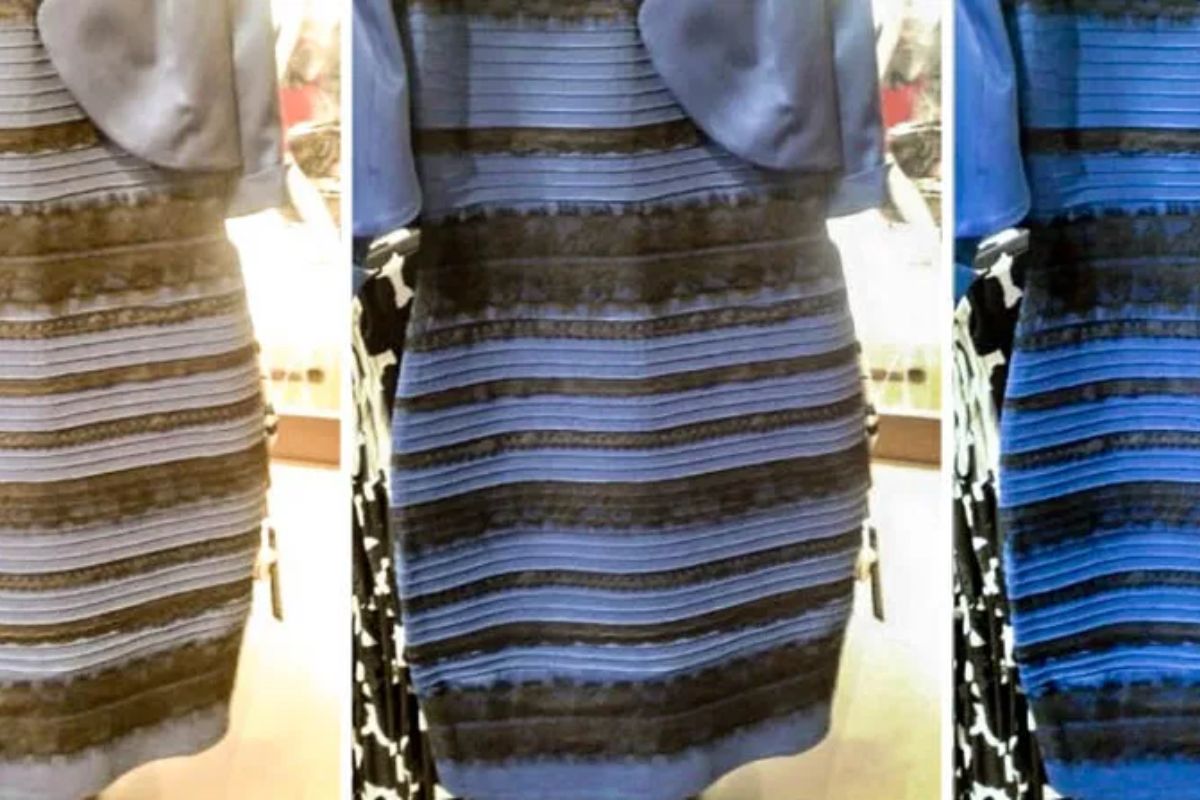
From The Controversial Dress To The Biology Of Your Eye: Understand The Technology And Limitations Behind The Colors You See On Your Monitor.
In 2015, a photo of a dress divided the internet: was it blue and black or white and gold? The controversy was not just a joke, but proof of a curious fact: the color you see on your computer screen or smartphone is not a perfect representation of reality. In fact, no screen can show all the colors that exist.
The explanation for this involves a fascinating mix of biology, physics, and the technology behind the pixels. What we see is an interpretation, both by the machine and by our own brain.
How Does Your Screen “Create” Colors? The RGB World
To understand the limitation, one must first know how a monitor works. Each tiny dot that forms the image on your screen, the pixel, is actually made up of three even smaller sub-pixels: one red (Red), one green (Green), and one blue (Blue). This is the famous RGB color system.
-
A couple buys an old chalet, breaks the kitchen floor for renovation, and finds over a thousand coins of gold and silver hidden since the English Civil War over 4 centuries ago.

-
Rigid bags with their days numbered: new trend prioritizes comfort in 2026.

-
YouTuber creates an excavator equipped with a giant 4.5-meter sword to challenge his brother to a rematch, and the invention quickly goes viral on social media.

-
The U.S. Army surprises the world by presenting the UH-60MX Black Hawk helicopter capable of flying without pilots, controlled by a tablet, featuring the MATRIX system, smart sensors, and full autonomy in real combat and rescue missions.


By varying the brightness intensity of each of these three points of light, the screen can create millions of combinations. In the most common standard (known as 8-bit), each of the three primary colors can have 256 levels of intensity. Multiplying the possibilities (256 x 256 x 256), we arrive at approximately 16.7 million colors that your monitor can theoretically display. It seems like a lot, but reality is much more colorful than that.
The Problem: What Is Outside The Screen
Science has tried to map all the colors that the human eye can perceive. The result is a horseshoe-shaped graph known as the CIE 1931 Chromaticity Diagram. It represents the complete spectrum of human vision.
The problem is that the RGB system of screens can only reproduce a part of this spectrum. The color standard of most monitors (sRGB) covers only a fraction of this graph, leaving out many shades, particularly the more vibrant and pure greens and blues that exist in nature.
Moreover, there are natural pigments so unique that no combination of red, green, and blue light can perfectly replicate them. Harvard University, for example, maintains a collection of over 3,000 rare pigments, such as ultramarine blue, whose shades are impossible to reproduce faithfully on a screen.
The Final Factor: Your Brain Also Deceives You


The limitation is not only technological; our perception also plays a fundamental role. Color is not a fixed property of an object, but rather an interpretation that our brain makes of the light that reaches our eyes.
And that’s exactly what happened with the controversial dress. The photo was taken under very specific lighting, with orange tones. Each person’s brain tried to “correct” the color of the dress based on the lighting it assumed was in the environment:
- Those who saw blue and black: Their brain assumed the dress was under warm light (yellowish) and “subtracted” the yellow from the image, revealing the actual colors.
- Those who saw white and gold: Their brain understood that the dress was in shadow (blueish lighting) and compensated for that, lightening the colors.
In the end, the garment was indeed blue and black. The phenomenon merely proved that color is a subjective experience, shaped by context, lighting, and the automatic “corrections” that our brain makes all the time.
So next time you look at a photo, remember: you are seeing a representation, a simplified version of reality, both due to the limitations of the screen and the incredible ability of your brain to interpret the world around you.
And you, what color do you think you saw the dress in 2015? Did your perception change after understanding the science behind it? Comment below!








Seja o primeiro a reagir!