





 Português
  Inglês
  Espanhol
 4 min de leitura
  1 comentário





Private Port Will Allow Gigantic Ships of Up to 25 Meters of Draft and Will Change Brazilian Maritime Trade Forever
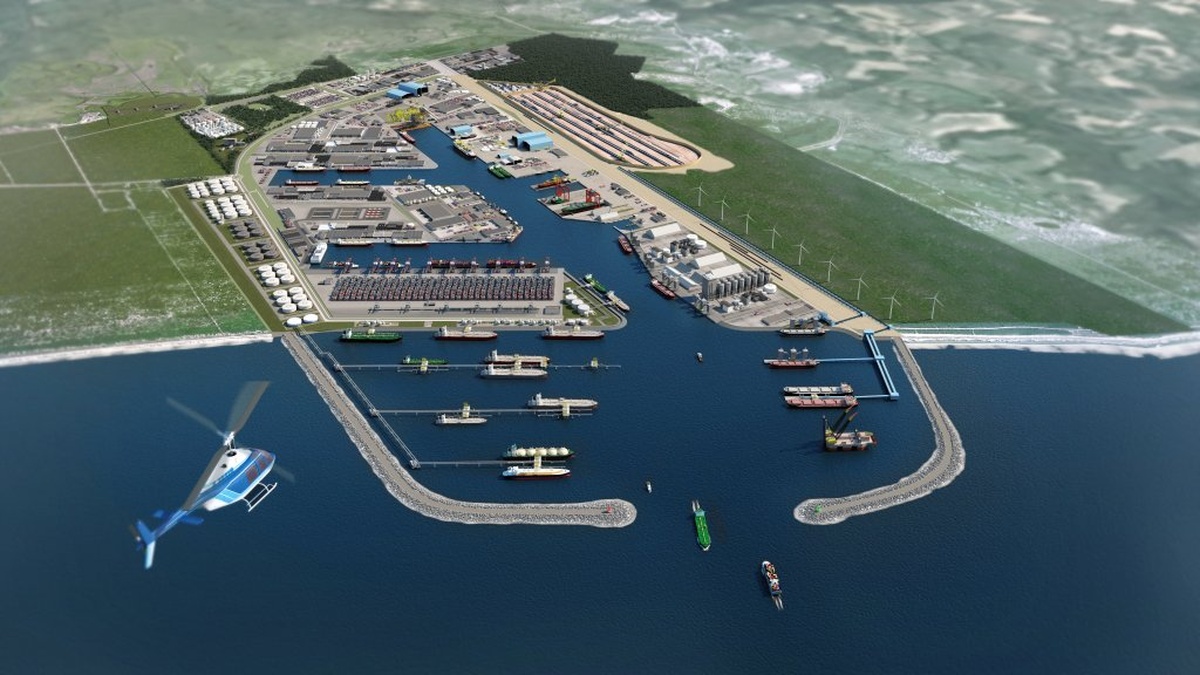
A mega port project is about to redefine Brazilian logistics and transform Espírito Santo into a new global hub for maritime trade. The Central Port, under construction in the municipality of Presidente Kennedy, will accommodate vessels of up to 25 meters of draft, such as Panamax, Valemax, and VLCCs—historic names for the sector. With announced investment exceeding R$ 16 billion, the complex is considered a game changer for the country’s infrastructure, according to 2024 data from the Ministry of Ports and Airports and the Association of Private Port Terminals (ATP).
Technical Project Ensures Unprecedented Capacity for Brazil
The initiative was planned to address longstanding bottlenecks in national ports. Currently, the main Brazilian ports operate with an average depth of only 13 meters, which limits the reception of larger ships. The Central Port breaks this limit and inaugurates a new era for the transportation of large volumes, with cutting-edge technology and modern engineering since 2022.
-
OceanPact Announces Acquisition of CBO and Creates One of Brazil’s Largest Maritime Support Structures with 73 Vessels, Annual Revenue Above R$ 4 Billion and R$ 14 Billion Backlog
-
With Extreme Winds, Giant Waves, and Unrestricted Currents, Drake Passage Is Considered the Most Violent Stretch of the Oceans

-
15th Century Merchant Ship Surprises Archaeologists

-
Odfjell Inaugurates First Operational Green Corridor Between Brazil and Europe Using Sustainable B24 on Maritime Routes and Reinforces Decarbonization Strategy

- 25 meters of draft, exceeding the national standard
- Capacity for vessels up to 400 thousand tons
- Strategic location in Presidente Kennedy, Espírito Santo
- Construction began in 2022 with accelerated progress in 2024
- Schedule forecasts partial operations by 2025
According to the Association of Private Port Terminals, the investment, entirely private, stands out for the transparency of contracts and the rigor in environmental licenses, adjusted in 2023 to ensure sustainability and safety.
Modern Infrastructure Promises to Transform International Routes
With the completion of the construction expected in 2026, the Central Port will place Brazil on par with logistics hubs like Rotterdam, Singapore, and Shanghai. Additionally, the new complex will be essential for the efficient flow of grains, minerals, and oil, benefiting agribusiness and the national industry.
Sources from the Ministry of Ports and Airports highlight that, starting in 2025, the operation of specialized terminals will strengthen Espírito Santo’s role in global export routes. Furthermore, integrated logistics will reduce costs, increase competitiveness, and attract new investments for the automotive sector, agribusiness, and the manufacturing industry.
Economic and Social Impact Exceeds Sector Expectations
The value generated by the project is already positively impacting the regional economy. The billion-dollar investment boosts job creation and energizes local markets, with a focus on technology, transportation, and services. According to the Association of Private Port Terminals, about 10,000 direct and indirect jobs are expected during the implementation stages.
- Over 10,000 direct and indirect jobs
- Attraction of foreign investments since 2022
- Revenue generation for Espírito Santo and neighboring municipalities
- Encouragement of new logistics and industrial projects
- Commitment to environmental responsibility at all stages
Throughout 2024, the approval of environmental licenses has been treated as a priority, aiming to ensure a balance between economic development and the preservation of natural resources.
Technical Rigor and Sustainability Shape the Future of Central Port
The administration of the Central Port maintains constant dialogue with environmental and regulatory agencies. Since 2022, the project has undergone technical evaluations and environmental impact reviews conducted by Ibama and state authorities. All phases of the construction follow sustainability criteria, transparency in processes, and public commitment to regional development.
The Ministry of Ports and Airports emphasizes, in its official statements from March 2024, that future operations must adhere to international standards of safety and efficiency. Moreover, risk control and permanent environmental monitoring are requirements for each stage, ensuring that the mega-complex does not repeat historical mistakes of other ports in the country.
Chronology of Central Port
- 2022: Start of construction, investor attraction, and initial environmental licenses.
- 2023: Revision of technical projects, update of environmental standards, and expansion of partnership contracts.
- 2024: Progress of construction, official announcements of capacity and structure, and beginning of local workforce hiring.
- 2025: Forecast for the start of partial operations and arrival of the first large vessels.
- 2026: Completion of main phases and full operation of the port complex.
Central Port Connects Brazil to the Global Logistics Future
The arrival of Central Port not only modernizes maritime infrastructure but also increases Brazil’s participation in major international routes. Espírito Santo becomes a reference for strategic investments, the generation of skilled jobs, and innovation in logistics, according to 2024 reports from ATP and the Ministry of Ports and Airports. Thus, the mega port complex meets the demands of global trade without compromising sustainability and the transparency of processes.
What do you consider most important for the future of Central Port: to accelerate operations to boost the economy or to prioritize sustainability and governance, even if the process is slower? Share your opinion!









Será verdade?