





 Portuguese
  English
  Spanish
 4 min of reading
  1 comment


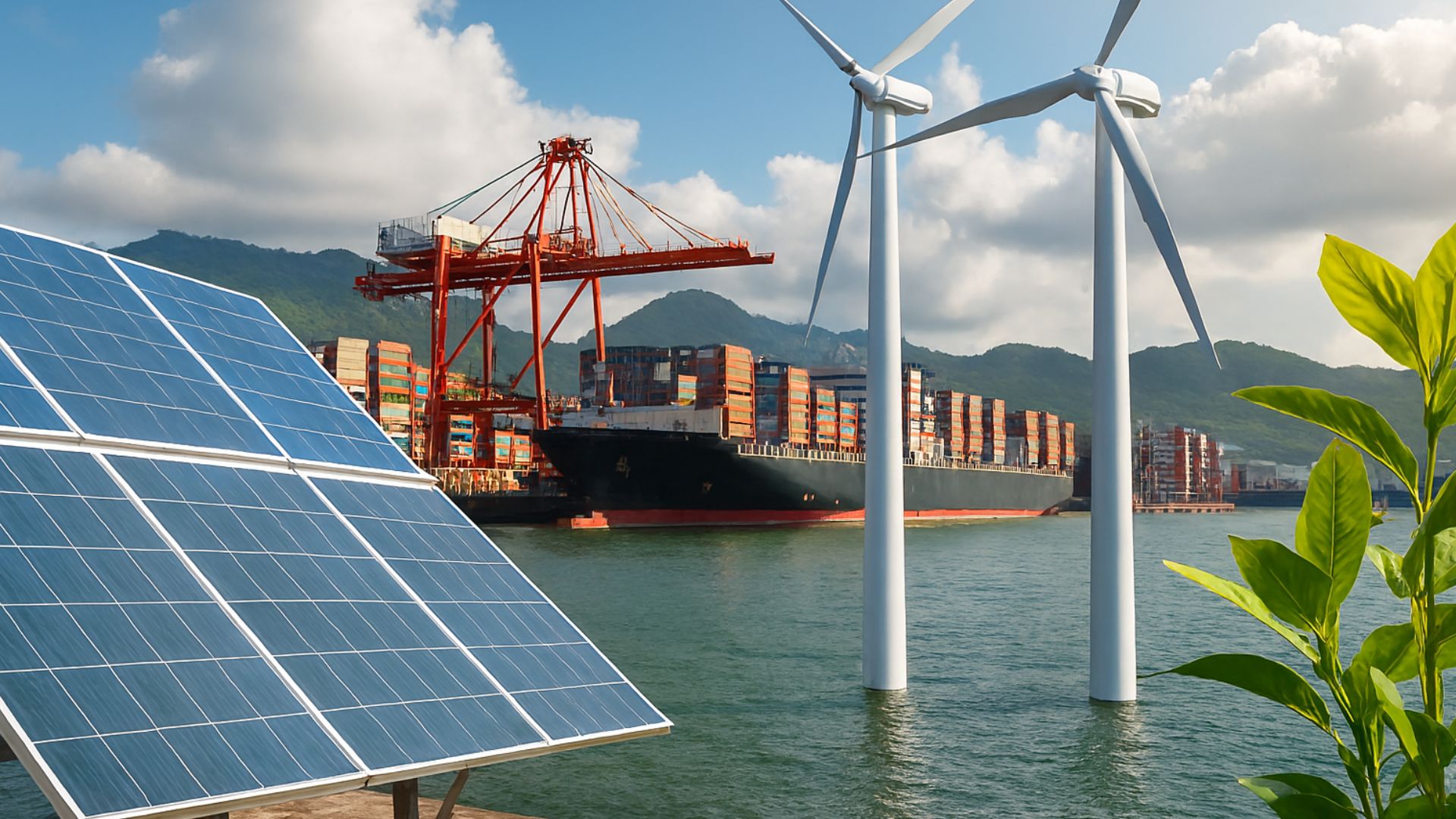


The Port of Santos Partners with the Valenciaport Foundation to Boost Renewable Energy Projects, Reduce Pollutants and Strengthen Environmental Sustainability in the Coast of São Paulo
In a decisive step towards sustainability, the Port of Santos formalized an agreement of R$ 3.2 million with the Valenciaport Foundation from Spain, to develop two strategic studies: a Decarbonization Plan and an Energy Master Plan.
The contract was signed on October 14, at the foundation’s headquarters in São Paulo, marking a new phase in the pursuit of pollutant reduction and the expansion of renewable energy in the largest port complex in Latin America.
International Agreement Strengthens Sustainability at the Port of Santos
According to a report released by G1 this Wednesday (15), the partnership between the Santos Port Authority (APS) and the Valenciaport Foundation has the main objective of transforming the Port of Santos into a global reference in port sustainability.
-
Renewable energy advances over protected areas in Brazil, and a survey by the Energy Transition Observatory reveals silent impacts that challenge environmental conservation and pressure sensitive traditional territories.

-
Rio Grande do Sul accelerates energy transition: State invests in renewable technologies and consolidates decarbonization strategies and pathways to attract billions in new industrial investments.

-
With 160,000 m² of collectors, an area larger than 20 football fields, Silkeborg, in Denmark, hosts a solar thermal plant that heats 19,500 homes and could become the largest solar heating plant in the world.

-
With earth, bamboo, straw, and lime mortar, a specialist builds a house for just over $460 and draws attention for its cost being much lower than traditional construction.

The Decarbonization Plan will outline concrete goals to reduce carbon dioxide (CO₂) emissions in port operations, covering activities from terminals, ships, and land modes.
Simultaneously, the Energy Master Plan (PDE) will aim to expand the use of clean energy sources, such as solar and wind, within the complex. The studies will be conducted over 22 months and are expected to result in practical guidelines for the port’s energy transition.
Valenciaport Foundation Leads Renewable Energy Studies
The Valenciaport Foundation, internationally recognized for its work in innovation and port sustainability, will be responsible for developing the two plans.
The director of the institution, Antonio Torregrosa, participated in the signing of the contract, highlighting the importance of international cooperation to address global environmental challenges.
The investment of R$ 3.2 million will be directed towards research, diagnosis, and strategic planning, focusing on clean technologies and sustainable solutions. The initiative also anticipates the training of local professionals and the exchange of technical knowledge between Brazil and Spain.
Pollutant Reduction as an Environmental Priority
According to data from the APS, the Port of Santos handles about 160 million tons of cargo per year, which represents a significant emission of polluting gases. With the Decarbonization Plan, a progressive reduction of CO₂ emissions is expected, in line with the global goals of the Paris Agreement and Brazil’s environmental commitments.
Actions planned include:
- Encouragement of alternative fuels for ships.
- Modernization of the fleet of vehicles and port equipment.
- Implementation of real-time environmental monitoring systems.
These measures aim to make the Port of Santos a reference in sustainability in Latin America, promoting a cleaner and more efficient operation.
Renewable Energy in the Coast of São Paulo: Advances and Challenges
The Energy Master Plan will be essential to identify opportunities for generating and consuming renewable energy at the port. The APS intends to install solar panels in strategic areas, as well as study the feasibility of wind turbines in regions with high wind potential.
According to the Ministry of Mines and Energy, Brazil already has over 90% of its electrical matrix composed of renewable sources, such as hydropower, solar and wind. However, the application of these sources in port environments is still limited, making the project pioneering and highly relevant for the sector.
Technological Innovation and Energy Transition at the Port of Santos
The partnership with the Valenciaport Foundation also includes the analysis of emerging technologies, such as:
- Energy storage systems.
- Digital platforms for energy management.
These solutions aim to accelerate the energy transition of the Port of Santos, making it more resilient and competitive against international environmental demands. Innovation will be one of the project’s pillars, focusing on efficiency, safety, and reduction of operational costs.
Sustainability and International Cooperation
The choice of the Valenciaport Foundation as a strategic partner reinforces the importance of international cooperation in the search for sustainable solutions. The Spanish institution has already worked on similar projects in ports in Europe, Latin America, and Asia, bringing valuable technical expertise to Brazil.
The project’s success will be measured through clear indicators, such as:
- Percentage reduction of CO₂ emissions.
- Increase in the share of renewable energy in the total consumption of the port.
- Energy efficiency of operations.
This data will be continuously monitored and disclosed in periodic reports, allowing for transparent tracking and evaluation of results.
It is worth mentioning that the Port of Santos already has other sustainable initiatives:

Port of Santos as a Model of Port Sustainability
The agreement signed between the Port of Santos and the Valenciaport Foundation represents a historic milestone for port sustainability in Brazil. With a focus on pollutant reduction and the expansion of renewable energy, the project aligns Latin America’s largest port with the best global environmental practices.
The initiative reinforces the APS’s commitment to sustainability, innovation, and social-environmental responsibility, promoting economic, environmental, and social benefits for the entire São Paulo coast region. In a world increasingly demanding in terms of environmental preservation, the Port of Santos takes a firm step towards the future.









Fui diagnosticada com doença de Parkinson há quatro anos. Por mais de dois anos, dependi da levodopa e de vários outros medicamentos, mas, infelizmente, os sintomas continuaram piorando. Os tremores se tornaram mais perceptíveis e meu equilíbrio e mobilidade começaram a declinar rapidamente. No ano passado, por desespero e esperança, decidi experimentar um programa de tratamento à base de ervas da NaturePath Herbal Clinic.
Sinceramente, eu estava cética no início, mas, poucos meses após o início do tratamento, comecei a notar mudanças reais. Meus movimentos ficaram mais suaves, os tremores diminuíram e me senti mais firme ao caminhar. Incrivelmente, também recuperei grande parte da minha energia e confiança. Tem sido uma experiência transformadora. Me sinto mais eu mesma novamente, melhor do que me sentia há anos. Se você ou um ente querido está lutando contra a doença de Parkinson, recomendo muito que você considere a abordagem natural deles. Você pode visitar o site deles em w ww.naturepathherbalclinic.com